Rob Farnham’s West Coast Trip

Rob visited several classmates on a trip to the West Coast April 16th to 21st, 2018. Here’s his report:

Andy Fleming: You are traveling abroad and hear through a neighbor’s loose communication that the Santa Rosa fires are close and then receive a further message that your house is now an ash heap. This is miscommunication in the Internet world, he thought. He and his wife went into denial. But, his house did burn down (the Tubbs fire alone took down 2800 homes and burned 34,000 acres) and they returned to wrestle with insurance and living with their children for 30 days before relocating to an apartment in downtown Santa Rosa. They intend to rebuild on the same site.

Upon graduation, Andy applied in North Adams for a conscientious objector designation after receiving a dreaded number, #154. When the draft board later stated no number over #150 would be so drafted he moved to Chicago and drifted until an assignment to the National Health Board in San Francisco was offered. Studying various disease-related issues in the hot bed of a drug culture at the time, Andy later decided to attend a program teaching machinist skills. He does not philosophize as to the why, except the challenge and satisfaction of working with one’s hands and mind simultaneously clearly spoke to him at the time. He parlayed that education into the high precision machine shop at Hewlett Packard. Precision measurements of the parts for computer manufacture led him to work developing the calibration devices necessary to measure the micron tolerances so associated.

What the Williams education gave was clarity of expression and the ability to write in simple, declarative sentences what the engineers were producing while explaining the technical foundation the work was based on. Most could not do this.

Gary Barth: “ I wrote my senior paper for the Williams in India program on Emptiness.

Years later in a private meeting with the Dalai Lama, I asked him, ‘if I can’t find a Tibetan teacher who speaks English, what do you think about studying with one of the California based Zen Masters?’ His prescient answer, given with a chuckle: ‘I think the Tibetan emptiness is bigger.’

Truly amazing answer: truthful and a Zen koan back to me: how could something without dimension have inferior dimension?”

Gary has continued over the years as a participant in programs abroad to reduce blindness through pro-bono cataract surgery and corneal transplant operations. His eye surgery practice in Santa Rosa includes 7 surgeons and he serves on the Board of the Seva Foundation for the prevention of blindness.

He reminisces about his Long Island high school where he played lacrosse for Renzi Lamb, the now retired coach of Williams lacrosse. He states when he found out Williams was looking for a new coach he called Renzi about the opening.
Like so many classmates, he found intellectual stimulation in those “under the radar” discussions or meetings, the importance often not recognized till later in life. He found a pocket of individuals through the Religion Department (Prof. Eusden) that would gather to discuss moral issues or subject matter pertinent to the day. Some students and some faculty members from other disciplines. He views these moments as quintessential Williams and impactful later in life. The sharing of ideas with mental space enough for various world views and questions one needs to unravel on his own.

Wynne Carvill: Currently serves on the Alameda County Superior Court in CA a position held since 2003. He, too, participated in the Williams in India program and remembers Scott Miller, Bill Loomis, Dale Riehl ’72 and Steve Kendrick ’72.

What was seminal in his development was the manner Prof. Gaudino conducted his classes. Gaudino did not judge nor indicate his own conclusions, but attempted to penetrate other’s viewpoints and the respective influences on the thought process. What was the foundation of the thinking: family, culture, geography or experiential factors? Out of this exposure developed a blend of listening to one another and attempting to give credence to viewpoints distinctly different than one’s own.

For two years now he will head the Administration of the ACSC dealing with human resources, budgets, etc. “Someone has to do it”, was the refrain of his professional brethren. And, “Don’t get into arguments with the LA County system regarding budgets, because they always win.”

He notes distinctions in character in what comes before the courts from different municipalities, even those with contiguous borders. With understanding, he expresses the complex interface of economic, cultural and police management issues that give rise to the court proceedings.

Bruce Irvine: For a man who later in life suffered significant heart issues and is now under chemotherapy for lung cancer, Bruce has a quiet strength without victimhood entering his philosophic outlook. Directly after graduation he returned to CA (a Los Angeles high school experience) and tended bar. He then managed a racket ball facility for five years before joining a California bank within its retail division. The retail experience led him to a position in the commercial banking network of the same bank where he served as a relationship manager for 20+ years.

He remembers his Williams experience with a thought without chronicling the detail: “I believe I was too young to enter Williams at age 17.” Prodded slightly for further insight, he considered momentarily before stating, “My high school was pretty restrictive. Too much freedom at Williams.”

He asked about Mike Caruso and said Mike was his roommate. He would very much like to see him again.

Jane Gardner: One of the 7 females graduating with our Class. She spent two years at the College and was part of the “Gaudino” nexus with Wynne Carvill, Bill Loomis and Metzger. She remembers Clay Hunt and Samuels of the English Department fondly and received a Watson Fellowship, which she utilized to study Dante in Italy with the same mentor Clay Hunt studied with during his formative years. This was a one-year course of study, but she found this a “lonely experience”.

A career in advertising recently morphed into a partnership using a skill set honed in her previous profession, but unrelated. One project this partnership structured along with other foundations is the “Big Lift”, a reading program in San Mateo County in CA for children in the third grade and lower. A holistic approach with interfaces with family, etc. to imbue the children with an interest and desire to read and learn. Third grade and lower is the key according to research and studies she was instrumental in.

Not sure her insights into the experience of being female at the College are meaningful, she notes, “the experience was the experience”. Although in another discussion she mentioned the visceral experience of the “ferment of the late sixties”.

Frank Murray: One of 11 children from Dallas. The mother of a friend who attended Harvard suggested he look at Williams. He ordered course catalogs from Williams, Amherst, Princeton and Notre Dame (his Mom’s choice). “ND was too big”, so he read all the catalogs and could tell, “Williams was the place for me with its emphasis on teaching”.

Frank has spent 30+ years teaching at St. Mary’s College in Maraga, CA, a Christian Brothers affiliated enterprise (the French derivative). The curriculum utilizes the Great Books as mandatory for of all students for a portion of their education. The history of this arm of the Christian Brothers included the education of the poor and 1/3 of St. Mary’s student body is Pell eligible and ½ is comprised of ethnic minorities.

Frank returned to Dallas after graduation and applied to the Dallas Draft Board for conscientious objector status. Four Board members were WW II veterans with little sympathy for a CO. Rubber stamping, No, was an efficient way to work through the files. A family friend, a veteran himself, indicated he “despised” what Frank was doing, but would write a letter verifying Frank’s honesty and integrity. This was the only item the Board read in his file and concluded he should be given the CO status. The two-year commitment included an experience at a pre-trial holding facility within the prison system.

Frank was recruited to teach at his Dallas high school, which he did, until he decided he did not want to be another, “Mr. Chips”, so he completed a Masters degree in English Literature at Stanford.

An application to St. Mary’s was accepted and 30+ years of teaching crosses other disciplines besides English Lit. One is the theater. He mentions occasions when David Strathairn is in San Francisco performing of taking several theater students into town to meet Strathairn at the Café Mason just outside one of the performing arts venues there. Discussions regarding the art form from a practitioner are a lot like Mark Hopkins sitting on one end of the log.

John Barkan: John is another classmate with two professions under his belt including the earlier one spent in the advertising world. He then pursued his teaching credentials and recently finished a 20+ year career in education in San Francisco.

John is originally from San Francisco and met wife, Joan, at Skidmore. As a lifer in San Francisco he remains living in the first house purchased over 40 years ago and recently renovated portions of the structure, to which he states, “never again”.

Travelling and grand kids are now his focus.

Ned Palmer: Ned now lives on Bainbridge Island in WA, the home of the Bloedel Reserve (worth a visit for the gardens). His wife, Susan, spent two semesters from Mt. Holyoke at the College.

Ned tells of acquiring his pilot’s license at North Adams just before graduation and remembers Rick Beinecke also taking lessons there at the time. Like all rookies he had a harrowing story of a flight to Milwaukee through stormy weather. I wondered if such buffeting was valuable in his career in banking (NYC?).

Ned spends some time in Hawaii each winter and indicated he visited with Jim Tam there recently. He also returned to the College in 2012 to attend the Charlie Waigi ’72 Bicentennial Medal ceremony. Waigi is currently working in Kenya and Ned is involved with a group spearheaded by Waigi.

Camille Townsend: Camille is a Smith grad and attended the College for two semesters. Born and raised in PA she headed the development department for 30+ years for a private elementary school with 600 students.

Williams was an opportunity to change her environment and dislodge herself from whatever rut seems to haunt all of us on occasion during a College career. She was a geology and art history major so the curriculum at Williams was robust enough. Character traits allowing change to enter her life are now on display as she moved to Seattle three years ago to be near her daughter and granddaughter. With another potential move to Durango, CO in the near future the vagaries of life are settling around her with new equanimity.

Asked what the Williams exchange experience was like, she indicated there were few issues of real friction. The occasional bathroom facility mix-up, the lack of swimming time for women in the pool (men swim nude, “supposedly”), but negative friction from gender bias was largely absent from her experience. She thought the Administration (Nancy McIntire) did an admirable job in transitioning for female students.

In answer to, what motivates you now?, she states, “I have not figured that out yet. Possibly some volunteer work within the art world. A gallery or other.”

Jim Stearns: A law degree from Georgetown University had a curious and somewhat Byzantine relationship to Jim’s pathway. After moving to Rochester and a job reviewing contracts for software, he was counseled to learn more about the technology he was reviewing. This is understandable given items such as vocabulary, technical nuance and product differentiation. So he took math courses and computer science (old Fortran) and “got hooked”.

At this time in his career owning a computer store appeared to offer entrance into the future and with a partner he opened one. “This was a good idea, but ten other individuals in the same location had the same idea and the business did not work out”.

Joining Hewlett Packard, however, where he served for over 20 years in several divisions did. When he was assigned to a division of HP in Columbus, Ohio he finished a Masters in computer science at Ohio State. He also served HP in Colorado Springs and Fort Collins, CO.

Now with the National Oceanic and Atmospheric Administration (NOAA) in Seattle, Jim is working on a project to move the data gathering for commercial fisheries from paper to the digital age. Counts within any catch including volumes, sizes and species and are cumbersomely created. Ask Jim about the software and technology.

David Albert: A discussion with David leads to many roads on a path less travelled, but few statements can spark an intrigue more than, “Good things happened to me when I had no money”. From a blue-collar family and a Queens, NY location, he attended a magnet school in Manhattan. The family was gifted musically and Professor Shainman influenced his choice of Williams.

His time at Williams included some friction with classmates whose families were considered wealthy, but his exposure to their parents became an influence for future pursuits. Conversations with those parents included acts of philanthropy with non-profit organizations and travel to foreign countries. These became a touchstone.

He notes one of those “under the radar moments” when listening to the Williams Radio program one night where they played a musical piece using a veena. He did not know the instrument, but researched it (Indian), found it of some fascination and now acknowledges it as the germination of his interest in the country.

During his two-year study at Oxford under a Carol Wilson Fellowship, he bemoaned the lack of funds to travel extensively to other near and distant countries. He did, however, find an overland route to travel to Tehran, Iran to meet up with an Iranian student class of ’73 that David believes was a “trial” for Shah Pahlavi’s son to attend the College. He followed Oxford with a degree from the Committee on Social Thought, University of Chicago.

He concluded these academic peregrinations by being a founding member of New Society Publishers, a non-profit publisher of books as tools to help build a new society. His writings on home schooling, which he and partner, Ellen, accomplished with their two children, are considered definitive works on the subject and published by the enterprise. I left his house with five to read.

In 2006 David was discussing water projects in under-developed countries with a friend and in 2009 they raised the funding to start a non-profit organization, Friendly Water of the World, which utilizes bio-sand filters, a low-cost technology. He is the current chairman. When asked what country they should initiate a program he said, “Burundi because it’s the second poorest country in the world”.
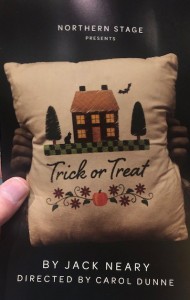
Trick or Treat


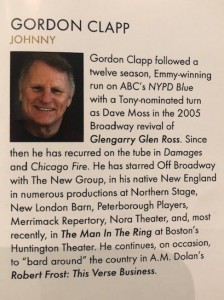
Steve Brown provides notes about a performance of Trick or Treat starring Gordon Clapp in New York on February 16, 2019:

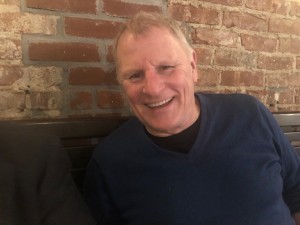
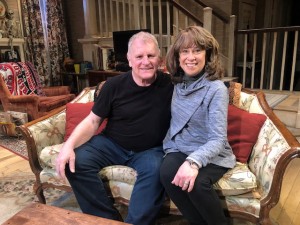
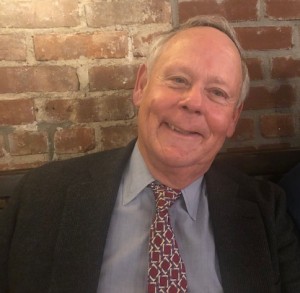
Sue and I met Gordie and Gene Bauer for lunch before a Saturday matinee performance of Trick or Treat in NYC. Gene was in the midst of a 4-day, “performing arts” blitz in which he was seeing numerous plays and a New York Philharmonic performance while his wife attended an art education conference in NYC. In Trick or Treat, Gordie plays the lead role of a father of a dysfunctional family whose actions lead to a Halloween night filled with twists and turns. Gordie does a great job in a role filled with emotion. Gene, Sue and I were all amazed how Gordie could transform from the nice, funny and warm person he was at lunch at 1PM into this tormented father who must deal with a family with lots of serious past and present issues only an hour later. Bravo! Rob Farnham and Dave and Audrey Kubie are scheduled to see the play on the 17th.  Included are pictures from lunch, and Sue and Gordie on the set after the play.
Rob Farnham adds:

Dave and Audrey Kubie, my wife, June, and I by unanimous proclamation considered the performance well-acted. Gordie developed his character with savvy and infused it with the right touch of emotion and hubris. The play developed an edginess as the actions of the character he played left one having to judge whether they were heroic or just pathetic. Great to see Gordie ply his craft with deftness.


Winter Study 2019

Lots of ‘71 help with Dave Olson and Steve Brown’s Winter Study course on Mock Trials. “Judge” Rodney Brown traveled from Rye NY to preside over the first trial the course. Doug Pickard and Colin Brown (who traveled all the way from warm Florida) served as unbiased and interested jurors for the first trial. Bob Schwed took a day off from teaching on his own Winter Study course on deal-making to serve as judge for the second trial and Sue Brown ably served as a juror.

The trials were preceded by dinner at the Browns the evening before:

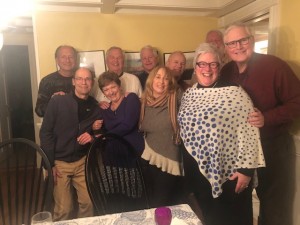
(front row) Jorie Latham,Judy Allerhand Willis, Sue Brown, Jane Pickard and (back row) Paul Willis,Steve Latham, Rod Brown, Colin Brown, Dave Olson, Dace Olson, Doug Pickard

Paul Willis, Steve Latham, Colin Brown, Rod Brown, Dave Olson, Doug Pickard.
Steve Brown, Jorie Latham, Judy (Allerhand) Willis, Jane Pickard


Oxford Trip

March 20, 2020

Dear ’71 Oxford Travelers,

Since we last wrote with an update, so much has changed in the world. Yesterday, we sadly came to the decision with colleagues at Wiliams that we must cancel your pre-50th June Oxford trip due to the globally growing concerns of COVID-19. We are so sorry, this is such disappointing news to share at a moment when that’s all we seem to be receiving.

Sadly, this news likely comes as no surprise to you. Indefinite travel bans and the unknown personal and public health risks of traveling anytime soon were obviously our primary concerns. For Oxford, specifically, our current students at the Williams-Exeter Programme at Oxford have already been sent home, and Oxford University is likely to be closed for an extended period of time. Therefore, even if we were able to and many of you chose to travel in a few months, we could not be certain of any of the planned trip activities happening. We hope this notice gives you plenty of time to change your travel plans for June.

We are in the process of canceling arrangements with all of our vendors, lecturers, and partners in Oxford. We will begin processing reimbursements to each of you for whatever deposits or fees you’ve already paid to the college. We hope to be able to return them to you in the next week by check or directly to your credit cards depending on how you paid us.

Some of you have asked already what might be possible in rescheduling this trip or some other special pre-50th gathering for your class. We can’t know yet, of course, but we will explore possibilities with your class leaders as soon as we’re able to think that way. Rest assured, we will do all we can to help you gather together in fun and meaningful ways through Williams as soon as possible.

We are thinking of all of you in this moment and hope that you and yours remain healthy and safe in the days ahead. We are most appreciative of all you do for each other and for Williams and look forward to seeing you all very soon. Thank you.

Sincerely,

Mark & Kate

Fall 2019 Mini-Reunion

Our Fall 2019 Mini-Reunion was combined with our Presidential Forum.  This provided us with the opportunity  to learn about some of the inner workings of Williams.


We met September 13 – 15, with a “pre-event” on the evening of Thursday the 12th — a discussion of “Digital Technology, Social Media, and Today’s Political Climate” sponsored by the Class of ’71 Public Affairs Forum, the Cohan Family Forum, and the Lecture Committee from 7:00 to 8:30 PM in the ’62 Center for Theatre & Dance.


The discussion was reported on in the September 18th issue of the Williams Record.

Friday, September 13: 

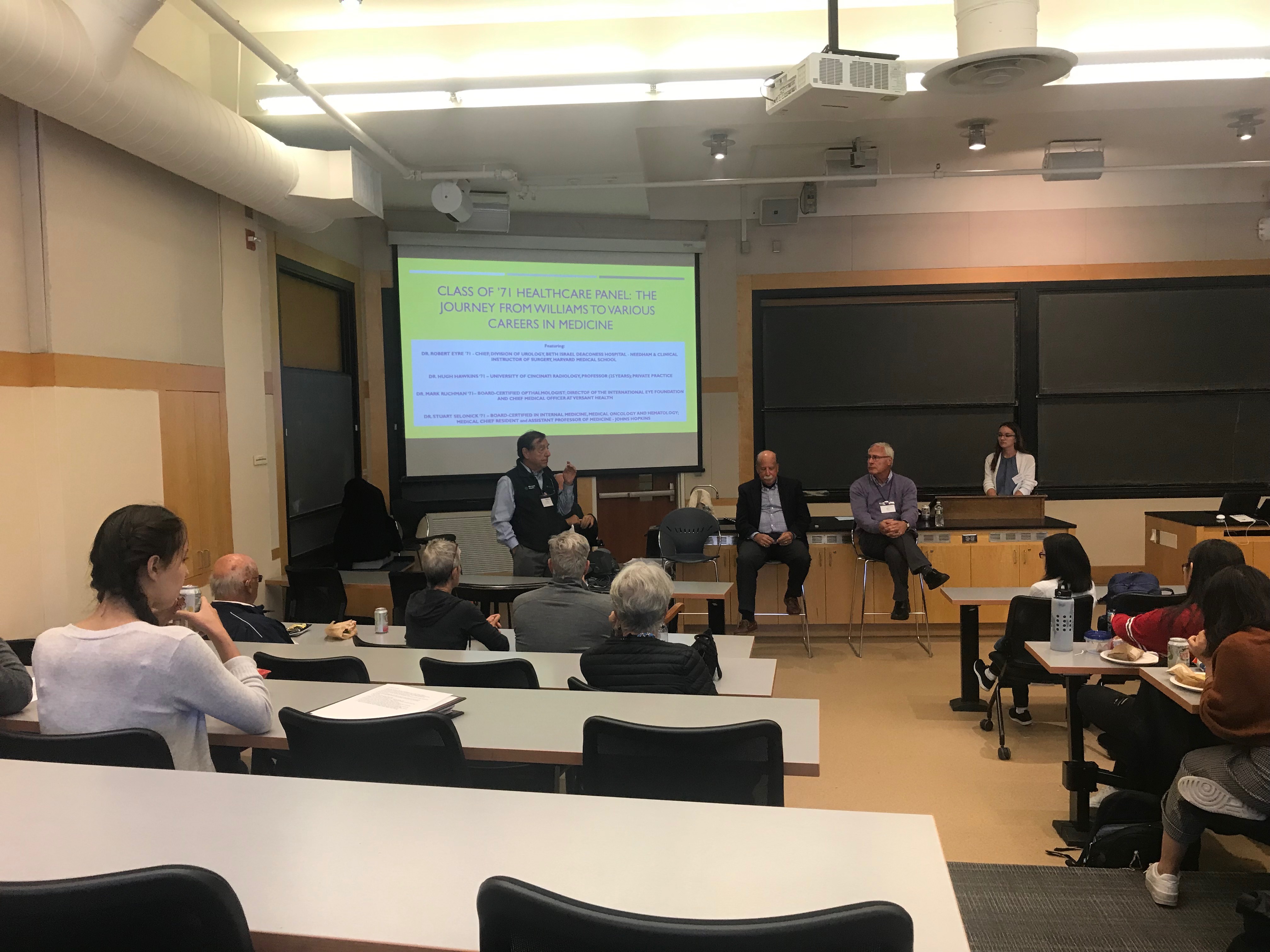
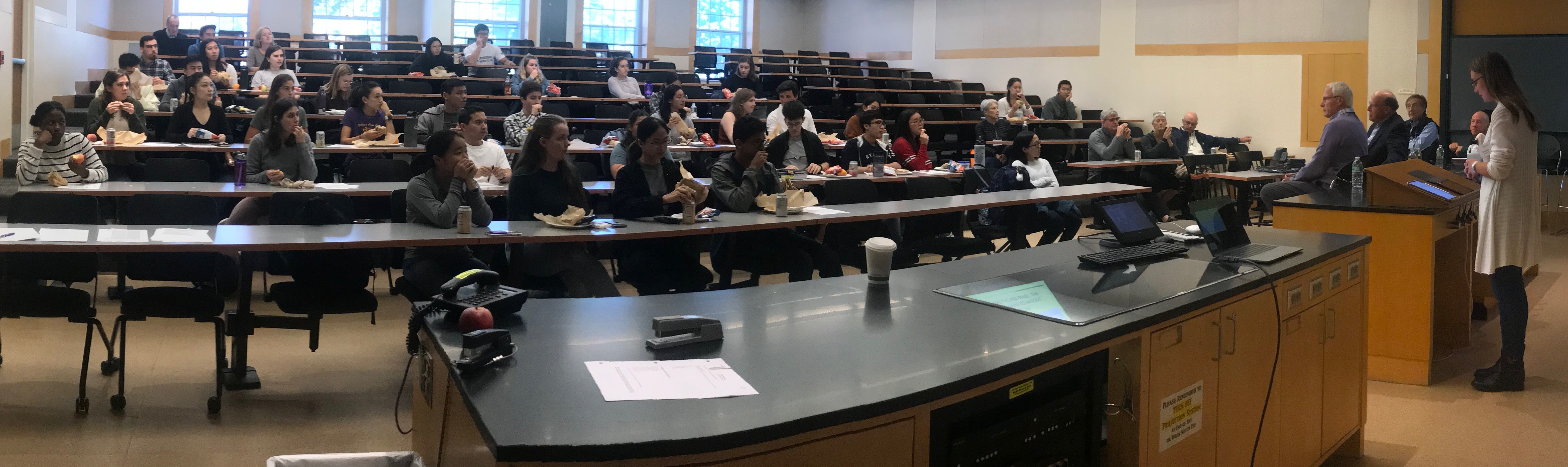
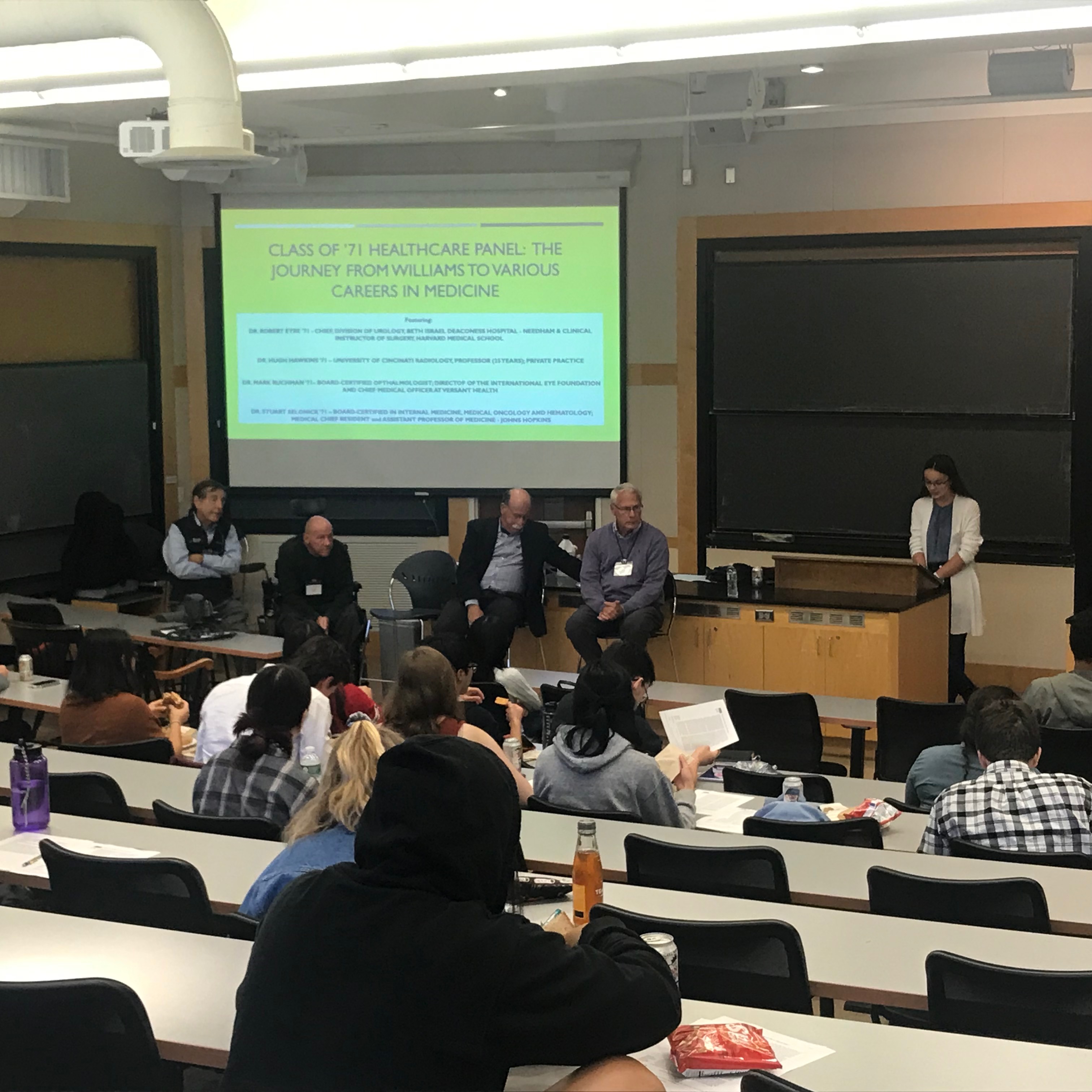
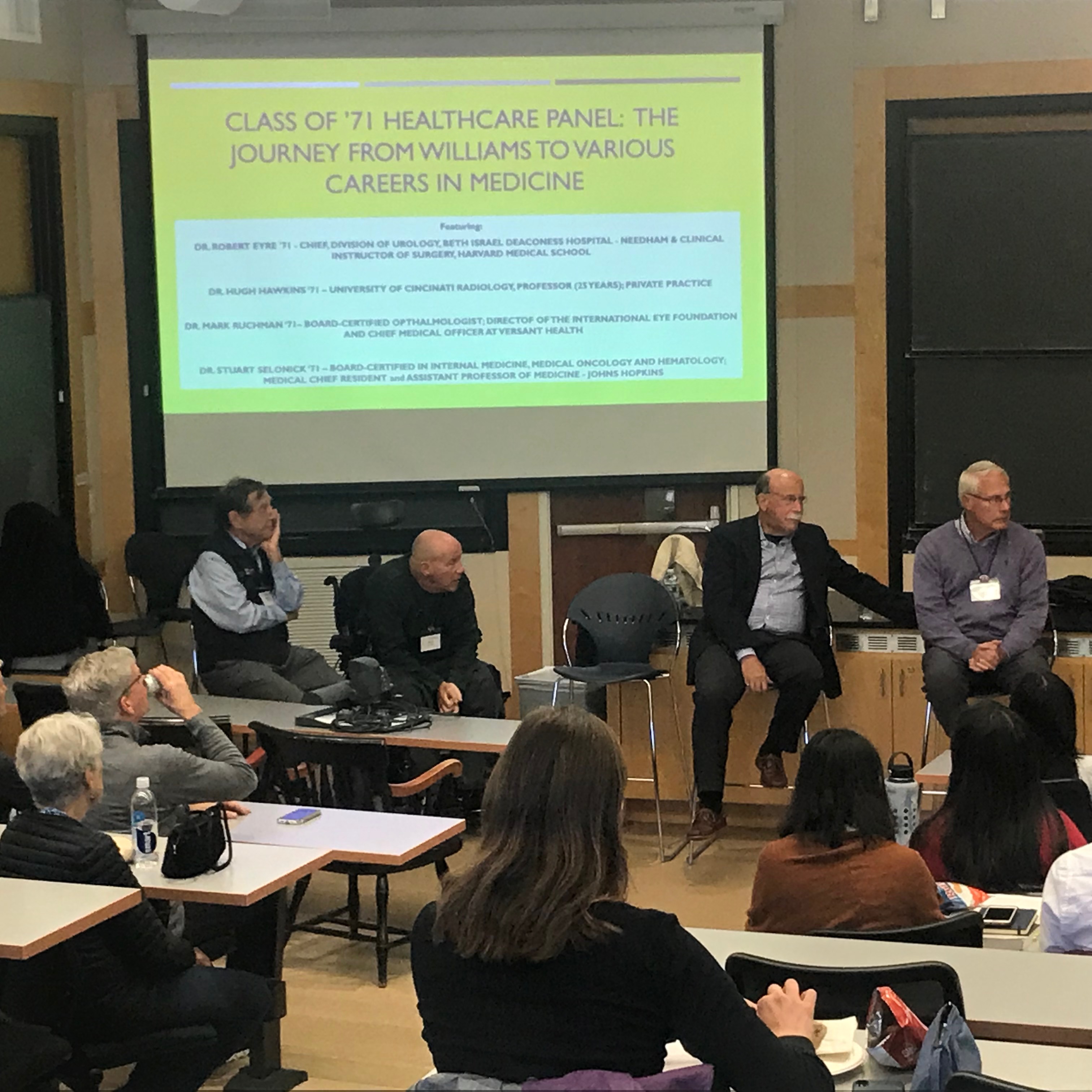
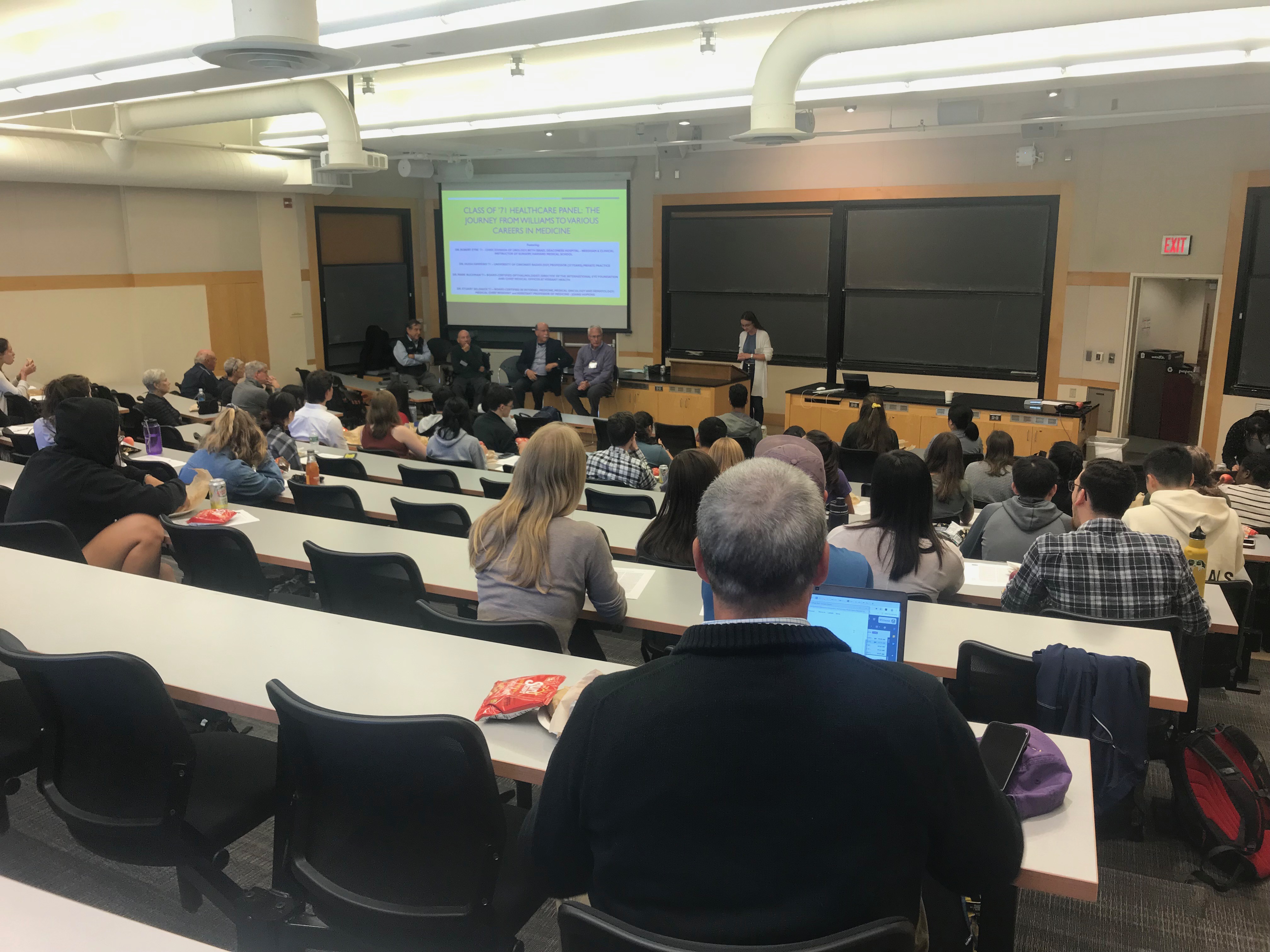
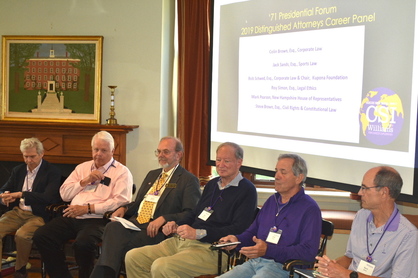
12:00 – 1:30 PM:  Separate lunches with students organized by Career Counseling with doctors, educators  (teachers and administrators), and attorneys.  Classmates who aren’t panelists are also invited.

    • Doctors:  Bob Eyre, Hugh Hawkins, Mark Ruchman, and Stu Selonick; Wege Auditorium, Chemistry Building
    • K – 12 Educators:  John Chambers, Peter Clarke, George Ebright, and Kent Rude; Lewis Room, Mears House, 95 Park St.
    • Lawyers:  Colin Brown, Steve Brown, Mark Pearson, Jack Sands, Bob Schwed, and Roy (“Andy”) Simon; Faculty House (Lower Level)
       

      See more photos

2:00 – 3:30 PM, Presentation Room, Weston Hall:  Session 1:  Williams Today – Who constitutes the Williams student body and faculty today?  How are they selected, and what are the challenges in getting who Williams wants (tenure, housing, and financial aid, etc.)?  What are academic and student life like today?

3:45 – 5:15 PM, Presentation Room, Weston Hall:  Session 2:  Williams Finances – What do the College’s finances look like?  What is the vision for Williams over the next 25 years, and what resources will be required to accomplish it?  Topics include tuition and financial aid, faculty recruitment, and endowment management.

6:00 – 9:00 PM, Faculty Club:  Cocktails and dinner at 7:00 with President Maud Mandel who will  talk about the Strategic Plan and questions about the Plan and from the afternoon sessions.  Business casual attire; jacket recommended for men.

Saturday, September 14:

8:00 – 9:00 AM, Faculty Club:  Breakfast and committee meetings

9:15 – 10:45 AM, Paresky Center Auditorium:  Session 3:  Speech on Campus – Provocative speech, offensive speech:  how can Williams facilitate productive, open debate on controversial issues?  How does the College ensure a wide range of ideas and beliefs are shared?
 
Here are some suggested readings for this session:

11:00 AM – 12:15 PM, Paresky Center Auditorium:  Session 4:  Arts on the Campus & Beyond – What does an education in the arts look like today, both inside and outside of the classroom?  How do the arts and humanities remain vibrant in an era of pre-professionalization?  How does Williams take advantage of its location in the arts-saturated Berkshires?

12:30 – 1:30 PM, Room 3, Griffin Hall:  Lunch at tables with faculty members/coaches and students

12:30 – 2:00 PM, Ramunto’s at The Log:  Lunch Meeting of the Reunion Fund Committee

1:30 – 6:00 PM:  Free time, with a couple of organized events from 2:30 to 3:30:

    • Meet in the Schow Science Library Atrium for private, small group tours of the new Science Center by Tiku Majumder, Barclay Jermain Professor of Natural Philosophy and Chair of the Science Center, and other faculty members. They’ll plan to visit labs and include some students, with plenty of time for Q&A.
    • Meet in the WCMA Atrium in Lawrence Hall to join Deborah Brothers, Costume Director, Designer, and Lecturer in Theatre, for a mini course in the Williams College Museum of Art (WCMA) Rose Study Gallery. This interactive session includes close looking at textiles, photographs, and paintings in the WCMA collection with a focus on costume history and detective work.

Also, the Clark Art Institute has an exhibit “Looking Twice at Renoir and O’Keeffe (Ida, not Georgia)” which has received very good reviews.

6:00 PM – 9:00 PM, the new Williams Inn:  Reception with Class dinner at 7:00.  Business casual.

We will have a videographer present to capture thoughts about why we come back to Williams, some of our fondest memories (veridical or not), etc., so think about what you might want to say.

Sunday, September 15:

8:00 – 9:45 AM, Faculty Club:  Class committee meetings

9:00 AM – 10:30 AM, Faculty Club:  Brunch with Maud – more Q&A with  Maud based upon the sessions during the weekend or discussions among classmates

Fall 2016 Mini-Reunion

This summary was sent to classmates after the Fall 2016 Mini-Reunion:

On November 3-4, we had our first class of 1971 Mini-Reunion in Williamstown. It was a great weekend attended by 39 of our classmates, spouses and friends (listed below). We had a Friday night cocktail party at Taconic Golf Club which was attended by some of our 1971 class scholars who proved that our 25th Reunion gift was very well spent. Saturday night we enjoyed a dinner with members of the class of 1967. We will have a Mini-Reunion every fall in Williamstown the next four years leading to our 50th in June, 2021. The tentative date for next year is Oct. 20-22, 2017 in Williamstown.

Three quick notes on the reunion planning front: 1) Rob Farnham and Doug Pickard have switched jobs so Rob is now our Reunion Chair and Doug is our Treasurer; 2) we are busy getting our full Reunion Planning Committee organized and 5-year timeline developed (including mini-reunions and regional events) – thank you to those of you who volunteered so far and we welcome any additional volunteers; and 3) we are aiming towards early next spring to have a comprehensive letter and timeline out to you describing an exciting next 4 ½ years leading up to our reunion. All thoughts, ideas, and comments are welcome.

On Saturday morning there was a meeting of our class 50th Reunion Gift Committee. To keep everyone in the class advised on our progress to date, we decided to periodically send out short reports on our progress. This report briefly summarizes the discussions at that meeting.

50th Reunion Gift Committee

A. Gift Committee Reports. Traditionally the 50th Reunion Class Gift[s] to the College is the largest fundraising effort each class will undertake. Our goal is to assure that our Class shows its gratitude to the College in ways the Class believes will have a meaningfully impact the lives of future undergraduates. To that end we have organized a Gift Objectives Committee, chaired by Geo Estes, which is comprised of three subcommittees. These subcommittees have begun their work and these are summaries of their first reports. Once the Gift Committee has completed its work and have defined projects they believe are consistent with our goals the entire class will be polled to identify the two, three, or four projects we wish to support with our 50th Reunion Gifts.

1. Science Advancement Subcommittee. This subcommittee is chaired by Mark Ruchman and Mike Rade. Bruce Lindsey, Bob Eyre, Ken Richardson, and John Finnerty have volunteered to serve as subcommittee members. This committee reported on their discussions with the College’s science faculty and the College Development Office. The College has experienced what only be called an explosion in Division III majors and double majors. In response a new science center is under construction. There are multiple brick and mortar projects and programmatic support projects our Class might support. At this point in time the subcommittee leans toward programmatic support projects with particular interest in a project which would promote student scientific research and in a project to support junior faculty research. If you would like more information on the work of the subcommittee or would like to join in this effort please contact Mark ( [email protected]).

2. Academic and Scholarship Support Subcommittee. This subcommittee is chaired by Nick Tortorello. Jim Lavine, George Ebright, Bill Wilson, and Rod Brown have volunteered to serve as members of this subcommittee. In addition to enhancing scholarship opportunities for students with needs, this subcommittee is exploring projects to enhance student learning opportunities on issues dealing with ethical conduct in business and government, leadership development, and effective involvement in the political process. If you would like more information on the work of this subcommittee or would like to join in this effort please contact Nick ( [email protected]).

3. Support Beyond The Classroom Subcommittee. This subcommittee is chaired by Jack Sands. Steve Brown, Steve Lawson, Roger Kaufman, Peter Clark, and John Ackroff have volunteered to assist in this effort. The focus of this subcommittee is to investigate possible funding opportunities in support of student enrichment and faculty engagement outside of the classroom. This subcommittee is looking into whether the Class of 1971 Public Forum might merit additional support and whether there are other initiatives that might further faculty and student interaction on projects outside of the classroom. If you would like more information on the work of this subcommittee or would like to join in this effort please contact Jack ([email protected]).

Also John Ackroff , our outstanding Class Agent, reported on the status of our campaign . As of the date of our meeting, $2.7 million dollars has already been credited to our 50th Reunion Campaign. Of this amount approximately $790,000 were gifts made to the Annual Fund. Gifts to the Annual Fund are very important to the experiences of today’s undergraduates and a critical element to our 50th Reunion efforts. All such gifts over the next four years are credited to our 50th Campaign. Since our 40th Reunion ( which is the date on which counting for the 50th Reunion Gift commenced) 68.1% of the Class have made a gift to the College either through the Annual Fund or to support some other College effort. Our goal is to hit 71% (something magical about that number) by our 50th

If you have any question please call or email us. Best wishes to all for a Happy Thanksgiving !!

Steve and Sey

Steve Brown (Class President)            Sey Zimmerman
[email protected]   (Co-Chair with Ken Richardson
215-994-2240(work)   and Geo Estes of the 50th Reunion Campaign)
610-291-1288(cell)  


Gene Bauer and Ellen Shortell
Colin Brown
Steve and Sue Brown
John Chambers and Laurel Cardellichio
Peter Clarke and his son, Noah ‘95
Bob and Kate Eyre ‘73
Rob Farnham
John and Louise Finnerty
Roger Kaufman and Mary Ann Lee
Dave and Audrey Kubie
Dick Lamb and Holly Taylor
Steve and Jorie Latham
John and Anne MacKinnon
Ken Richardson
Doug and Jane Pickard
Mark and Sharon Ruchman
Jack and Arria Sands
Paul and Meg Schneider
Nick and Ann Tortorello
Jim and Sharon Vipond
Sey and Janet Zimmerman

Fall 2018 Mini-Reunion

Our Fall 2018 Mini-Reunion was held September 28 – 30, and contained a full calendar of events:

Thursday, September 27

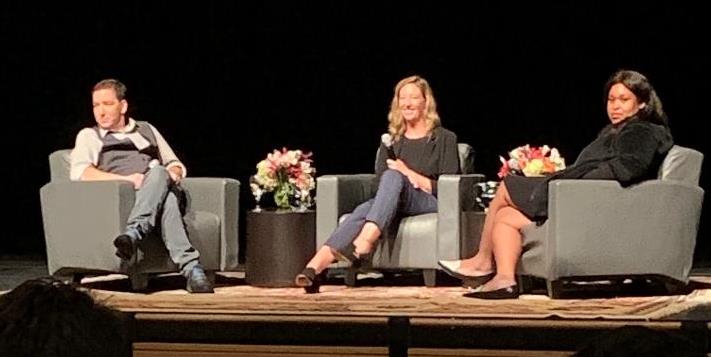
Panel Discussion:  Free Speech and Tolerance  co-sponsored by the Class of 1971 Forum.  ’62 Center, 7:00 – 8:15  PM

Friday, September 28

Class Meeting with President Mandel, Griffin Hall, 3:30 – 5:30 PM

1968 – 1972 Multi-Class Reception and Dinner, Williams Inn, 6:00 PM

Saturday, September 29

Conversation with President Mandel, ’62 Center, 10:00 – 11:00 AM

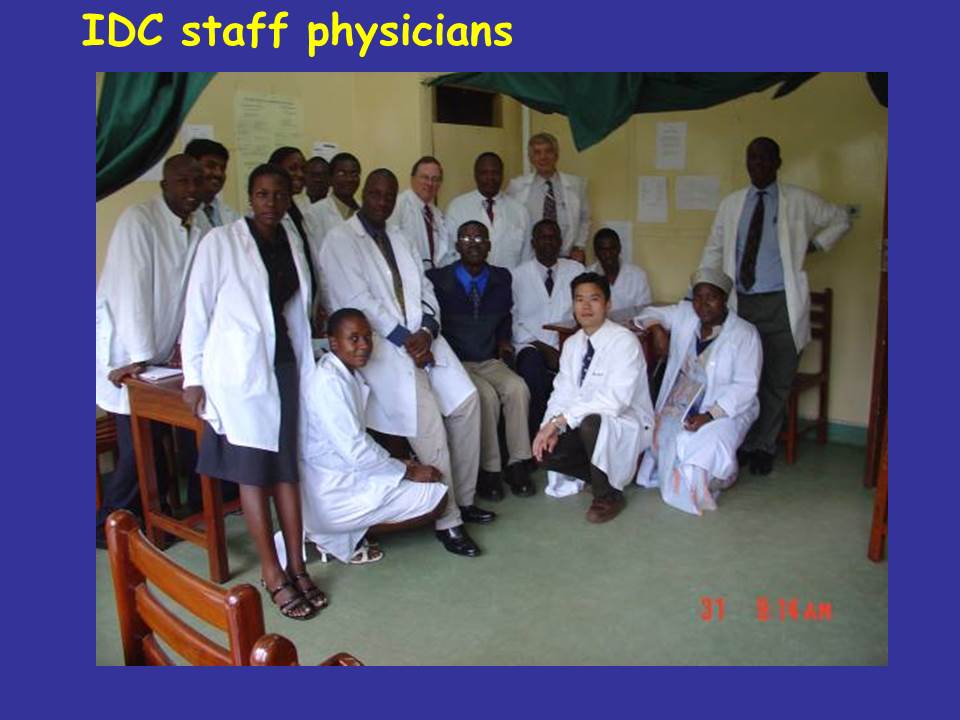
Panel Discussion:  “Williams Without Borders:  Eph Contributions to Healthcare in Africa” with Wally Schlech, John McGill, and Bob Schwed, led by Laura Estes.  ’62 Center, 11:15 AM – 12:15 PM

Reception and Dinner, Taconic Golf Club, 6:15 PM

Sunday, September 30

1968 – 1972 Multi-Class Farewell Breakfast, Faculty House / Alumni Center, 8:30 – 10:30 AM

Steve Brown writes in Class Notes:

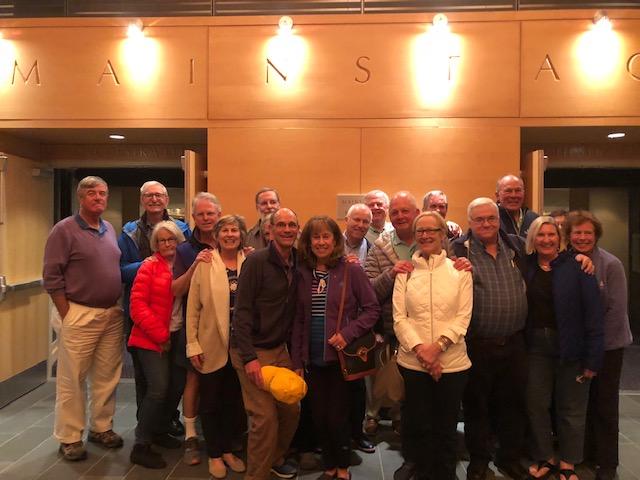
We had a wonderful Mini -Reunion weekend on the last weekend of September in Williamstown. We had classmates and friends of ’71 return for all or part of the weekend which was highlighted by: a class of ‘71 Forum discussion on the Main Stage of the ‘62 Theater, a visit with new President Maud Mandel at our class meeting on Friday afternoon, a presentation by Wally Schlech, John McGill and Bob Schwed on the Main Stage at the ‘62 Theater on Saturday morning, a Williams football victory over Trinity on Saturday afternoon and finally culminating with a class dinner at the Taconic Golf Club on Saturday night with lots of laughter, remembrances of Sey, and lots of good old ‘71 camaraderie.

Eighteen classmates and friends of ‘71 started the weekend early by attending a Thursday night presentation sponsored by our ‘71 Public Forum entitled “Free Speech and Intolerance.” A huge thank you to Jack Sands for his continued effort in making the ‘71 Public Forum a thought-provoking and well attended event on the Williams campus. At least 100 students attended as wll as a number of townspeople, faculty and locals alums. Our class was out in force with the following: John and Karen Ackroff, Sue Brown and me, Rod Brown, Dan and Jody Hunt, Dave and Audrey Kubie, Steve Latham, Ken Richardson, Jack and Arria Sands, Nick and Ann Tortorello, Mary and John Untereker (all the way from Houston), and Peter and Kathy Wege. BTW – earlier in the day, we spotted Gene Bauer, along with Ellen Shortell, trying to make a downhill put on the 6th hole at Taconic.

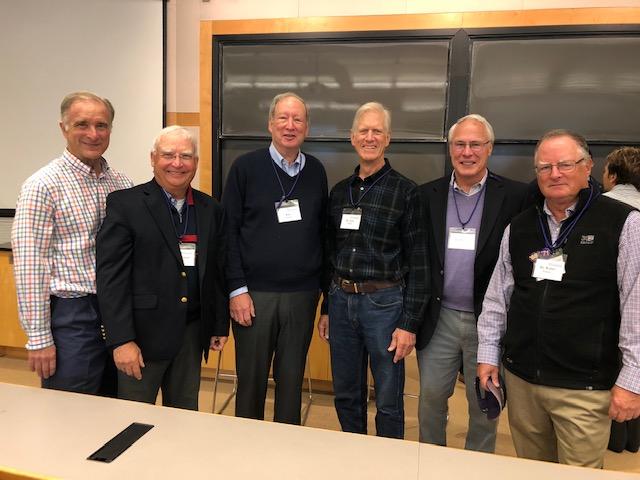
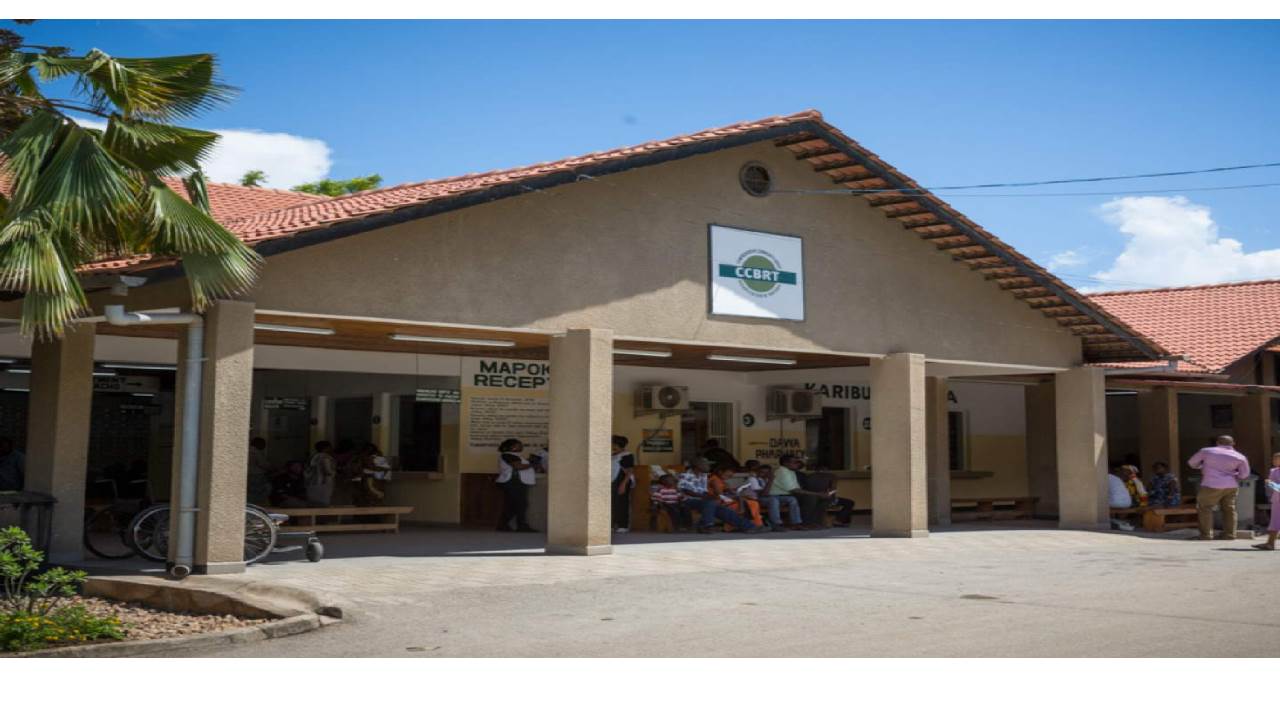
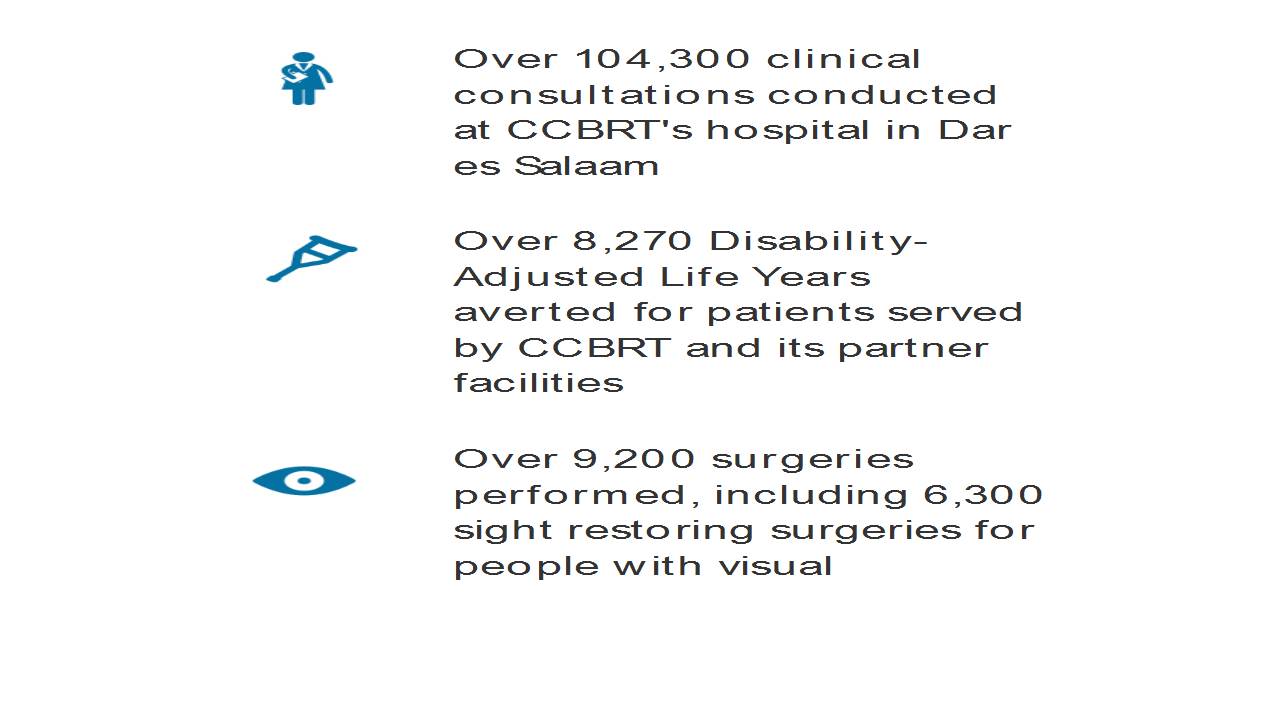
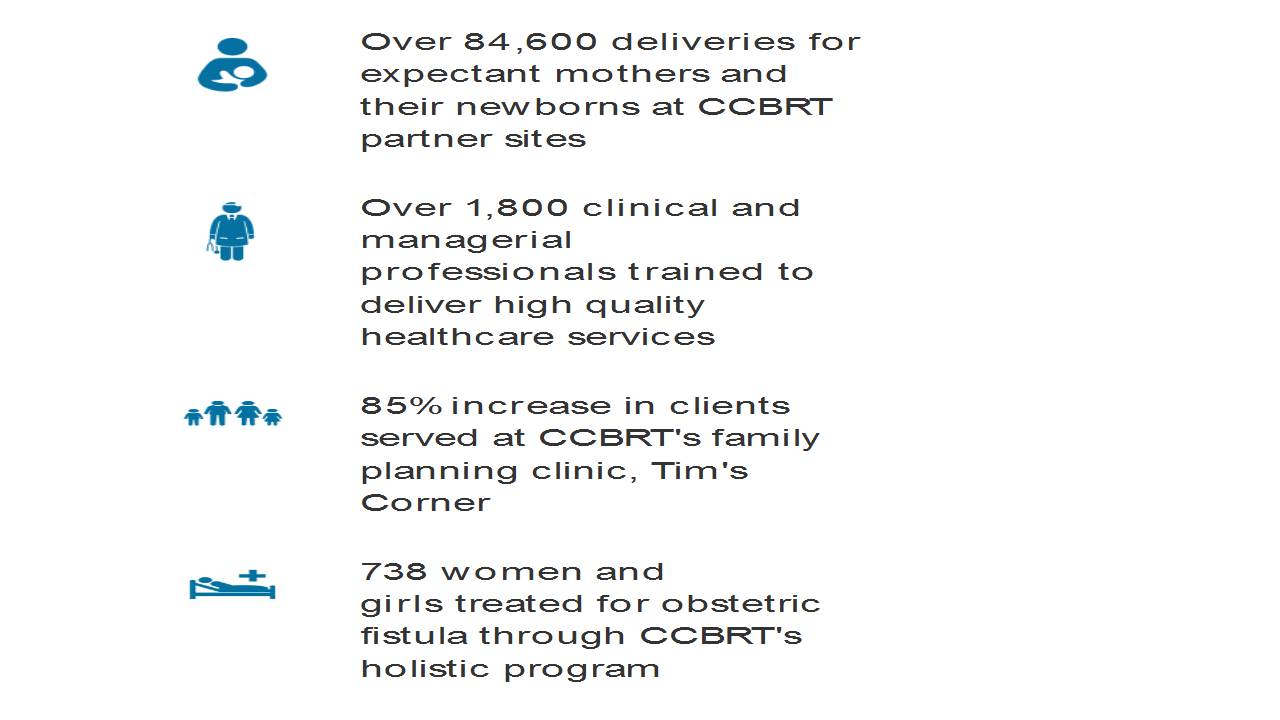
On Friday, Wally Schlech, John McGill, Mike Rade, Bob Eyre, and Gary Barth spoke to 65-70 students in a jammed Wege Auditorium about their medical careers both in the US and abroad. Our ‘71 medical contingent was joined by Bob Schwed who spoke to the students about his experience as a retired Mergers and Acquisitions lawyer working on the Board of a non-profit that is establishing a healthcare system in Tanzania which includes building hospitals.


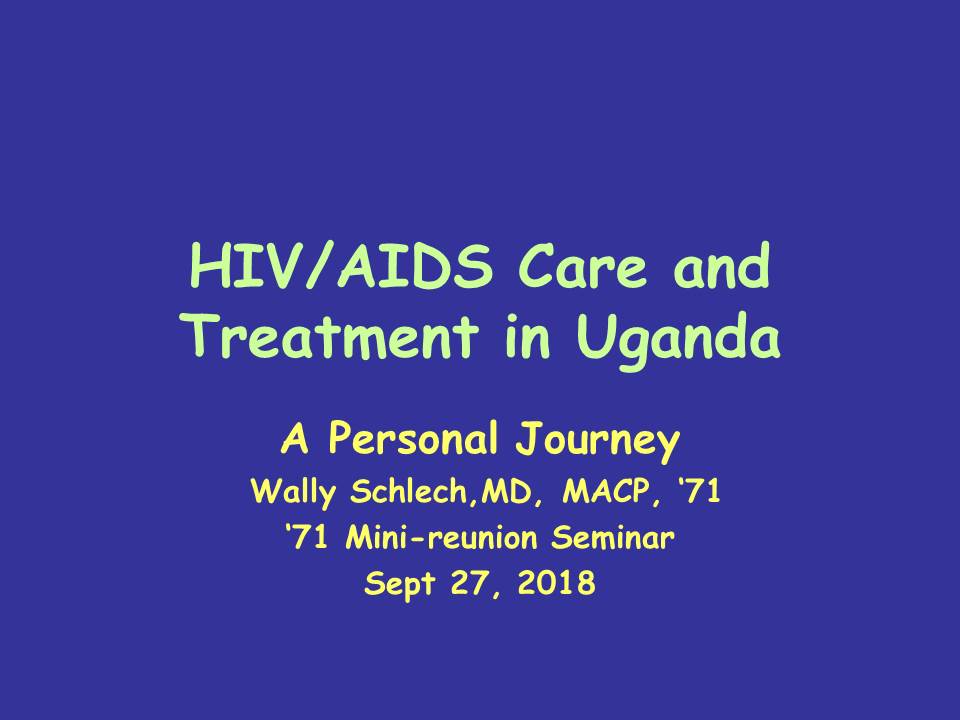
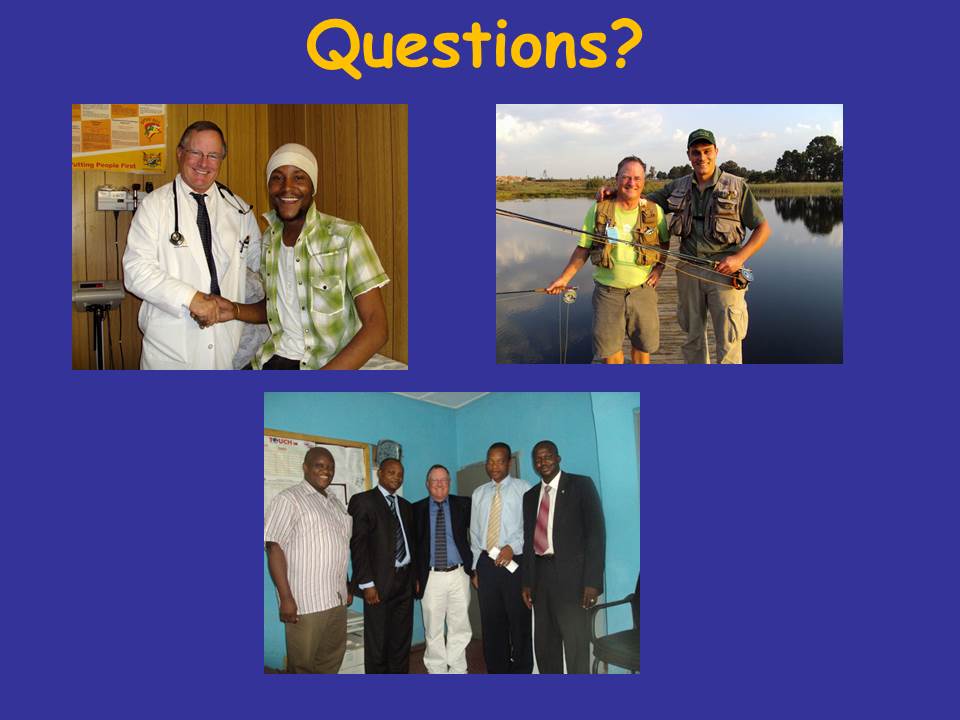
Wally has shared his presentation with us.  If you view the thumbnails and hover your mouse over the pictures, you’ll see his explanations.


as has Bob:

Later in the afternoon, we had our annual class meeting. We were fortunate to have President Maud Mandel with us for 45 minutes, most of which was covered by her answering questions from our classmates.


Reunion chair Rob Farnham reported on outreach efforts so far, including recruiting 37 volunteers to make sure all our classmates and friends of ’71 knows we would love to see them in Williamstown in June, 2021. Geo Estes and Ken Richardson gave us an update on the status of the ‘71 Class Gift, and Jack Sands, Bob Schwed, and Mike Rade reported on the 3 specific buckets of our 50th Class Gift (public interest fellowships, out Class scholarship fund, and funding for students doing research with science professors).

John Ackroff gave a very positive report on our Annual Fund. Finally, John Chambers, with John Ackroff’s assistance, wowed the crowd with a prototype of our Class’ website which is equipped with features like “find a classmate”, a digital version of every Williams record published when we were there and much much more. Finally we heard from two Williams recipients of the ’71 Scholarships who thanked the class for its generosity and told us about their backgrounds, how they found their way to Williamstown and their experience as students. In addition to those already listed, we were joined on Friday by Peter Clarke, John and Louise Finnerty, Hugh Hawkins, Roger Kaufman, Tim Murnane and Diana Michaels, Dave and Susan Olson, and Paul and Megan Schneider.

On Friday night we attended a dinner at the Williams Inn with the classes of ‘68, ‘69, ‘70 and ‘72. It was wonderful opportunity to catch up with old friends from other classes.

The Saturday morning highlight was the presentation of Wally Schlech, John McGill and Bob Schwed, very ably moderated by Laura Estes, to a gathering of about 200 alums about their experiences in healthcare overseas, particularly in Africa.
Saturday afternoon featured a tailgate at Farley-Lamb Field, a beautiful fall afternoon, and an exciting football win over Trinity (whom Williams had not beaten since 2011). Jim Lavigne along with his wife, Mary Gavin, returned to the campus for the first time in over 40 years. Jim was accompanied by Bill Pinakiewicz (“Pinky”) ’72, who looked fit enough to get on the football field if the Ephs needed him in the fourth quarter.
We ended the weekend’s formal activities with a wonderful gathering at the Taconic Golf Club for dinner on Saturday.


Before we sat down, a number of classmates shared warm and humorous memories of Sey Zimmerman. We toasted a classmate who had worked so tirelessly for so many years for our class.

Gary Barth won the “long ball” for traveling all the way to our mini-reunion from Santa Rosa, CA, followed by Tim Murnane from Scottsdale, AZ.
I think everyone left looking forward to the next time we could all get together. We look forward to seeing other classmates and friends of ‘71 at one of our events leading up to the 50th.


Fall 2017 Mini-Reunion

Steve Brown reports in Class Notes:

We had a great time at our 2017 Mini-Reunion when 32 alums and friends of the Class of ’71 enjoyed a weekend full of classes, meeting with then-President Adam Falk, sporting events and plain old good times. Here are a few highlights of our weekend in the Purple Valley. Our medical contingent was well-represented by Elizabeth and Craig Blum, Bob Eyre and Katie Eyre ’73, Ellen and Mike Rade, and Mark and Sharon Ruchman. Our doctor classmates reported that they were still enjoying their work and working hard, although there was reason to question how hard a particular surgeon from Buffalo was working when he carded a 35 on the front nine at Taconic, including an eagle 2 on the 7th. I was not aware that some surgeons in Buffalo regularly see their patients on the practice tee or putting greens. Our reunion chair and class VP, Rob Farnham, took a couple of days off from installing windows and doing masonry on his fixer-upper in Burlington, Vt., to rally the troops. We are hoping he will do a TED Talk to teach us all how to build stone walls and do landscaping with boulders. Peggy and Larry Ferraro made the trip up from South Carolina, where they retired 11 years ago. Larry fired up the crowd at dinner on Saturday night. I think he has a second career as a motivational speaker. Larry was joined on the retirement front by Joe Quattlebaum and his wife, Joan, also up from the South. Louise and John Finnerty rolled in from New York, where John is still teaching economics at Fordham to undergrads and grad students. Anne and Jock MacKinnon made the trip from NYC. Denise and Bob Schwed came, and Bob added a strong dose of dry humor to Pres. Falk’s serious remarks on Friday afternoon. Valle Schloesser earned his dinner and extra piece of red velvet cake on Saturday night by cycling up Mount Greylock earlier that day. Ann and Nick Tortorello came from Philadelphia, and Nick did an excellent job educating all of us on his group’s class gift suggestion to promote work and internships for Williams students in public service. Meg and Paul Schneider joined us on Saturday night for dinner, and both are at early stages of retirement. Mary and John Untereker traveled up for the weekend from Houston, Texas. It was a wonderful time.