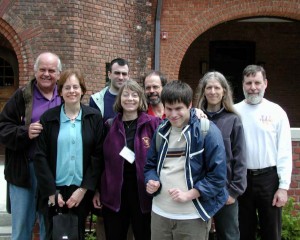
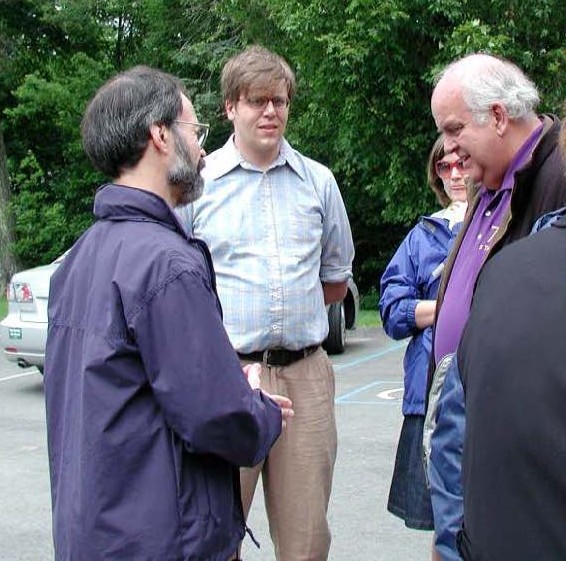
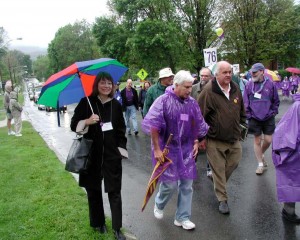
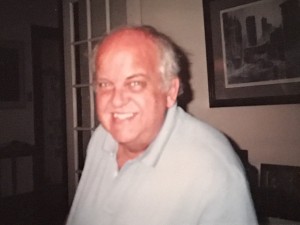
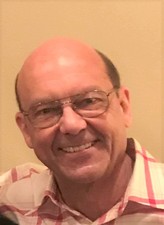
Fran Cardillo


John Ackroff has submitted the following:

December 16, 2020

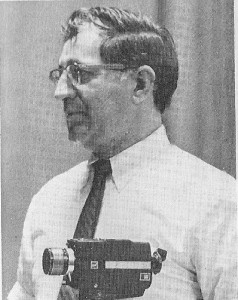
On December 16, 1970, Fran Cardillo and I convened at some obscene hour in the morning to drive to Irwin Shainman’s house.  (Fran was staying in Brooks House — a different long story — so the rendezvous was not difficult.)  We were to drive Irwin and his family to New York for their sailing to Italy, where Irwin would spend his spring semester sabbatical leave visiting opera houses.  Fran and Irwin were close:  Fran had succeeded Irwin as Director of Bands, a post which Irwin gratefully relinquished.  The fact that Fran had a station wagon undoubtedly helped seal this deal.  I had taken Symphony in the semester that was ending, and I guess I got a good enough grade that Irwin and I were comfortable spending that much time together in close quarters.

We eventually arrived at the dock on the Hudson River from which Irwin’s ship was departing.  I don’t recall going on board to see them off, but I do remember the Italians who ran the dock operation tripping over themselves to do anything they could to make “Il Professore” and his family feel welcome, which also did not escape Irwin’s notice.

Once the Shainmans were settled in and the ship had set sail, we went to Brooklyn to visit Fran’s sister.  She made us chicken livers with onions (and bacon?) on toast.  And, mercifully, coffee.  (I don’t recall there having been madeleines, and probably wouldn’t have know what they were had there been any.)  There was a fair amount of discussion was about their brother Patsy (Pasquale), who was 2nd clarinet for the Boston Symphony Orchestra.

Fran decided that I should drive back.  Negotiating the Taconic’s “Wall of Terror” in the station wagon kept us awake for that segment.  I don’t remember what we talked about, but I remember opening the windows frequently to get some “fresh” (cold) air — it had been a long day.  We arrived back at Brooks House in time for the end of the NBC news, which in those days used the opening of the second movement of Beethoven’s Ninth as the exit theme.  A fitting close to the adventure, since it was Beethoven’s 200th birthday.  Episodic memory is an interesting phenomenon, and I am really good at placing events in time, but this coincidence makes this one easy.  I can think of other significant “moments” while I was at Williams, but can’t pin them down as exactly as this one.

But this was just one moment, albeit an extended one.  Fran is probably the person most responsible for keeping me sane during my years at Williams (although there are those who might argue about how successful he was).  Sitting in his office in Chapin listening to him struggle with various etudes was somehow relaxing for me.  Visits to the Captain’s Cabin for sombreros (once I looked old enough) gave us a chance to help each other unwind.


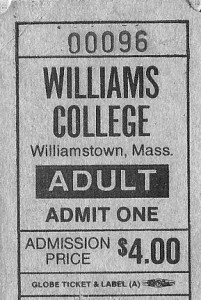
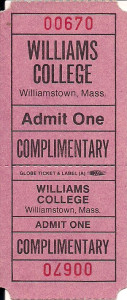
Fast forward 25 years or so.  I’d occasionally visit campus on fall weekends, usually for events related to fund raising, and would “happen” to drop by Chapin on Friday afternoon while the band was rehearsing for the following day’s half time show.  “John!” he’d say,  “Great to see you!”  Eventually, he’d ask if I would be going to the game the next day, and when I’d say that I was, he’d lower his voice, and in a conspiratorial manner, hand me a complimentary ticket, saying “Here, you shouldn’t have to pay to get in.”  This was a great savings, given the cost of admission in those days.     
 
I still have some of those tickets.  Great gifts come in small packages.  Fran gave me many.

Fall 2020 Class Notes

Class Secretary George Ebright has submitted these Class Notes to be published in January:

On September 9, classmates Michael Douglass, Russ Pulliam, and  Pat Stone hosted a one-hour Zoom webinar about the business of and life in  radio, newspaper reporting, and specialty publications during the pandemic. Michael (radio), Russ (regional newspaper reporting) and Pat (pro sports/entertainment) called on their different backgrounds to address what responsibility, if any does media owe its listeners/readers, what are differences in working for media conglomerate and working for yourself or small media company, which radio, TV stations, or print media do they watch, listen to or read and why.  Michael had a 37-year career in radio broadcasting including sales and sales management positions with Capital Cities Communications in LA, 13 years as VP/General Manager of WTOP News Radio and Wash-FM in Washington DC, President/CEO and minority partner of Clark Broadcasting in Bethesda, MD and President/Owner of Douglass Communications, LLC. Mike married his wife, Patricia, in 1986, and they are enjoying retirement in Eagle, Idaho.  Russ worked for the Associated Press, NYC, covering the city’s 1975 bankruptcy as well as a story that became the film, Dog Day Afternoon. He met Ruth in NYC, and they moved to Indianapolis, where Russ wrote editorials and columns for the family newspapers, now owned by Gannett.  He has continued to write commentary and work with younger journalists through internship efforts. He has sympathy for parents teaching children at home during the virus as he and Ruth homeschooled their 6 children through high school.  Pat somehow persuaded his remarkable urban, black, Vassar grad wife Becky to move with him to the mountains of Western North Carolina, where he fell into an editorial job at the original back-to-the-land magazine, Mother Earth News.  After a dozen years there the mag was sold, moved to NYC, and the staff let go. Not wanting to move, Pat started a different (i.e., not how-to) garden magazine, GreenPrints, “The Weeder’s Digest,” a heartwarming quarterly of personal garden stories. 31 years later, he and Becky are still creating it. (Becky is the famous one, doing historical reenactments of Rosa Parks, Harriett Tubman, Maya Angelou, and—a special prize if you know this one—Pauli Murray).

Participants in the webinar included John Ackroff, Colin Brown, Sue Brown, John Chambers, George Ebright, Bob Eyre, Jay Fahn, Rob Farnham, John Finnerty, Andy Fleming,  Hugh Hawkins, Dick Hemingway, Shaye Hester, Tom Jones, Rives Kistler, Rob Jones, Steve Latham, Jim Lavigne, Paul Lieberman, Paul Miller, Tim Murnane,  David Newton, Scott Nycum, Paul Oldshue, Dave Olson, Doug Pickard, Ken Richardson, Bill Rives, Mark Ruchman, Steve Saxby, Jeff Stein, Nick Tortorello, John Untereker, John Walcott, Mort Wasserman, and Judy and Paul Willis. – plus others.

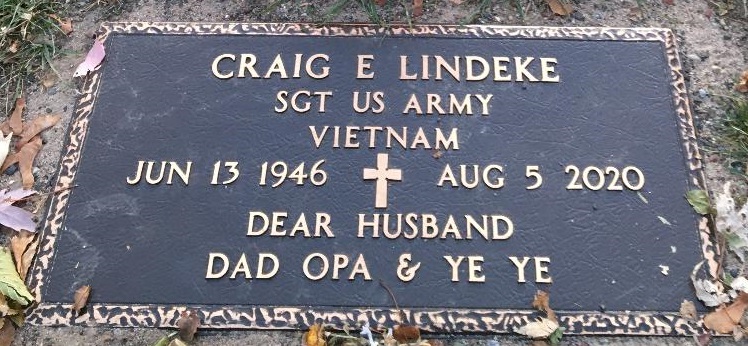
Unfortunately, I have to report that Craig Lindeke passed on August 5, 2020.

In answer to how our pets have helped us survive the pandemic, Jay Fahn gave the best reply in an email to Steve Brown.  “You ask about our dog.  Luke is an 8 year old rescue. He is mostly Bluetick Coonhound with a blend of pointer, about 55 pounds and just starting to settle into middle age. He is our wonderful playful “keeper of humans.” His predecessor was truly the great love of my life, an English Bulldog named Sofia. Nina and I were her indentured servants for 12 wonderful years.  Since she departed, there hasn’t been a single day that i haven’t consciously missed her. To say that she had a large personality would be a gross understatement. I’ve been enslaved to other dogs but none quite like Sofia. (Think 45 lb. watermelon with short legs and incredibly strong jaws).  Nina and I actually met 15 years ago via our respective dogs and they completely controlled our lives-where we lived, what type of houses we had, when and where and if we took vacations, indoor temperature, types of furniture…everything is predicated on “ Will the dog like it? Is it safe for the dog? Will the dog be comfortable?”

I’ll admit Sofia was rather indifferent to being on the ranch and was pretty much focused full time on selecting one of her many beds upon which to nap. That is classic bulldog behavior. Luke however is a great ranch dog and takes advantage of the land and wildlife smells and engages in typical hound behavior, including wonderful howling or “baying” which is not so wonderful at 2 am when he is compelled to respond to the local coyote chorus.  Our friends think we overdo the “dog thing” but we don’t mind. 

On the Ebright home front, our two golden retrievers, Hunter (13) and Bene (12), have made sure we get outside and walk them daily.  Bene, suffering from a possible tumor, has caused us the greater concern, but he keeps on chugging and his big brown eyes keep me entranced.

Thanks to Amy Lovett, editor of the Williams Magazine, I can report about the Class of ’71 Performers Webinar that took place on October 20.  Class President Steve Brown organized different kinds of performances: actor Gordie Clapp shared humor and story-telling in his Emmy award-winning style, pianist Dr. Bob Eyre played Beethoven’s Pathetique Sonata and dedicated to our classmates who have passed and a Rochmaninoff Prelude; architect and guitarist Bruce MacNelly performed his own style of improvisational guitar that he accompanies a dance company on Martha’s Vineyard; and composer/pianist Denman Maroney, who performed two Thelonious Monk compositions and joined the webinar from his home in St. Martin de Sossenac, France.

Gordie Clapp has no intention of retiring.  Actors never retire. Their parts just get smaller (their roles, Gordie would say).  After graduation, he joined a children’s theatre and summer-stock group for a short time and then wandered the continent for 40 years. He returned to New England in 2014 and lives in Vermont when he is not on Broadway or at one of several regional theaters he has been frequenting. Gordie is best known for his role as Detective Greg Medavoy for 12 seasons on NYPD Blue, winning an Emmy in 1998.

Bob Eyre retired in July 2019 after a 40-year career in urological surgery, both in academic and private settings.  Bob studied the piano (from age 3) and several other instruments until he entered Williams.  At Williams, he played tuba in the Berkshire Symphony, Vermont State Symphony, and Brass Ensemble (conductor during Irwin Shainman’s sabbatical) and was involved in AMT musicals (with Gordie Clapp). He played very rarely for the next 45 years but has now taken it up again in retirement. While teaching a Winter Study at Williams this past January, he presented an all-Debussy recital.

Bruce MacNelly is an architect on Martha’s Vineyard. He has been playing guitar, solo and in groups, since his time at Williams, and currently plays freely improvised music for a dance troupe on the Vineyard.

After Williams Denman Maroney completed his MFA at California Institute of the Arts and then taught in Michigan.  The lure of New York City brought him there.  While writing his own music, he supported himself by driving a cab and then working in advertising until 2005.  “The music of Thelonious Monk made me want to become a musician,” Denman said before playing Monk’s “Stuffy Turkey.”

Those who joined in the webinar included John Ackroff, Karen Ackroff, Dave Albert, Gene Bauer, John Barkan, Colin Brown, Sue and Steve Brown, Doug Bryant, John Canfield, John Chambers, John Conover, Pril Dorman, George Ebright, Mark Engasser, Geo Estes, Laura Estes, Rob Farnham, Andy Fleming, Mike Foley, Greg Griffin, Paul Hannan, Hugh Hawkins, Shaye Hester, John Hubbell, Tom Jones, Rob Jones, Roger Kaufman, Rives Kistler, Steve Latham, Jim Lavigne,  Paul Lieberman, Paul Miller, Jock MacKinnon, Denman Maroney, Paul Miller, Tim Murnane,  David Newton, Scott Nycum, Paul Oldshue, Dave Olson, Andrew Osman, Bonita Palmer, Greg Paxton  Doug Pickard, Irwin Rubin, Mark Ruchman, Jack Sands, Steve Saxby, Bruce Smith, Roy Simon, Dave Sobel, Jim Stearns, Jeff Stein, James Tam, Nick Torterello, John Untereker, Wally Schlech,  Jim Vipond,  John Walcott, Mort Wasserman, Ned Weihman and Judy and Paul Willis.

Steve Brown reports that Reunion Chair Rob Farnham and his wonderful team of volunteers are still at work planning for our Reunion in Williamstown next Jun 9-13 – meals, activities, seminars, and just good old, hanging-out time!! Steve and Rob are certainly aware of the uncertainty regarding whether we will actually go ahead next June, and plan to make a decision by late-Feb. – early March with about whether we are a “Go” for June, 2021. In the meantime, enjoy connecting with old friends and meeting new ones in our ’71 zooms or just reaching out to reconnect with roommates, teammates, lab partners and other classmates!! If you need info where to find them , just let Steve, Rob, John Chambers or John Ackroff know whom you would like to contact.

Visit our website at williams71.org.  John Ackroff and John Chambers keep adding more news, photos, and information than you could imagine.   Check them out and please add your own thoughts, memories of that very unique event and period.  Be sure to write your own Personal Statement so it can be included in the 50th Reunion book.  Just find a recent email from John Chambers (begging for your statement of up to 600 words), and use it to click right to your part of the book draft. Or email it to him at [email protected].

Steve Latham’s Vegetable Garden


  Steve Latham won 1st Place in the Veggie category in the first-ever Home Grown Grow-off Competition sponsored by The Berkshire Eagle, the Bennington Banner, the Manchester Journal and the Brattleboro Reformer.

Steve Brown and Rob Farnham are negotiating with him to provide the veggies for our Reunion meals.


9/11 — The Road to Recovery

Tom Willoughby’s article was published in the London maritime law periodical “The Advocate.”

The first that Hill Rivkins & Hayden knew of the events of Tuesday September 11, 2001, was the debris flying across its offices on the ninth and 10th floors of 90 West Street.  This was to be followed by bodies being hurled, from the ill-fated airliner and One World Trade Center, over its building onto the Marriott World Financial Hotel nearby.

At 0848 that morning, most of Hill Rivkins’ staff had already arrived at work.  A quick call to the building management confirmed the worst, and personnel were mustered to the tenth floor to be evacuated down the south firewell.  The building staff at 90 West performed their duties quickly and flawlessly, even refusing an offer by member of hill Rivkins’ staff to help assist in the evacuation of the building and the rescue of two individuals trapped in the elevator, who, sadly, were later killed.

Hill Rivkins’ evacuated its staff moments after the second air strike, which was clearly visible from its offices, the outline of the plane itself being silhouetted briefly on the south facade of the tower.  The 90 West building staff continued their extraordinary efforts even after the collapse of both towers, the second of which fell onto 90 West, gouging out a line of offices from the eleventh to the eighth floor and filling the lobby with fire.  So fierce was the inferno, the remaining members of staff were forced to flee through a fourth floor window via scaffolding that was, thankfully, still in place.

So close was 90 West to the epicentre of the tragedy, to look at the top of Two World Trade Centre you had to open the window and physically lean out.  The structural survival of 90 West, despite the fire, was the subject of a number of lengthy articles in The New York Times.  One article compared 90 West  favourably with Seven World Trade Centre which, despite being located further away from Ground Zero, was totally destroyed and eventually collapsed.  90 West was also compared to its modern neighbour, The Deutsch Bank, which, despite being spared fire, had an enormous crater in its north face.

Once evacuated, Hill Rivkins’ staff were kindly given a port of refuge at Healy & Baillie at 29 Broadway, where the collapsed towers were clearly visible on what was otherwise a clear sunny day.  The air-conditioning vents at Healy’s were secured, and window frames stuffed, to keep out as much of the smoke an concrete dust as possible.

Of course, the immediate concern of both firms was the safety of their staff.  Many had to walk several miles to get transportation home, groping through the near-midnight conditions on lower Broadway with wet hadnkerchiefs covering their faces.

In the days that followed, Hill Rivkins was able to get a partner, who was present in the office on the day of the tragedy, down to the site to survey the damage.  His current US Armed Forces identification card enabled him to pass south from Canal Street through the numerous checkpoints manned by NYC Police and National Guardsman.  Using mobile phones, he was immediately able to send reports back to Hill Rivkins.  Over the following months, he became known as ‘our man in Havana’.

The police officers were particularly happy to have someone around who knew the neighbourhood because, before maps became available, he was able to direct the guard units to where they needed to go.  City building inspectors also consulted him about the structures in the area as the diagrams they were given were occasionally wrong or out-of-date.

An inspection of Hill Rivkin & Hayden’s offices confirmed the firm’s worst fears.  Following a 36-hour fire, seventy per cent of the building’s structure had been incinerated, including virtually everything accumulated by the firm over its seventy-year history.  Fire marshals estimate that temperatures in the building approached 2000º F.

Locksmiths brought in from Pennsylvania were able to drill the firm’s vault open over a five-hour period and retrieve the contents, all apparently intact, including computer backup.  Unfortunately, subsequent forensic engineering could not reconstruct the computer tapes.

However, despite almost total destruction, numerous visits by the firm’s personnel unearthed, from under the ashes, all the firm’s file ledgers containing vital information for every file in the company’s possession, including those received as late as September 10.  Other than these items, a charred piece of marble from the firm’s reception desk was retrieved by ‘our man’ as a souvenir, along with his antique brass smoking stand, now melted down to its base.  In fact, ‘our man’, along with many others, became a familiar figure in and around Ground Zero.  Wearing a hard hat, boiler suit, boots, gloves, and facemask, he blended in so well with the firemen and construction men that a passing FDNY chaplain stopped and thanked him for being there.

However, amongst the devastation, there was also humour.  One example was a box of donated tee-shirts left on West Street.  Firemen would go up to the box, pull out a desperately needed clean replacement shirt only to throw it back in the box again.  It was only on closer inspection of the tee-shirts that this mysterious reaction was explained — the logo read “GORE / LIEBERMANN IN 2000”.

The file ledgers enabled the firm to resume operation almost seamlessly within two days of the casualty, along with the help and generosity of Kirlin Campbell and Keating, who provided a temporary home to the Hill Rivkins core group over the next five months.  Kirlin’s kindness, and that of Hill Rivkins’ clients and attorneys who provided duplicate files, enabled the firm to resurrect itself in a remarkably short time.  The material assistance of unknown companies and individuals who donated computer equipment and other items also contributed to the firm’s rapid redeployment.

Within five days of the attack, Hill Rivkins had divided its attorneys into teams to begin searching for new permanent offices and to buy the necessary telephone, computer systems and on-line services.  At no time did the firm consider relocating anywhere other than downtown Manhattan.  Over twenty possible sites were looked at and a plethora of new suppliers interviewed and selected in a short space of time.  In fact, within three months of the tragedy, Hill Rivkins & Hayden had entered into a lease and contracted all the services it needed to be fully back up and running.  With over 20,000 telephone systems lost in the attacks, the only real delay was the telephone company being able to provide new lines.

Hill Rivkins is now permanently relocated on the fifteenth and sixth floors of 45 Broadway.  It has been joined by several of Kirlin’s attorneys following the firm’s dissolution on December 31, 2001.  The most important observation that came out of the events of September 11 is that the firm did not merely survive that day, but emerged as a strengthened force in the field, due primarily to the character and professionalism of its people in simply solving the problem.

Craig (“The Sarge”) Lindeke


From left to right: Craig, Debbie Stein, Ben Thompson ’01, Elizabeth Lindeke, Jeff and Adam Stein, Karen and John Ackroff, outside Agard House at our 35th Reunion in 2006.   Jeff Stein, Bill Lindeke ’01, and Craig, June 2006.   Elizabeth and Craig with Rich Casden, June 2006.


From the Willwerscheid Funeral Home:
Craig E. Lindeke (June 9, 1946 – August 5, 2020), of St. Paul.


Died Wednesday, August 5, 2020 of heart failure. He leaves behind his beloved wife, Elizabeth and five children, Benjamin Thompson (Ginny Ann Glasgow), William Lindeke (Emily Parks), Anne Thompson (Max Berger), Glen Lindeke (Jin Wen Guo), and Lisa Daniels (Seth Daniels). He was the beloved Opa and      
Yaya to his four grandchildren Edgar Berger-Thompson, Eleanore Berger-Thompson, Estelle Berger-Thompson and Lotus Lindeke. Craig was a graduate of Wayland Academy, Williams College and Vanderbilt University Law School. He worked in the Minnesota Revisor’s Office drafting legislation for over thirty years. His wit, generosity and larger than life personality will be sorely missed.


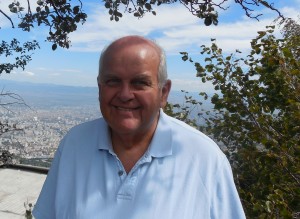
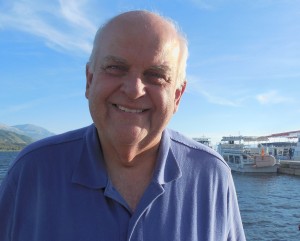
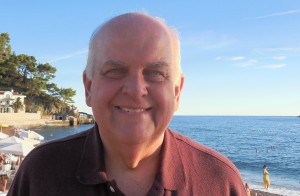
Craig and Elizabeth loved to travel; Elizabeth has shared some pictures with us:


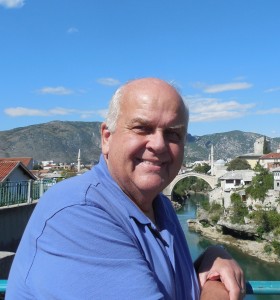
  Craig in Croatia   Craig in Macedonia  


>

Craig in Montenegro   Craig in Sarajevo   Craig in Salt Lake City


John Nelson has shared his thoughts:

Although we lived 500 miles apart, Craig and I remained in touch and visited one another several times over the years. We attended fireworks conventions in Fargo, ND and Mason City, Iowa and short-track auto races at Elko, MN, Cedar Lake, WI and Knoxville, IA. I visited the Lindekes at their home in St. Paul and their summer cottage in Wisconsin. We regularly exchanged Christmas cards and postcards of our travels. I always enjoyed getting together with Craig, Elizabeth, and their extended family. He will be missed.

The Ramsey County, Minnesota, Bar Association held a memorial service on May 7, 2021, for members who passed away in the previous year.  Craig’s memorial was read by his stepson, Ben Thompson ’01, and was written by Bill Lindeke ’01 and his wife Emily Parks, Lisa Lindeke Daniels ’06 and her husband Seth Daniels ’06, and Ben and his partner Ginny Ann Glasgow.

Craig Lindeke was born on June 13, 1946 in St. Paul, Minnesota.  A loving husband, father, and grandfather, he passed away from heart failure on August 5, 2020 in St. Paul at the age of 74. He explored the world and pursued his far-reaching interests with curiosity and a gregarious personality.

Craig spent his childhood in Minnesota, Kentucky, North Carolina, and Germany.  This early exposure to a variety of cultures and lifestyles inspired a lifelong love of travel.  After graduating from Wayland Academy in Beaver Dam, Wisconsin, Craig attended Williams College in the Berkshire Mountains of Western Massachusetts.  His college studies were interrupted by four years of Army service during the Vietnam War.  After his tour of duty, he was shipped directly back to Williams with only his uniforms for clothing.  He was known as “Sarge” by his college friends ever after.

After graduating from Williams, Craig pursued a law degree at Vanderbilt University in Nashville and joined Spear and Hill in New York City when he graduated. He enjoyed telling of his adventures on Wall Street, especially his role in the firm’s representation of the Sultan of Oman. When the firm dissolved Craig returned to St. Paul and began working in the Minnesota Office of the Revisor of Statutes. 

Accomplished and outgoing, Craig was well known at the Capitol. He formed close connections with the many legislators and staff with whom he worked drafting and reviewing legislation and rules. Craig’s easy way of communicating, listening skills and command of language helped him excel in his role of translating ideas into law.  He particularly enjoyed serving as the legislative attorney for the Ways and Means Committee.  Craig enjoyed mentoring newer attorneys and connecting personally with all of the support staff in the office until his retirement in 2011.  

Craig was dedicated to community service and the betterment of others. Through the years, he sponsored refugees resettling in Minnesota, served on the boards of Neighborhood House and the Lex-Ham Community Council, and delivered countless meals with Meals on Wheels. While mindful of his need to remain politically neutral during his career as a bipartisan public servant, he proudly displayed the United Nations flag as a symbol of world peace.  

Craig connected easily with people who crossed his path, especially his neighbors and their dogs, for whom he always had a spare treat.  Generous with his time, Craig hosted dozens of international students and staff from France and Japan in his home.  He loved taking his family and visitors on road trips visiting baseball stadiums, national parks, historical sites, and friends and family across the country.  He also loved international travel. Craig was an avid collector of everything from books, records, stamps, presidential campaign buttons, and car brochures to the Star Wars figurines displayed prominently in his office.  

Craig will be remembered by his colleagues and friends for his legal acumen, his charisma, sense of humor, and kindness.  He is survived by his wife, Elizabeth, children Ben, Bill, Anne, Glen, and Lisa and their families.  He is greatly missed.  


Williams Campus — Then and Now

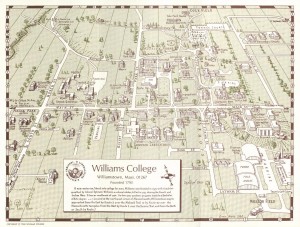
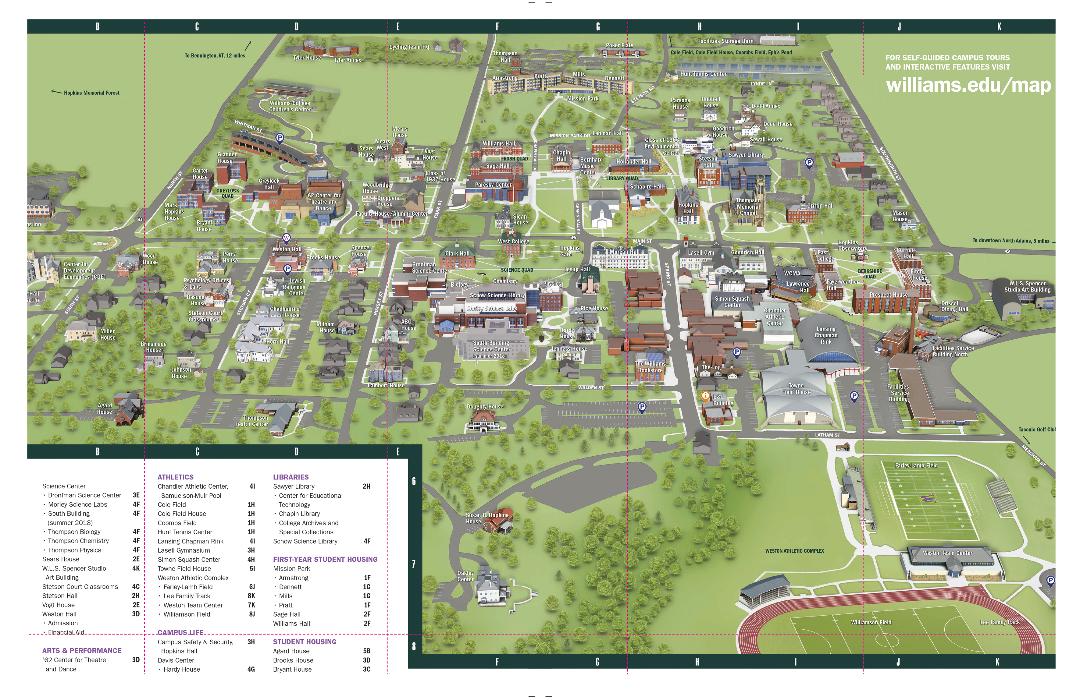
Halley Moriyama ’70 has graciously shared with us his compilation of how Williams’ physical plant has changed since we graduated.  His sources include various Williams web sites and Whitney S. Stoddard’s 2001 Reflections on the Architectural History of Williams, edited by Thomas W. Bleezarde, featuring Arthur D. Evans’ photographs.


Williams College, 1968    Williams College, 2020


My, how you’ve grown!


The Williams College campus has changed dramatically since when we were there. Nearly half the buildings are new, many constructed within the last ten years. They are energy efficient — Hollander and Schapiro Halls were the first two buildings in Berkshire County to attain LEED (Leadership in Energy and Environmental Design) Gold status — built for the internet age, and organized to promote interdisciplinary learning. Construction of a new science center to replace Bronfman began in late 2017 and will be completed prior to our 50th reunion.


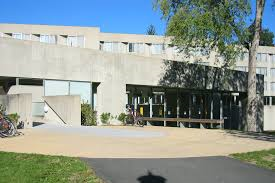
Mission Park (1971)
     
Mission Park, a freshman dorm, is located off Park Street near the Haystack monument. The dorm is made up of four sections, each of which has horizontal entries. The central spaces in Mission Park have great lounges with pool tables, a kitchen, and comfortable couches. Almost all the rooms in Mission Park are singles.    
     
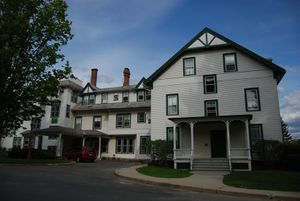
Dodd House (1974)
     
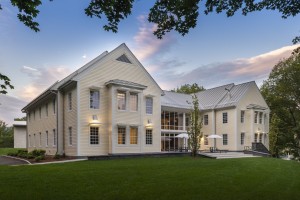
  The former Williams Inn, Dodd is a white clapboard residential dorm building comprised of singles and doubles – and almost every room has its own bathroom. Most Dodd rooms are large, and the house itself boasts hotel-like amenities, a spacious common area with a nice kitchen on the first floor, and a grand piano.
     
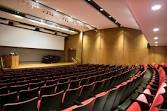
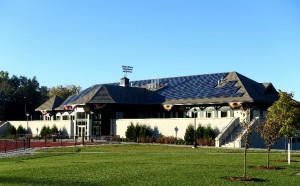
Bernhard Music Center (1979)
 
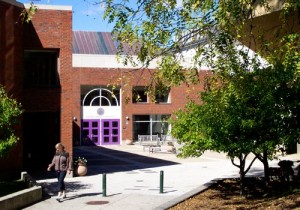
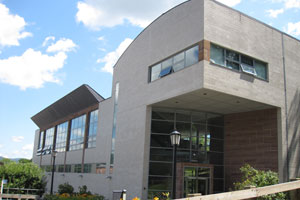
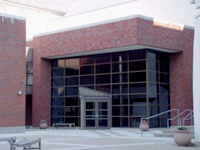
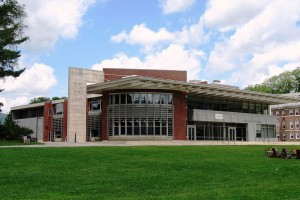
The Bernhard Music Center, which is located beside Chapin Hall, contains two classrooms equipped with multimedia technology as well as well-maintained Steinway grand pianos, twenty-three practice rooms, ten faculty offices, and concert and rehearsal spaces. Numerous concerts take place year-round in the 279-seat Brooks-Rogers Recital Hall, along with all-college lectures, classes, and other events.     

 
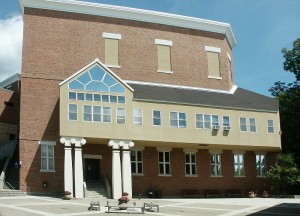
Williams College Museum of Art Expansion (Phase I-1983; Phase II-1986)
 
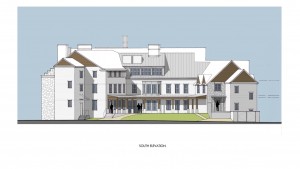
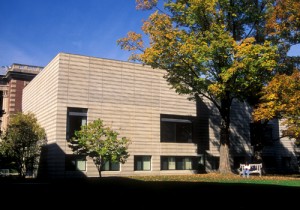
    The first phase of the expansion of Lawrence Hall involved construction of a new wing off the south side of Lawrence.  The back entrance features Ionic Order columns which cantilevers the space above (used for faculty lounge and offices), giving the back of the building an interesting composition. The new wing contains a big atrium that
became the connecting link between the old and the new sections. The second phase involved the addition of new gallery space along with refurbishment of old rooms.
 
Chandler Athletic Facility (1987)
 
The new athletic facility was named for John Wesley Chandler, 12th President of Williams College (1973-85). It contains the Olympic-length eight-lane Samuelson-Muir Pool with a diving area as well as a basketball court with adequate spectator accommodations. The new building is located off Spring Street and is connected to the squash courts and Lasell gym. Lasell was extensively renovated when the Chandler facility was built.    
 
Hopkins Hall Addition (1989)
 
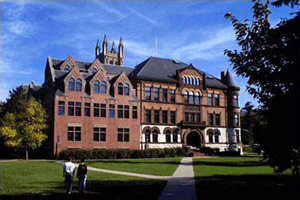
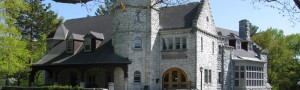
    Based on the Romanesque style of H. H. Richardson, Hopkins Hall was built as a memorial to Mark Hopkins (d. 1887). Built in 1897, Hopkins was gutted to the shell and completely renovated in 1988-1989 with an addition on the north end.

Hopkins houses the main administrative offices of the college

 
Jewish Religious Center (1990)
 
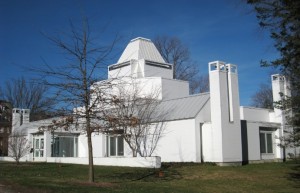
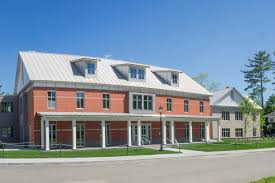
he Jewish Religious Center (JRC) is home to the Williams College Jewish Association and Jewish life on campus. The JRC is located on Stetson Court, across from the Admissions Office.
This building of unique architecture serves as temple, meeting hall, library, and kitchen.
   
 
Chaffee Tennis House and Hunt ’44 Tennis Center (1993)
 
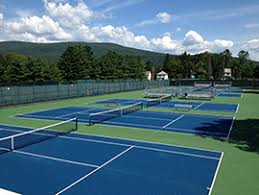
    At the southwest corner of the College tennis courts, on the corner of Stetson Road and Lynde Lane, is the Clarence Chaffee Tennis House, which, together with six new hard courts, forms the core of the Torrance Hunt ’44 Tennis Center.  Portions of the house contain trophies and memorabilia of Chaffee’s
extraordinary 32-year career as coach of the College’s tennis, squash and soccer teams.
 
Spencer Studio Arts Building (1996)
 
Prior to the construction of this new building, the studio people had suffered in many locations throughout the campus, including the cellar of the Greylock Dining hall with no windows, in parts of the former Rudnick Laundry, in portions of the former Steele & Cleary garage and then Goodrich. The stone and glass structure, which is located on the far eastern end of campus, houses classrooms, studios,     
and faculty offices. Opening off the lobby of Spencer Art building, Wilde Gallery is the primary student exhibition space on campus. Used for class exhibits, critiques, and student-initiated individual or group shows, the gallery enables students to complete the art-making experience by presenting their work to the public as finished product.
 
Simon Squash Courts (1998)
 
  In the 1990’s, the U.S. squash organizations decided that the game of squash would be improved considerably by increasing the width of the regulation squash courts to standardize our dimensions with the rest of the world.
As a result, it was necessary to build new courts, as other schools were doing. In the fall of 1998, Williams formally dedicated the Carol Girard and Cynthia Stewart Simon Squash Center, thanks to the vision and generosity of Williams alum and former squash captain, William E. Simon, Jr. ’73. Boasting twelve cement-plaster courts (nine of them glass-backed), brand new coaches’ offices, and housing the state-of-the-art Henze Fitness Center, it offers its players the finest squash facility in the country. The new squash courts are located adjacent to the Chandler Athletic Facility on Spring Street.
 
Goodrich Hall Restoration (1999)
 
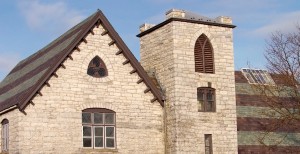
Goodrich Hall is a Gothic Revival limestone building constructed in 1859 to serve as the College chapel, alumni hall, and classroom space. The building was renovated in the late 1990s and turned into a student activity center. Today, it houses a student-run coffee bar and is a    
vibrant hub of student activity for socializing, studying, and hosting events. Goodrich Hall is also a popular summer destination for Williamstown Theater Festival events.
 
The Morley Unified Science Center (2000)
 
    In September 2000, Williams celebrated the completion of the Unified Science Center project. This project included constructing a new building, the Morley Scientific Laboratory, and extensively renovating the four existing science buildings. The net result is that these buildings are now connected in a state-of-the-art interdisciplinary science facility.
 
Class of ’62 Center for Theatre and Dance (2005)
 
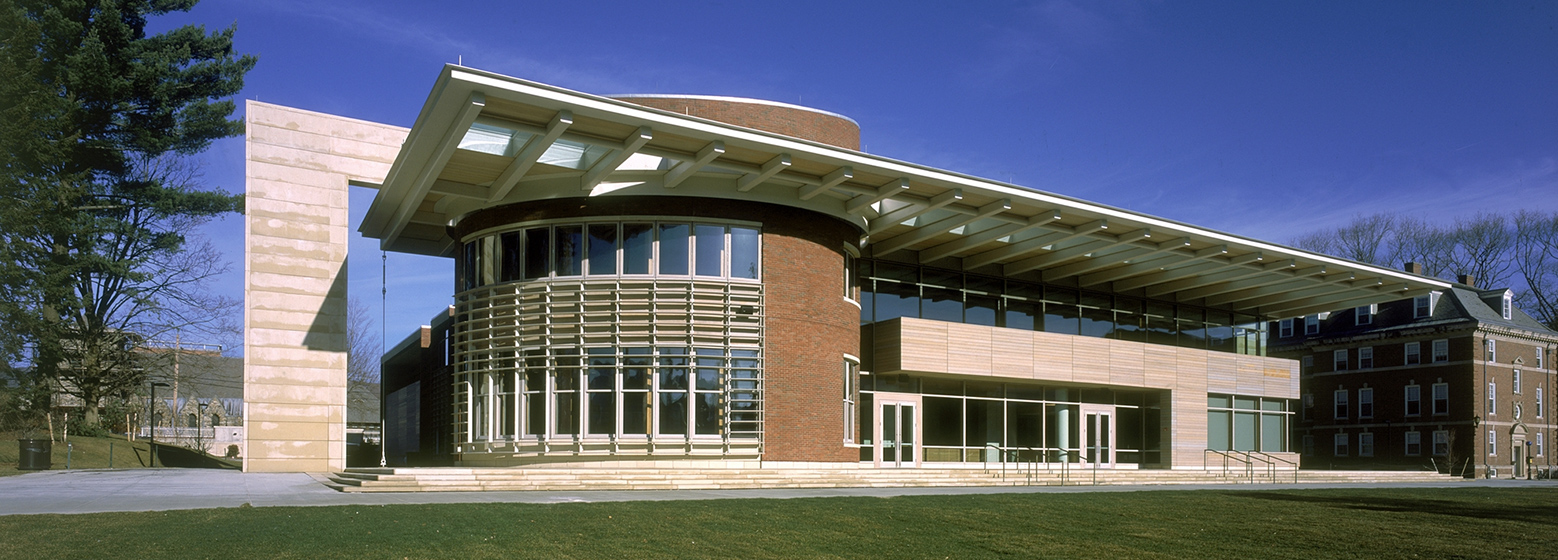
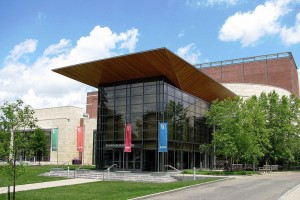
The ’62 Center for Theatre and Dance provides teaching, rehearsal, performance, and technical spaces for the Williams College Department of Theatre, Department of Dance, Williams student performing ensembles, lectures and panel discussions, intercollegiate festivals, and nationally renowned visiting artists performing and working in collaborative    
residencies with students. The Center is named in honor of the Williams College Class of 1962, whose members envisioned the state-of-the-art venue for performing arts at Williams. The ’62 Center for Theatre and Dance is the summer home of the Williamstown Theater Festival.
 
Paresky Center (2007)
 
    The new student center has been named Paresky Center in honor of a substantial gift from David Paresky ’60 and his wife, Linda, in support of the college’s endowment and financial aid program. Paresky attended Williams on full financial aid and says he both felt the obligation, and cherished the
opportunity, to give others a similar educational advantage.  Paresky Center occupies the site of the former Student Union, which was demolished. In addition to lounge areas and student organization meeting rooms, Paresky boasts four separate dining rooms, including the “snack bar,” which is a reproduction of the snack bar from the original Student Union.
 
Hollander Hall (2008)
 
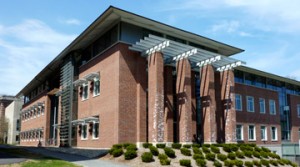
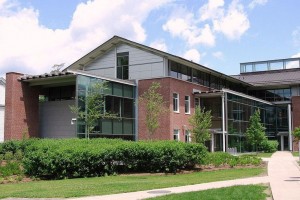
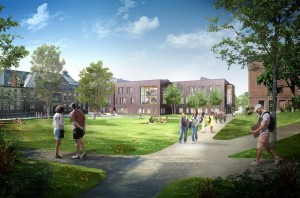
The North Academic Building, completed in 2008, was re-named in 2010 as Hollander Hall, named by Richard and Jackie Hollander in honor of their sons Jordan and Adam, both members of the Class of 2010. This facility houses classes for the humanities and faculty offices.    
Hollander Hall along with the Bernhard Music Center and Chapin Hall form the northerly part of a quadrangle that is composed of Stetson Hall and Sawyer Library to the east, Hopkins Hall and Schapiro Hall to the south, and Paresky Center to the west.
 
Schapiro Hall (2008)
 
    Opened as the South Academic Building in July 2008, the building was renamed Schapiro Hall in April 2009, honoring then College President Morton Owen Schapiro. Like Hollander Hall, Schapiro Hall houses classes for the humanities and faculty offices.
 
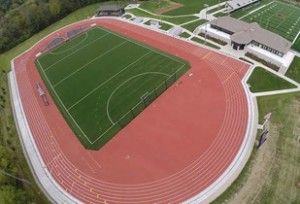
Weston Field Athletic Complex (2014)
 
The newly re-configured Weston Athletic Complex opened in the fall of 2014, and is home to Eph football, track and field, lacrosse, and field hockey teams, while also providing practice and game fields for the soccer teams in case of unplayable field conditions at Cole Field.

The complex consists of two separate turf fields, Farley-Lamb Field (long turf) for football and lacrosse, and Williamson Field (short turf) for field hockey. Both fields and the track are lighted to allow for night practices and games. The Eph track and field team races and practices on the eight-lane Lee Track, which encircles Williamson Field. Jumping pits are alongside Williamson Field and at the end of the field. The surrounding field areas are used for field events.


A team support building, located at the south end of Farley-Lamb Field, provides all the teams with countless resources. The building contains four sizable home locker rooms, two for men, and two for women, in addition to separate locker rooms for coaches.

The Ephs also have access to a training room complete with an examination room, a hydrotherapy room, and a taping room. On the second floor, the teams enjoy a spacious multipurpose room.

Teams can use the filming deck to film games or practices from a behind-the-goal line view. The building also contains offices for coaches, a laundry room, and a massive storage area for equipment. There are viewing decks on both sides of the building for spectators. This complex gives Williams’ athletes sports facilities that are among the best in NCAA Division III.

 
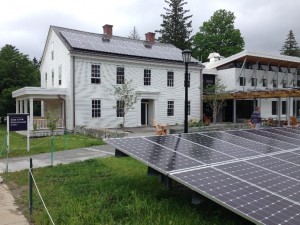
Class of 1966 Environmental Center (2015)
 
    Dedicated in 2015, the college’s new environmental center is a living laboratory for sustainability and home to the Center for Environmental Studies Zilkha Center for Environmental Initiatives.

With a classroom, meeting and study spaces, a reading room,a kitchen, and gardens, the center’s development has

combined sustainable building practices, historic preservation, and extensive urban agriculture. The college is seeking Living Building Challenge designation for the center, the most rigorous performance standard for sustainable design.
 
Horn Hall (2016)
 
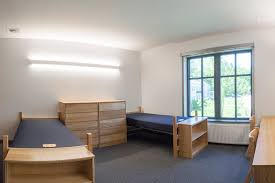
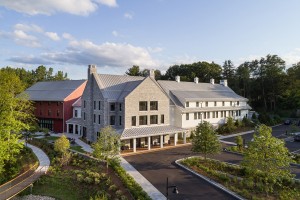
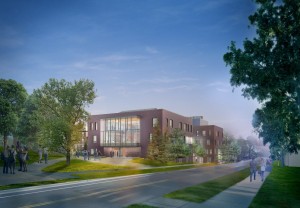
Horn Hall is the first residence hall built in 40 years at Williams College. Horn Hall, located on Stetson Court, houses 60 sophomores, juniors, and seniors.  Horn Hall is named for Joey and Ragnar Horn, alumni of the classes of 1987 and 1985, respectively.

The 25,000-square foot residence hall contains forty single rooms and ten doubles organized into six-person suites that share a bathroom. It has several lounge rooms, study areas, a collaborative meeting room and classroom space, and a backyard with patio space for entertainment or meetings. The building


has many sustainability features including low-flow plumbing fixtures, triple-glazed windows, additional exterior insulation in the roof and walls, LED light fixtures, and occupancy sensors. The college is pursuing LEED Gold certification for the building.
 
Chapin Hall Plaza and the New Quad (2016)
 
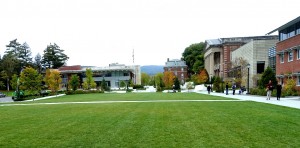
    Chapin Hall Plaza was a multi-phased transformational project that creates a new pedestrian friendly green space/academic quad in the heart of campus and completes the east/west axis from the ’62 Center to the new Sawyer Library.
 
During the summer of 2015 the old Sawyer Library was demolished and replaced with concrete walks and the extensive landscaping was planted. Concrete walks that traverse the quad at various locations also were added. A new plaza was created in front of Stetson Hall to complement the significance of that historical structure and complete the entrance to the new Sawyer LibraryThe existing concrete stairs that connected Chapin Plaza with the new quad area were replaced with a series of granite steps surrounded by large marble blocks that create opportunities for gathering and social interaction. Chapin Drive and the plaza in front of Chapin Hall were also reconstructed with brick and granite pavers that complement the more predominantly pedestrian features of these spaces.
 
Sawyer Library (2017)
 
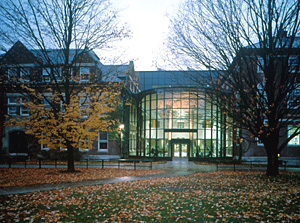
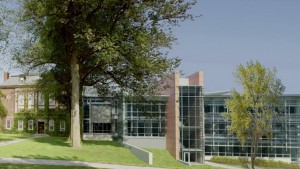
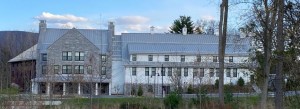
This project represents the culmination of a twelve-year effort to reimagine the Williams library and restore historic Stetson Hall, which served as the library and now continues in an archival role by housing the Chapin Library, which houses rare books and manuscripts (including copies of the Declaration of Independence, the Constitution, and the Bill of Rights). The results fuse new and old, intertwining the college’s historic roots with the forward-looking views of its scholarly community. A library constructed in the 1970s (former Sawyer Library) eclipsed Stetson Hall’s presence on campus, and its large volume diminished pedestrian flow. Two additions to Stetson Hall’s rear served as faculty housing, relegating them to the campus perimeter, far from classes and student activity. The first phase of the project was to relocate faculty to two new academic buildings, followed by placing the new Sawyer Library in the space previously occupied by faculty housing. This has restored Stetson Hall’s stature as a campus destination and connects it and the library to Williams’ student center via new green space. Stetson Hall’s interior and exterior were meticulously restored, and its reading rooms and gallery spaces house items from the Chapin Library.    


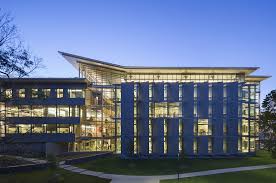
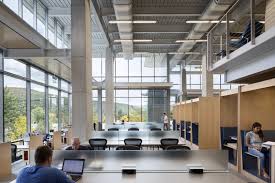
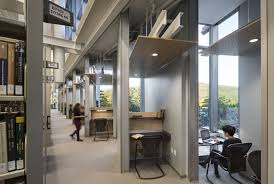
For the new 132,000-square-foot library, the team focused on collaboration. It features a wide range of solo and group study environments, and splits the space into two distinct zones: one for collaboration and one for collections. The collaboration zone is split among three levels that house reference materials, technology, and rare books. The library’s monographs are spread across four levels and are readily browsed. Study carrels ring the stacks and provide sweeping views of the Berkshire Mountains.

Sawyer Library illustrates how sustainable planning and design can deliver inspiring architecture that supports social interaction, foster a sense of community, and provide environmental stewardship. Sustainability in every sense of the word drove the design and provided the motivation to restore Stetson Hall to its former glory. Other sustainable features include optimized construction systems and natural lighting, which energizes the library’s significant footprint through two major atria and a four-story light reflector that distributes clerestory light into the heart of the building. To further bolster Stetson Hall’s prominence, the new library’s roof is tucked below its cornice line.

 
Williams Bookstore (2017)
 
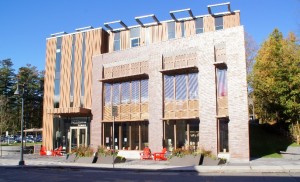
    Williams opened this 10,000 square foot bookstore, cafe, and event space in August 2017. Located towards the end of Spring Street, the Bookstore is the place to buy course books and general interest titles, attend readings by Williams faculty and guest authors, study or relax with friends over coffee, and browse a wide selection of official Williams apparel and merchandise.
The first floor includes a new cafe operated by Tunnel City. The second floor includes a private meeting room available for use by college departments and local organizations. The third-floor offices are currently leased by Overland, an organization that brings teenagers from around the country to Williamstown for global travel experiences.
 
New Williams Inn (2019)
 
Construction began in the fall of 2017 for a new Williams Inn. The site is located off the end of Spring Street. There are sixty guest rooms, a function room for up to 200 people, small meeting rooms, and a restaurant with thirty-five to fifty seats and an accompanying bar. There’s the possibility of adding, now or in the future, an annex with forty guest rooms, which    
would be available at peak times, but not need heating, etc. There is also a patio and location for a tent.The goal of the new building is to serve visitors and people who live here and who gather at the inn    
for events such as banquets, chamber breakfasts, weddings, bar and bat mitzvahs, and receptions after memorial services.  The new Williams Inn opened in the Fall of 2019.
 
Garfield House (2019)
 
    The Garfield House Project is being designed as a high-performance wood framed building using the “Passive House” design criteria and philosophy. This represents the most stringent energy performance criteria in the industry today and focuses heavily on a well-insulated airtight envelope, high
performance windows, and high efficiency energy recovery. The forty bed, 16,000 square foot structure will include ten double and twenty single bedrooms, a full kitchen, dining room & living room areas, laundry facilities, and bike storage, as well as multiple gathering spaces strategically located throughout the residence hall.
 
Works in Progress
 
Saint Anthony Hall Restoration (2020)
 
The current Saint Anthony Hall building, which houses the Center for Developmental Economics, is being renovated to remove all residential components. The kitchen and dining function will be relocated from the west wing to the east wing to serve programmatic needs and better utilize building spaces. Additional classrooms, study spaces, and offices for faculty/staff will be developed in the space vacated by    

the residential component. Restoration of the original finishes is planned where feasible.  Mechanical system and envelope upgrades are planned. The work began in the fall of 2018 with an estimated completion scheduled for the spring of 2020.
 
Science Center Renewal Project (2020)


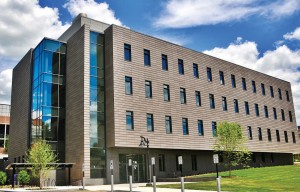
    The Science Center Renewal Project includes design and construction of two new science buildings, which together will add 178,000 square feet to the existing Unified Science Center. The two buildings are the south building (~77,000 square feet) and the north building (~101,000 square feet.). Also, as part of the project, the 90,000 square foot Bronfman Science Building has been demolished. Included in this project are two new classrooms in Schow Library and the renovation of the biology labs. The project began in 2017 and is scheduled for completion in the fall of 2020. The project was driven by growth in the number of Williams students majoring in the sciences. In 2000, about 27% of students were science majors. Today, more than 45% of students are science majors.

The South Building was completed and opened in May 2018. It houses research and teaching laboratories, shared equipment and shop support spaces, a microscopy suite, and faculty offices for the biology, chemistry and physics departments.

In summer of 2018, Bronfman Science Center was demolished to make way for the new North building, which is anticipated to be completed in the fall of 2020. While the college looked at ways to save Bronfman, it proved infeasible given the numerous changes required to bring the building into compliance with modern academic and code standards. The new building will replace Bronfman with a similarly sized building that will house more flexible space, including classrooms, a large auditorium, labs, offices, and collaborative spaces for the Math/Statistics, Psychology, and Geoscience Departments. The new, central auditorium will carry the Bronfman family name.
 

Recollections: The Strike!

Editor’s Note:  In March, 2020, we found ourselves dealing with a pandemic that abruptly shut down institutions and businesses, public and private,  reminding some ’71 classmates of another shutdown 50 years ago – the Strike!  A thread of recollections starts below. Feel free to make comments at the end, or to mail pictures to [email protected].  In May of 2021, ’70 – ’73 had a multi-class Zoom on the strike; you can watch the video here.
Jack Sands went to Washington along with Bruce Irvine and John Untereker; the Richmond Times-Dispatch told their story.

Jack adds:  A postscript to my trip to Washington with John and Bruce- The two of them went up to Washington as I first went to Charlottesville to visit some friends at UVa.-  The next morning wandering around the famous lawn in front of Jefferson’s rotunda I came across groups of students meeting in small groups to discuss whether UVA should also shut down . The group I was witnessing were demanding the college to shut down until ” women are admitted “. I casually remarked that those of us who voted to strike at Williams were concerned  about the war in Vietnam, not whether the school should be fully coed. Apparently one of the leaders on campus heard me and asked if I would return that afternoon and mention that to some others. “Sure” I said- So I returned to the rotunda after lunch and walked out to see a sea of humanity in front of me on the entire lawn. Undergraduates, law school students, med students. etc. I remember a long haired dude with a big red flag hanging off of one of the columns. The leader turns to me and then with his bull horn announces to the crowd ” We have with us one of the leaders of the strike movement against the war in Vietnam who has come down from the north to tell us why we should be closing down the school.” Well I quickly gave my spiel about hearing the debate about coeducation earlier and how ridiculous that was. I quickly got off the stage. That night the students took to the the streets  with signs :’honk for peace”. The national guard was called out to clear the streets. The next day one of my pre law buddies at the frat house I was staying out told me I better get to Washington ASAP- Apparently my picture was in the college newspaper and I could be arrested for “crossing state lines with intent to start a riot”. I got to Washington as fast as I could. Can’t remember if I saw John and Bruce there, but I do remember being bored as Jane Fonda spoke. Everyone was having a great time, swimming in the reflector pool, some in the nude. With no violence to be concerned about I left town.

Dave Olson replies:

The 50 year cycle is an interesting basis for reflection.  The article mentions the trip to Washington to be Marshalls.  Many of us went on that trip and had different experiences.
 
I recall staying at a church within walking distance of the Washington Monument and the large lawn.  We traveled down on a bus with students from not only Williams but other colleges from the area.  We arrived the night before the march.
 
The night before the event, there was a “briefing” from an individual who had just mustered out from the army.  His last role while still in service had been to watch and record information from the ever more common anti-war events with his camera.  He said that some of the people, whom we would see the next day taking pictures of the crowd, were not just other students.  Instead, these were the folks performing his former task — recording what was happening in photos.  They were then loaded into a data base for potential future use.
 
We were trained to sit back to back or facing the crowd.  We were to sit in the front right and be the buffer in case there was a disturbance and a rush of the stage.  We were to “cover” and block the exit path for the speakers and the other organizers.  Thankfully our role as cannon fodder was never needed.
 
We walked back to the church, but the streets were very crowded.  At times, there was a discussion in the crowd of “going to walk past the White House.”  We knew that there were three rows of buses  staggered like bricks in front of the WH.  As I recall, Nixon was there at the time and a strong response was surely expected (and some were looking forward to the confrontation).  Later we heard that there had been discussions about using tear gas, etc.  
 
I declined the offer to participate and made it back to the church.  After a dinner of beer, chips, pretzels, and dip (there was never any salsa back then), we went to the Lawn to hang out.
 
Around 11:00 pm, we were with a small group sitting in a circle with a lantern between us telling tall tales.  We started hearing some noise like engines.  A little time later, we started to see flickering lights in the darkness.  On the horizon, we then started to see pairs and then a growing line of lights, and the sound of the engines became much more distinct.  A bunch of police motorcycles were coming across the lawn.  There appeared to be a long line of them, and that line was getting closer.
 
I quickly did the prudence/valor assessment, and decided to leave.  Now I was trying to run in the black motorcycle boots.  I became a swimmer because I was not really too graceful running on land.  Had to wind my way through unfamiliar streets to return to the church.  WE spent the night on the roof watching the stars and chatting about the day’s events.
 
Quite a time to remember.
 
From George Ebright:
 
Thanks Jack for your article about the Strike.  Thank God we have good memories of our wonderful Williams years.  

I remember going to Washington, too, for the protests against the bombing in Cambodia.  I jammed into a station wagon with Mark Udall and eight other friends.  We stayed at Rep. Mo Udall’s house in McLean, VA.  I had incredible talks with Mo because of my friendship with Mark and our Williams connection.  I also remember the buses that Nixon used to barricade the White House.  There was a concert with Judy Collins next to the Washington Monument until Abbie Hoffman took over the stage.  I jumped in the Lincoln Memorial’s reflecting pond with all the hippies who were skinny dipping there until the Park police chased them out.  Yes, their motorcycles created a paradoxical environment.  Not as noble as your recollections, Dave.

I think the government functioned better with Hank Paulson. a Williams alum, as Secretary of Treasury.  Oh, stop name dropping, George.
 
Steve Brown calls up three recollections:
 
We all remember the strike in the spring of 1970. Nothing had ever happened like it before or since until this year. I have three distinct memories.

  The first was the power of Chapin Hall.  Students were sitting in the aisles, the balcony was jammed, and the student speakers were electric. We were not there to learn but to make our voices heard in a matter that directly affected each of us (depending upon the luck of the lottery) and our friends and classmates. I have attended a lot of sporting, entertainment and political events — but none of them can match that day in Chapin.  I can still hear the calls of “Strike, Strike, Strike” every time I return to Chapin Hall.

   Second, Mike Foley, Jack Curtin ’70 and I drove down to Washington DC on the night before the March because we wanted to make our voices heard again.  We spent the night with a hometown friend of mine at George Washington Univ. and were unsettled by rumors that troops who had just returned from Vietnam were spending the night in the basements of nearby government buildings in case they were “needed” the next day. We attended the gathering the next day with tens of thousands other students there to make their voices heard. There were many more people and  louder voices but, for me, it lacked the personal impact of Chapin.  After the protest finished, we  drove straight through the night to return to Williamstown.

  The third and completely unexpected (but most long-lasting) memory that I have of the strike was of the time that I got to know Sue much better. Our strong friendship, thanks to an introduction by John Untereker and being in 3 of the same classes,  had started to develop into something more in very late April before the Strike.   Freed of classes, homework, and sports,  that developing relationship bloomed throughout the last 3 weeks of May, 1970 and continues until this day.

And speaking of John Untereker, let us hear from him about the Strike:

The student strike in Spring 1970 was a seminal moment for me. As crazy, dynamic and violent as the ‘60s had been, my recollections were mostly happy ones of high school, friends, college, music, sports, theatre, etc. The college closure definitely amplified my consciousness and seriousness regarding the issues.

I turned strongly against the war sometime around late ‘68 or early ‘69 upon learning that our country had abrogated its obligations under the Geneva Accords of 1954. The confrontation with the Ohio National Guard at Kent State was a shocking moment and I remember the student meeting/vote in Chapin Hall vividly. Honestly, I don’t remember how enthusiastic I was about the strike itself.

With some crucial inspiration from my good friends Jack Sands and Bruce Irvine, I decided to do something meaningful with the time. We ventured to the DC metro area and gave talks to several independent schools in Virginia. Our message was that non-radical individuals could and should justifiably question our government’s policy. We also had the opportunity to stay with Representative McCloskey (R, CA) and attend Congressional briefings. I was proud at the time that I was trying to do something constructive about a major political issue. Then there was the march on DC that I mostly remember as a massive lawn party. Thankfully we survived. Later, I learned that President Nixon visited some students at the Lincoln Memorial. I was appalled that he chose to only talk about college football with them. In a strange way, I pitied him for being so tone deaf/insensitive.      

I believe our nation has paid a high price for never quite getting this whole period behind us. Later, I read Schlesinger’s Best and Brightest. The book confirmed that our government’s policy and actions were even worse than I thought. I felt proud that so many in our youth recognized that and tried to do something about it.

As a lifelong procrastinator, I immediately recognized the opportunity that the strike presented. No school work was done until early September ’70. I completed an Am. Civ. paper and Architecture project just under the wire. Nightmares ensued well into my 40s triggered by my subconscious thought that I did not finish them and never graduated. Maybe this recap will trigger them again. God willing, I will let you know in June, 2021.


Rob Jones recalls

The Strike of 1970 was an historic event in which many of us played some role. I remember sitting in Chapin Hall listening to various faculty members saying they favored the strike, and wished  students to participate in it, but in no case happy with the idea of individuals “going off and painting their boat,” and using it as an excuse to take time off.  

I might have been one of those who sat by the sidelines, as I was in the midst of changing my major, and refiguring life after a Winter Study Project that preceding January. After traveling to Great Britain to study and write about  the National health Service in England for my project, I developed an insatiable desire to travel. 

After thinking more about the comments that Clay Hunt and others made that day at Chapin, however, I called a close friend, Ross,  who was going through something similar at Wesleyan, and he and I took off for DC to register our concern for the Administration’s new incursion into Cambodia and the escalation of the war in Indochina. 

We had connections to Charles Percy,  Illinois Senator, and made plans to meet with him. We spent 30 minutes in his office speaking with an aide, registering our concerns, and 2 minutes with the Senator, mainly getting head shakes and nods. 

In addition, my sister at Hood College in Frederick Maryland wanted to know more about the war, and invited me and my friend to speak to some interested Hood coeds. Ross and I quickly became “experts” on the war in Vietnam, and, after rallying around 30 of my sisters’ friends at Hood, also became inadvertent organizers.  We came back to Hood to speak once again, and were banned at its entrance gates  by campus police. They called us communists, and told never to show up again.

Nevertheless a bus of coeds was assembled and we all participated in the DC demonstrations in some way. I do not remember coming in contact with capital or city police, but I do remember the smell of tear gas.

After two weeks in DC, Ross and I came back to Middletown.  We watched the newly released documentary on Woodstock. I will never forget a person in the audience, right behind us, getting up in the middle of the show, running down the aisle, and running right through the movie screen.  Clearly wacko  from LSD. Luckily there was no brick wall right behind the screen, but it did end the show pretty quickly

That summer I returned to Europe, with a book bag full of course work which needed attention.  Fittingly,  that bag was stolen in Assisi, Italy, but eventually found its way back to me, although not in time to be of help in completing my missing Junior year semester. 

That summer was notable for a number of reasons, chief of which was meeting my future wife, Mica, and second, traveling to Prague July 4th. I was never more happy to be an American than the moment we passed into Austria from Czechoslovakia.

I finished the year as an exchange student at Vassar, missing my Perry House Photo, meeting some interesting people, becoming buds with Corky Corkran who also was an exchange student there , and taking some amazing courses on European History.   

All in all, it was a  very formative year. 

Blair Gordon

 
October 29, 1949 – February 21, 2020.
 
Blair Macleod Gordon was the beloved son of the late Janet and Clifton Gordon and brother of Megan Cooper, brother-in-law to Terry Cooper, uncle to Chelsea Stephan and uncle-in-law to Michael Stephan. Survivors also include cousins Carol Gordon, Bruce Macleod and Ginger Macleod. Born in Stamford, Connecticut, he grew up in Connecticut and Ithaca, New York, and graduated with degrees from Williams College and University of Texas-Austin. He moved to Los Angeles in 1973, where he devoted his career to television market research. He retired as a senior executive at ASI Market Research. Blair volunteered at Braille Institute, Project Angel Food, and Glendale Memorial Hospital. He spent nearly nine years as front desk greeter at the hospital where he was loved by all.Something beautiful happened on the day of his passing. A hummingbird managed to enter his home, and hovered at the window by his bed. This symbol of love, joy, beauty and goodness is the true essence of Blair Gordon. He passed away peacefully, surrounded by loving family, following a recent cancer diagnosis.Blair’s lifetime of contribution and concern for others is an inspiration. He impacted the lives of friends and family so profoundly and he brought immeasurable joy to all. He will be dearly missed. According to his wishes there will be no memorial service.4

Published in the Los Angeles Times February 27, 2020.

Rod Brown’s Williams Experience

Rod Brown tells us about his Williams Experience:

My first day as a freshman at Williams began on a somewhat surprising note.  One of my roommate’s parents was an effusive lady from North Carolina.  For a Long Island kid who had no experience with a southern accent, but determined to be very polite on first meeting my roommate’s parents, I found myself vigorously nodding my head as she spoke to me. I realized after a few minutes that I did not understand a word she was saying, but I kept responding “Yes Ma’am.”  For all I know, she was saying “You are a complete idiot.”  “Yes Ma’am.” Who knows?  In any event, no permanent damage; the roommate is a friend to this day.

I was a first generation scholarship student at Williams.  The difference between my high school and Williams, both academically and socially, was both striking and challenging. My ability to focus on addressing these challenges was largely overtaken by the political events of the day.

1967 was an unusual year.  The Vietnam War dominated the news.  I became quite active in working for Gene McCarthy’s presidential primary campaign, canvassing in Massachusetts and then New Hampshire.  At that time, one often had to explain that “Gene” was not to be confused with “Joe.”  I still remember at one house the poignant experience of speaking with a woman who had lost her son in Vietnam.

I also attended with classmates and acted as a marshal at a demonstration in Washington, D.C.  A former Williams graduate put us up at a school he headed.

In all, it was a strange time to be “at Williams.”  Physically, I was there, but for all my time at Williams my basic focus was on the outside world.  Virtually every evening, the news reported “body counts.”  For better or worse, during my time at Williams, I never felt that I truly experienced being “in college.”  Things culminated in 1970, when the Spring semester ended abruptly and protests against the War took center stage.

At that point, I had decided to study philosophy at the University of Heidelberg. I had realized by my junior year that no matter what course I took, I would still write philosophy papers. Virtually everyone I was reading in philosophy had originally written in German.  I was inspired by the philosophy and political science courses I took at Williams, especially with Prof. Kurt Tauber, to focus on political philosophy.  Williams had given me a deep love for learning, so off I went to Europe, having designed my own senior year abroad program.  I graduated in abstentia, and spent an additional year to obtain a Masters in Philosophy.  The final irony is that, although during this time I was physically away from Williams, I carried then as I do to this day, the learning ethos of Williams.


The Value of a Williams Education

John Ackroff reflects on the value of a Williams Education:

I took an early retirement from Lucent in 2001.  There was really no choice; it was either resign on a particular Friday, with enhancements that would increase the pension payments and health care benefits (which would be drastically reduced later), or be laid off the following Thursday.  I took the retirement, applied for unemployment benefits, and the ruling from the State of New Jersey (there were lots of us in this boat) was that while we “retired voluntarily” we really had no choice, given the alternative.  The ruling also said that since we were collecting pensions toward which we didn’t contribute, our unemployment payments would be reduced by the amount of the pension.  I was happy to learn that my pension was greater than what unemployment would pay.

I spent about six months looking for work in telecom.  There were opportunities, but many at salaries I would not accept.  I felt my time and knowledge in the industry, let alone contacts, were worth more than they were offering.  So I did not take any of these offers.

I was offered an opportunity to teach at my local County College.  After the Lucent buyout offer was made, one of my co-workers told me that her husband was chair of the Psychology department of the college, and I might be able to teach for him.  The three of us had lunch one day, and I think that was my job interview – I was offered a couple of classes there.  I took that up, at the princely salary of $1,500 per course.  While I was there, Karen’s lab supervisor found an ad for a position at Rutgers.  I followed that up, and, long story short, finished my career at Rutgers.

The interesting thing is what happened while I was at the County College.  There was a local event for students who had been admitted to Williams, along with their families, to encourage them to accept their offers.  I was asked to attend to help these folks decide that Williams was for them.  So my first thought was “Okay parents, tell your kids to go to Williams, so when they’re laid off at 50 they can accept a low-paying job”.  Not a good sales pitch.  But then I thought about it a bit more, and realized that the message was “Tell your child to go to Williams so that when he or she has to re-invent him- or herself, he or she can.”

For my first job, at Bell Labs, part of the reason I was hired was that a person with my background could figure things out and solve problems.  I credit Williams for helping me with this.  My time and work in graduate school gave me extra letters after my name, but didn’t really teach me anything substantive.  (For a time, I knew by heart the logarithms for integers 0 – 20 to four digits, but that doesn’t get you much at Starbuck’s.)  But it was at Williams that I learned how to solve problems.  The greatest lesson I learned, which I tried to pass on to my students, was from Richard Rouse:  if you don’t ask the right question, you’re very unlikely to get the right answer.  Understand what the real problem is that you’re trying to solve, not just its surface manifestation, and go after that.  I think it was my training to do that that led Bell Labs to hire me in the first place.  From Bell Labs, I was moved to AT&T Bell Labs, then AT&T, then Lucent, and now we’re back where I started this tale.  But Williams played a part in all the phases of this story, and my experiences there helped me through each one.