Ice-out

From John Chambers:


Ice-out

I thought I was keeping a close eye
Each day inspecting thickness
Gauging the days until ice-out. 
Sixties some days, below 
Freezing some nights
Parcels of shoreline peel away
(Not our dock, mind you 
Shadowed by the elderly white pines)
But a three-inch crack appears
From the swim dock on the point
All the way to the island
And another, along the shoreline
Twenty feet out
Straight as a surveyor’s transit
Then torrents of rain
Puddles atop the ice
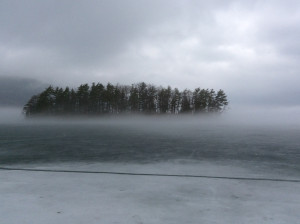
A mist that holds the island aloft
Chased by bursts of sun
Our dock unlocks a bit
Though the sheet still grips the bay
Another week, I predict
Only to wake surprised
By ripples from the north
By lapping water
By ice-out.

Forty-four Years, and A Walk In The Outfield

Bert Berarducci has shared two poems:


Forty-four Years
8/1/2020


August 1, 2020
Going into our 44th year
More than numerical symmetries
Not always perfectly square;
Our peculiar, personal cosmologies from far distant paths
Forge-welded into this one out of all;
 
Energy inputs from a few backward spinning electrons
Settling together into one orbital
Despite radically different nascent realities,
Like two rogue planets
Converging onto one interstellar path;
 
Though the space allotted was free and sure
Always one step ahead of the dour.
Clashes inevitably occurred
Without incurring lasting damage from their impact energies.
 
There have been hiccoughs for sure
But mostly we’ve succeeded
You’ll have to admit
Nothing’s ever perfect
But faithful effort and best intentions have always remained
Searching for the more perfect union
In this our third-third of life together.
 
Don’t you think
Things have stayed mostly on balance?
Shivered and knocked to a knee
But never to ground.
Given some of the possible outcomes
That’s saying something
I think…


A WALK IN THE OUTFIELD
(Celebrating the marriage of Liz to my son Tom)
10/16/2020

There was a time, my son
That seems like a very short time ago
When all it took to fix momentary tribulations,
A tough loss,
A strike out with the winning run on third,
Or anything else that seemed earth shaking from the previous moments,
Was a walk in the outfield after everyone else had gone home;
From foul line to foul line
Once, twice, however long it took
Teasing perspective out of frustration,
Snatching victory from the jaws of defeat.
 
Turning setbacks into life lessons,
Is what we both learned.
But now the years have passed, too quickly I might add,
And my legs will not carry me on similar walks.
But, you see, the patterns have been set and
Now you have Liz, your trusted life-partner
Who stands willing and able to walk in my stead,
She who trained for this moment on frozen slopes
Schussing down huge mountains on feet
Adorned with cutting flat boards.
 
Such daring and speed are not needed
For walks in the outfield like ours.
You both seem to sense your
Common ground in newly explored fields of green.
So many worldwide walkabouts you already have shared
Seeing life while enriching each other’s lives,
Whether you realized it or not.
 
New territories will undoubtedly beg for conquest
But you will meet them together now.
Your walks will be paced differently from ours
And undoubtedly will address different ups and downs.
This is as it should be
In case you were wondering.
 
No world will remain the size of an oyster.
Problems seem bigger when you are your own navigator
Through life’s troubled waters,
But big problems become pearls
By finding an outfield to walk in
To ease an agitated mind.
 
You now have another partner
To ‘walk those lines’,
Walks that will never change their effect
If you both remain open
To each other’s harmonies
And unique musical themes.
So, don’t ever forget the structure and forms
Of our original walks in the outfield.
 
They may be but a beginning cure for anything
Tormenting you and/or Liz
Out of the froth and the chop unsettling your seas,
Or even a seemingly placid harbor.
What exists, after all, is your shared journey
Enabled by your bonded slivers of universe, space, and time.
Resolution can be but one purposeful walk away.
Just like it was for us way back in the day.

Bridges and Contours

Here are two poems from an author who wishes to remain anonymous.


Bridges
2/15/21


The February dormancy
arrives with a layering of ice,
a frozen connection
across the pond.
 
The subject of this plane of reunion
coupling Nature’s bodies,
presents as a fissure
in human relations.
 
This bridge,
encompassing properties mysterious,
moves between material states
with stealth.
 
Its transitory dimension
and translucence or turbidity,
unsettling as we traveres it,
yet exhilarating as we engage it.
 
I note the deer
with an innate sense of trust,
move across its impermanence
as an avenue to sustenance.
 
There is a natural recognition
of symbiosis and respect.
This gateway to the present
no longer hostage to past properties.
 
This trust, however, suffers
the faint fear of a foothold
softened by time and
certainty’s loss.
 
The bonding and breaking
within its molecular structure,
activity beyond our gaze,
serves notice of fragility’s enablers.
 
But what of bonds
that tether and snap in silence,
no longer of Nature, but emotion?
Is not the human formulation as impermanent,
subject to undetected transformations?
 
Is time our nemesis
in a movement to a state
where listless vapor infuses our memory
and renders friendship weakened?
 
What bulwark is there
to combat diluted contact,
which drains
intimacy, sharing and growth?
 
It is an irony that ice in relations
may act as a more formidable bridge, once thawed,
to other states of connection
more enduring and with greater transportability.


Contours
2/18/21


The topographic map,
marking lines of earth’s history,
rhythmic and undulating,
a key to unseen mystery.
 
It is puzzling to decipher
a reading more visual,
for lines and contours
are never quite usual.
 
The surfaces withheld
in a state of unknown.
Peaks and swales divulged,
no scenery overblown.
 
A crag or a bluff,
a butte or a stone,
can be fashioned in shape
but eludes all tone.
 
A plain or a meadow,
its grasses askew,
does not share its secrets
of various fescues.
 
The oak tree exists,
standing majestic and proud,
beneath a dark sky,
ensconced in a cloud.
 
Their faces come forth,
but no longer a landscape.
Rather, my friends on a screen,
without any handshake.
 
I see sands and crevasses,
steep rifts and small mounds,
pocked marks and scar tissue,
rugged lines all around.
 
They are contours again,
a map more revealed,
of faces I know,
a history congealed.
 
Their stories stand out,
but so far untold,
so much to discover,
indications so bold.
 
There is mystery the same,
as both share a drama,
with markings that etch
the forces of trauma.

The Peregrination Arc

Would the faculty at Williams describe their offerings as a marketplace where entropy reigns supreme? How methodical can one be in shaping  randomness? And is this really the mysterious alchemy of an education in a liberal arts forum, a process of infusing chance with an inexplicable chemistry that creates the likelihood of a known outcome?

How ironic the above reads, but how real this irony regarding the lives of classmates as a result of my five-year “listening tour”. I am struck when a classmate describes their experience post Williams as the peregrination arc of the randomness of events and emotions that determine our pathway, which William James referred to as “growing up zig-zag”. He was more refined when he professed that, “every man’s life is a line continuously oscillating on either side of its direction”. I envision a sine curve split evenly between peak and trough by a straight line of 45 degree angle depicting the shape one’s life takes as the tug and push of events provides an ultimate direction. In a like vein, E.B. White can be paraphrased similarly:

In the beginning,
We have nothing to spur us forward,
But our idealism.

No assets to speak of,
But our youthful health.

And, no where to go,
But all over the place.

I can speak for the Am Civ major, perhaps the road to nowhere, but in retrospect a route to all corners of every profession. This is not due to specificity, but the unharnessed freedom to “go all over the place” while riding whatever waves of chance appear.

Pre-med classmates are blind to the importance a proficiency in playing musical instruments or on a team sport is in developing their skill to dexterously complete complex surgical procedures? Or that random discussions with classmates and a Religion professor will lead to the study of Buddhism and the wisdom of koans, which then seeks expression in providing pro-bono eye surgeries in developing countries?

Try tracking the experience of English Lit, Poli Sci and History courses that funnel, not subject matter, but the flow of interconnectedness within animal husbandry, crop science and the environment.

Where within the syllabuses do we locate the methods to home schooling? And how surprisingly well such an endeavor translates into  teaching  African villagers the manufacture of bio-sand water filters, an effort marshaling patience with the ability to explain.

Do educators rise from their pursuit to command a body of intellectual material or because of an inherent need more codified as a contribution to society? Where and how do they gain a skill in adapting methods able to reach different channels of association and non-linear brains?

What “under the radar” experiences impact the artist, the writer and the musician to formulate their creativity in what I describe as an idiosyncratic crucible; a mix of entanglement outside the bounds of faculty structure.

The list is long, the examples myriad and the lives a series of stories both unpredictable and inspiring. Corralling the Williams experience as to impact is no straight line chronicle. What of the arc of life and the association with the College? This is complex, sometimes knowable, but often lost in the indeterminate points of connection as we cannot account for them. I am less inclined to believe the trope that Williams teaches us “how to think”, but more comfortable with the idea it provides a subconscious layering of “how to remain open to possibility”.

— Rob Farnham, February 28, 2021


The First Draft Lottery

Chris Eiben shares his thoughts about the draft:

The Selective Service Draft Lottery

 December 1, 1969

Reading classmates’ recollections of the student strike and the subsequent Washington protest made me think of another unforgettable event a few months earlier: the Selective Service Draft Lottery on Monday night, December 1,1969. 

Even before we arrived at Williams in 1967, the Vietnam War hung over us like the Sword of Damocles.  My dread began in earnest the day I registered for the draft the summer before our classes began, an awful awakening experience.  Upon turning 18, we were legally required to register pursuant to The Selective Service Act (1951). The Act also required us to carry our Government issued ‘draft cards’ at all times and be prepared to produce them whenever requested by someone in authority.  I dutifully kept my draft card in my wallet behind a secreted condom, a forlorn reminder my student years at Williams were destined to be romantically disappointing.

For me, getting drafted and going to Vietnam – actually shooting people and getting shot at – was frankly inconceivable… something to be avoided at all costs.  What that meant I hadn’t a clue, anticipating (hoping) for clarity over the next four years while shielded by my cherished ‘student deferment,’ subject of course to my not failing and getting booted out of Williams.  Back in the fall of 1967, four years seemed a very long time to figure it all out, but clearly not long enough as the years passed quickly.  By our Junior Year, the Vietnam War and the military draft loomed large.  Becoming increasingly desperate, I hoped my disclosure to the Selective Service when registering might possibly be disqualifying.  The registration form included an open-ended question, “Do you have any medical or physical conditions that might impair your ability to serve in the military?”  After some reflection, I wrote, “I suffer from frequent and terrifying nightmares,” thinking I could build upon it later if absolutely necessary.  But then… almost magically… another possible way out was officially announced: the Selective Service would stage a lottery to determine who’d be drafted into the military.  In other words, luck would decide who’d go to Vietnam and who’d be spared, not the distrusted local ‘Draft Boards.’

We learned that the lottery drawing – the first since World War II – would be held on December 1, 1969 at the Selective Service National Headquarters in Washington, D.C.  The drawing would determine the order for induction into military service for all men born between January 1, 1944, and December 31, 1950.  This was how it worked: a large container was filled with 366 blue plastic capsules, each containing one of every possible birthdate, which were then individually drawn, opened and its date read.  The order of the birthdates drawn would determine the order of induction for men between ages 18-26, which included everyone in our Williams Class of 1971.

Immediately afterwards, a second lottery would then determine the order of induction of men born on the same date by randomly drawing the 26 letters of the alphabet.  In the order drawn, the letters would be linked to surnames to determine the order of induction.

On the evening of December 1, 1969, dozens of us descended to Perry House’s basement television room, a fetid airless space crammed with moldering sofas and chairs to watch the lottery live.  Though strangely quiet, the tension in the room was unmistakable as we awaited our fate, many of us clutching bottles of ‘ardent spirits’ to ease our anxiety.  My friend and classmate Pete Jensen anxiously sat next to me, his fingernails digging into the arms of his chair.  Then the lottery began and Congressman Alexander Pirnie (R-NY) of the House Armed Service Committee withdrew the first capsule and announced the date… September 14th.  Face ashen, Pete turned to me and disconsolately said, “That’s my birthday.”  I didn’t know what to say to him… what could I say… he was so screwed. 

I spent the next hours in paroxysms of apprehension as birthdates were drawn and declared.  After number 200 I started to relax and was nearly euphoric by the time my birthdate March 24th was finally drawn… number 258… forever after my lucky number.  Meanwhile, Pete Jensen kept sitting there, watching in stunned silence, pondering his awful fate.  After the birthdates, the letters of the alphabet were then drawn one at a time.  The first letter was… “J”… as in “Jensen”… and with that the Sword of Damocles impaled kind and gentle Pete Jensen.  I imagined Pete receiving his draft notice within days… instructing him to report immediately for his pre-induction physical examination, something he’d surely pass.  Pete was a fine athlete and physically fit.

As history would soon reveal, among those eligible for the draft and subject to the December 1, 1969 lottery, only those with numbers 195 and lower were drafted and inducted into the military.  My number 258 was solidly out of harm’s way.

Then came the invasion of Cambodia, the Kent State Shootings, and the Student Strike.  Despite the gravity of the situation, life at Williams was oddly festive… burning draft cards… crafting protest signs… painting red-fists on scavenged bed-sheets… hearing inspiring anti-war speeches at Chapin Hall…  professors and students standing shoulder to shoulder… and lastly the student/professor softball game solidifying goodwill and shared purpose.  I played shortstop. 

I remember nothing of the game except for one extraordinary moment.  Playing for the other team, Pete Jensen hammered a pitch deep to the outfield and imprudently tried to stretch a solid single into a doubtful double.  Covering second base, I watched Pete chugging in my direction and then sliding to beat the tag.  One of his legs snagged, twisted, and then buckled.  Almost instantly, Pete began writhing and screaming in agony.  Looking down, I saw that his kneecap had oddly migrated to the far side of his injured leg.  The pain must have been terrible.

Then it hit me like a lightning bolt.  Bending down close to his shrieking face, I yelled, “Pete… Pete… you won’t be drafted… you’re physically unfit … you’re saved!”  Pete’s transformation astonished me.  For the briefest moment, he stopped screaming and thrashing as if his pain had vanished, looked up at me and calmly said, “You’re right… I won’t be drafted.”  Then he flopped back down… howling and twisting in pain until carted away.

Pete and I lost touch after graduation, but occasionally I’ve wondered what became of him. He surely received a well-deserved medical deferment.  I just hope his leg healed completely, something I hope to learn at our 50th Reunion… whenever that may be.

Momentum

I tipped the jar to 45
and waited for the force,
scrutinizing its slow slumber
in contrast to my readiness.

The plans were made.
Five years in total.
The recipe a combination
of tradition and creation.

Grudgingly a mass built,
began its descent,
slow moving though,
despite efforts with the tilt.

And now to 60,
with viscosity overcome,
friction no longer an issue,
at last momentum.

Impediments seemed few,
the flow gained credence,
and as the volume increased
enthusiasm grew.

The mass poised on the lip,
almost over the edge,
its chance for all to mix
now thwarted and nixed.

Postponement jolted emotions
back upright and quiescent.
A sobering dimension
to the spirits unleashed.

Flow now dismantled.
Reconvening another year out.
What will happen to the mix
and how to find the perfect fix?

We are challenged with the issue,
but without deep despair
for our reservoir of nectar
stands waiting in reserve.

Resting 50 years full.
Many stories to be shared,
many laughs to be heard,
will await the proper tilt.

I know the angle to the jar
is 71 when we get there,
where flow begins to cascade
and our momentum again remade.

— Rob Farnham, February 12, 2021

Musings on being a member of the Williams College Marching Walking Scrambling Band

Dave Pomeroy  reflects on his experiences in Williams’ Marching Band:

I’m sure I’m missing an adjective in the title of our motley crew but close enough. I was prompted to write after reading John Ackroff’s slice-of-life remembrance of Fran Cardillo. Mr. Cardillo – I was too intimidated by any professor, whatever his/her formal title, to use first names – was one of those larger-than-life people that have shown up in my life from time to time. Always a big smile, ready laugh and the same pained look as he attempted to round us up to amble/march/walk down to the game in some semblance of order. Fruitless task.

Scrambling in the mud – I recall one game when the field was basically 2 inches of mud on which our saddle shoes* had no traction. We made it through the toughest maneuver in our repertoire – the pass-through, when the lead person in each line turned right and right again to walk/march between the two lines coming at him then turned again to follow the end of his own line. And if you have the slightest idea of what that looked like from my description you are hereby named an honorary member of the Band. As we then headed down the middle of the field Craig Anderson, our high-stepping Drum Major Extraordinaire, pranced out ahead of us, blew his whistle and yelled “SCRAMBLE!”. The lines dissolved into mayhem as we ran/skipped/dashed around … anywhere and everywhere all at once. Bill Bruggeman, cymbals clashing, chased the balloon tied to the upper bar of the glockenspiel which flew lower and lower the faster the glockenspielist ran…Bill, did you ever catch the balloon? The slick muddy goo challenged each person’s balance and footwork but most of us made it to the visitor’s side where we formed the first letter of their team’s name. Most of us. We were missing the tuba. Looking around we spotted said tuba planted firmly face down in the mud – the dark oval framed by flared brass mouth of a tuba is surely the face – with Mark Ruchman’s face also smushed into the brown goo. After pulling Mark up from the Nutella-ish stuff it was soon evident he hadn’t the slightest idea why he was covered with mud and carrying a tuba, on a football field nonetheless. When he slipped and pitched forward the metal ring of tuba tubing behind his head had smacked him in the head when he hit the ground and knocked him out.

By the end of each home game empty bottles of Boone’s Farm Apple Wine littered the grass under the bleachers at the 50-yard line (one of the perks of belonging to the Band was seats at the 50-yard line at every game except the Ephs v Jeffs end-of-season bash). The bright green bottles of Boone’s Farm fit perfectly in the inside pocket of a blue blazer …. As did my piccolo. One of the tallest guys in the band and I played the smallest instrument. And no Bill, I haven’t yet figured (fingered?) out the Star-spangled Banner solo part …

Detour through the barber shop part-way down Spring Street…yes the entire band traipsed through the shop, entering front door and exiting out the back. An addition to the route added by Craig A no doubt.

Time I spent in Williams College Marching/Walking/Scrambling Band was one of the most fun activities I had the entire four years of my stay in the Purple Valley. One of the others was the bicycle race around the ice course in the Frosh Quad. But that’s another story…

*saddle shoes were the base of our uniforms – blue blazer, white shirt, Williams tie, grey flannel slacks, white/black saddle shoes…and personal choice of hat. Anything one could affix to the top of one’s head fit the definition of “hat”. Anything attached to one’s head fit the definition of “hat”. A toilet (plastic). The ungainly model of an organic chem molecule of something fashioned from the grey and black sticks of plastic used to make more orderly ones in O-chem. Orange cone no doubt borrowed from a construction site. Berets, fedoras, and real hats.

John Hubbell


John Hubbell passed away on Sunday, January 17, 2021, after a year-long battle with cancer.  His obituary is available here.  You can also watch the video of his memorial service, held on February 7, 2021.

In December of 2020 he submitted the following as his personal statement for our 50th Reunion Class Book.  The profile he wrote for our 25th Reunion book follows.

Living with Death

Dramatic – yes. Attention getting – I hope so. True – Absolutely.

What a way to begin a bio of 50 years since graduation. Yet to begin otherwise seems silly, trite, maybe boring and impossible to do; or at least undesirable to do.

A week and a half ago my oncologist said to me, prior to the beginning of a new clinical trial: “I am worried, very worried about you…….If you were receiving your treatment in a community hospital, they would be referring you to palliative and hospice care……Plan for the worst and hope for the best.” While this may seem harsh and blunt, he spoke in the most gentle and caring manner. He was touching my knee as he said all this and looking directly at me. Because of COVID-19, I was alone with him as Kathleen, my wife, is not allowed to come in for appointments.

One year ago I was diagnosed with cancer – totally out of the blue. A few weeks later, I was specifically diagnosed as having diffuse, large B-cell lymphoma. Highly treatable and with a good prognosis. Over the last 11 months I have received three different types of chemotherapy, one round of CAR-T cell immunotherapy and now a brand new clinical trial that is combining two cancer drugs that have never been used together. I am the first patient in the clinical trial. While the various treatments have initially been promising, they have all “petered out”, so that the cancer continues to grow in my body.

So I literally am living with death; I have been at the edge and there is no certainty as to how long I will be on the edge. Nobody knows and there are no immediate markers to help know.

So 50 years since graduation. A long time; a life time and a very full life time. But I was not, am not ready to go yet. I was going to live into my 90s, as both my mother and father did. Prior to the diagnosis I had planned to attend the 50th reunion; I had attended the 25th, so why not attend the 50th. No big expectations, but some small wonderings and curiosity. Since the diagnosis, I have given much thought to these 50 years and who I was at Williams, who I am now and what impact did Williams have on me.

To me, Williams was a very intimidating and overwhelming place to be, even though I had been groomed to go there – both by my private school education and 4-5 generations of relatives having gone there. I was lonely, I was unsure of myself, I was nowhere near as smart as many others, I was nowhere near as good athletically as others, and I did not really know how to grab onto the freedom that existed there. My voice was in a minor cord and I had trouble finding it. However, what did stand out was the intellectual challenge that continually presented itself and the encouragement of asking questions. I frequently found myself challenged by the spirit of Professor Gaudino, even if I was not in the main circle that gathered around him. He was always curious, he always wanted to know what you thought and why.

I had to leave Williams to find myself. I have spent the last 50 years in that search and I imagine returning in a profoundly different place. I know all who have made it to this marker, have had hardships, difficulties, and unexpected events in their life. One cannot live these 50 years without difficult times. Life is hard.

Living with death is such an unusual and unexpected place to be. There is a kind of exhilaration that focuses on taking in whatever is happening in the moment. I have come to love sitting in bed in the morning with a cup of hot tea as Kathleen and I discuss…..whatever. I never sat in bed; I had to get up and get going. Projects to do. Living with death is terrifying. What is next?? Living with death is flashing on all those unfinished projects and ideas that I have to get to. Living with death is full of sadness at the prospect of not seeing my children and grandchildren grow into whom they are becoming. I want to see Carver play basketball; I want to see……..Living with death is so frustrating as I can barely do physically what I use to. When flushing the toilet is painful, I wonder what will happen next. Yet I am also grateful because I am in this state and am able to think, feel and talk about it. I am still able to connect with people and look forward to this continuing to happen.

I don’t know if I will make it to the reunion. I don’t even know if I will make it to my youngest daughter’s wedding on Memorial Weekend 2021. However, if I do, I look forward to the connections that can happen. If I don’t, you who are there will know that I am there in spirit.

For our 25th Reunion, John submitted the following:

I love the place and I hate the place.  I have been “back” — through it many different times, never for a reunion.  I don’t know if I will be back for the twenty-fifth.  Garry Hammond and I would talk of returning for a reunion but never reached the point of “Let’s do it.”  We each had our own ambivalences.  Unfortunately, he and I cannot have that conversation, because he died four years ago from AIDS.  I last saw him two months before he died.  But I was last with him a year later when a few of his friends gathered in Williamstown.  I led them up the hill behind the Clark Art Institute, and we remembered Garry with a few words, a song, and some silence.  We then released some of his ashes.  This was a favorite spot of his.  He and I often walked it; he loved to see it from the Fort.  If Garry were still alive, he would be encouraging us to go back for the twenty-fifth.

I love the place.  Some special moments while there:

  • Skiing Berlin Mountain under the full moon with two or three inches of new powder.  Tony Goodwin, myself and four or five others did this around midnight.  I have always dreamed of repeating it.
  • First meeting of a classmate:  Tony Goodwin.  The June before we started, I was up skiing Tuckerman’s Ravine for the first time and I ran into Tony.  Skiing Tuckerman’s remains a yearly spring tradition.
  • Mr. Gaudino.  Most prominent are evenings at his house.  Being challenged by him to think, to look at myself and at my experiences.  I remain inspired and indebted to him.
  • Late-night study sessions, working on papers with Court Walters in Van Rensselaer House.
  • Skiing the Thunderbolt trail on Mount Greylock with Court.  Frequent hikes to the top and skiing down through wonderful snow that would become increasingly treacherous as we lost elevation.  Court always being the madman, skiing out of control.
  • The steam tunnels and all-night heart games freshman year.
  • Courses in the religion department with Little, VanOulkirk (sic), Peterson, and Eusden.
  • The traveling play Wind in the Willows that I was part of senior year.
  • Senior year applying to five law schools and getting turned down.  Lucky for me.

When I reflect on the hate, it runs in two veins.  One is the way accomplishments and successes are the focus,, the criteria for valuing people.  The other, which is more important and has the intense feelings with it, is related to the state I was in back then.  I was lonely a lot of the time, never totally comfortable with myself and social interactions, and very confused as to what I wanted for myself and my life.  I was able to find only a few people that I felt I could be honest and open with.  Thus there is a deep sadness that if I do come back for the twenty-fifth, I will not be able to enjoy it and hate it with my two closest friends from that time period — Garry and Court.

Since Williams.  My draft number was low, I was being drafted, and I knew that I could not be in the military.  I was granted a conscientious objector status.  I moved to Chicago and did my alternative service at a runaway center.  I lived and worked with eleven other people.  I did a lot of antiwar work and loved the two and a half years I spent there.

I met my future wife in Chicago.  She and I moved to Troy, New York, and then to Minneapolis as she pursued a career in nurse-midwifery.  I worked in various social service agencies.  We moved back to the East when I got into the Social Work School at Smith College.  Being at Smith was wonderful, and for me it had few of the ambivalances and loneliness that I had felt at Williams.  I graduated with my M.S.W. in 1981.  There are few of us with social work degrees — Rick Beinecke being one — and even fewer having gone to both Williams and Smith.

Since then we have lived in the Boston area, the last ten years have been here in Cambridge.  We have three daughters, ages 12, 9, and 7.  I continue to do clinical work in a private group practice in Cambridge.  I work part-time, so I am home with my daughters half of the time.

The future is pretty hard to grasp.  I feel little long-term security because of all the changes in the health care field.  Money is a huge issue.  There seems to be not nearly enough when looking ahead, yet I have way more than what I had and expected twenty-five years ago.

So maybe June will fine me with my family trying to take it in and remember all the faces and all the things I have forgotten about.

Reunion Status

This page will make available the most up-to-date information available about our 50th Reunion, now scheduled for AUGUST 7 – 10, 2022.

The most current version of the Reunion Schedule is available here.

Reunion Launch:  June 10 and 11, 2021:

Thursday, June 10, noon EST:  All-college Q&A with President Maud S. Mandel

Friday, June 11:

Noon  EDT:  Society of Alumni Annual Meeting, featuring announcement of our Class Gift.

5:00 PM EDT:  Class of ’71 Reunion Launch Zoom


The program:

  • First, Geo Estes and Kennedy Richardson report on our Class Gift.  After that,
  • Williams College Campus Then and Now:  4:11
  • Remarks from President Maud S. Mandel:  12:23
  • A look at some of the results from our survey:  23:50
  • Gordon Clapp’s musing on aging:  30:32
  • Excerpts from Paul Lieberman’s video on coeducation:  39:04
  • Creating our Reunion Commemorative Bowl:  56:04
  • Greetings from overseas classmates:  1:03:55
  • In Memoriam — classmates we’ve lost since our 45th:  1:15:59
  • Closing remarks:  1:17:03
  • And, as is our custom in our mountain land, two verses of The Mountains:  1:23:12

We’re glad so many of us were able to get together as we kicked off our Reunion Celebration!

+     +     +     +     +          +     +     +     +     +          +     +     +     +     +  

January 21, 2021:  The College announced that Reunions will not be held on campus in the summer of 2021, given the “continuing challenges posed by Covid-19”.  The text of the announcement is available here.

Steve Brown sent the following email from the class leadership, explaining what this means to us:

Dear Classmates and Friends/Family of ’71,

     It is now official – our June, 2021 reunion  has been postponed with a date to be determined later. We have attached the College’s announcement just in case you have not seen it –  https://alumni.williams.edu/reunion/

    What’s this mean for us?  

             1. We will definitely have a reunion where we can all get together – most likely in summer of 2022!! We will update you as soon as we hear more from the College.  

             2. We will have a virtual reunion via Zoom on the second weekend  of this coming June. It will be short, fun and provide a preview of what our in-person reunion will look like  — think of it as  teaser for our big bash in Williamstown in 2022.   More details to come.

             3.  Geo Estes, Ken Richardson, and Dave Olson will end their very hard work raising money for the Class Gift on June, 2021.

             4. Class Book – John Chambers is happy that the postponement will allow more classmates to submit personal statements, adding to the 122 already in hand.

     We will be in touch in the next couple of weeks with more information/ questions, but wanted to make sure you knew the  status as soon as the College announced it.

     Stay safe!!

      Rob, John C, John A, Geo, Ken, Dave, and Steve


Larry Beals

Rob Farnham shares some thoughts:

It was an instrument utilized during his habit of hiking the Adirondacks in and around Keene Valley, NY, the summer haunt of William James. He brought it to my attention after a tutorial session on James our Senior year. The unit was a sophisticated compass able to be fastened on a tripod and essentially used to site boundary lines, as well as, provide ordinary bearings. I knew he hiked. He asked if I wanted to buy it as he did not utilize it much. I asked, “How much?” and he replied,” $15”. Even in 1971 it was worth multiples of that and I said , “Yes”. It was not the money he desired, but this offering enabled him to share something of mutual interest (hiking) while retaining a respectable relationship between student and professor.

Larry Beals was like that. Tradition oriented and a caring man who lacked the narcissism of a high-profile professor at an elite school. You would not think he was captain of the track team at Williams in 1929, his year of graduation, as his demeanor was anything but that of a competitive individual.

In December of 1986, I received a note from his wife, Betty, with a copy of the tribute given by Robert G.L. Waite (Williams History Professor, 1949-1999) in the Thompson Memorial Chapel on October 29th at the memorial service upon his death. I had not attended. True to Waite’s concise assessments, he stated Larry was “… a good man; a jolly companion; a thoughtful host; a loyal friend.” He went on to say, “He was an honest man. Direct without guile … and let you know where he stood on any issue.” Knowing Professor Waite as one not to sugar-coat the description of any individual, I find his sentiments true to my experience and what I believed Professor Beals to represent as a person.

Larry taught at Williams from 1933-1972 and upon retirement was named the College’s archivist. In the note, his wife remarked about my observation that James came before Santayana where they knew each other at Harvard ( Larry completed his doctorate there in 1933). She noted this was true and that as Larry got older he “philosophized” that Santayana was an old man’s philosopher and he really enjoyed him. She added, “In no other way did Larry show his age.” Indeed, I believe he was young at heart, a keen observer of the human condition and filled his life with the ruminations of his mind and the teaching of his students. Now, being an older man, I must take the time to understand what Professor Beals meant regarding Santayana, while also appreciating what an unexpected exploration Larry’s memory provides.