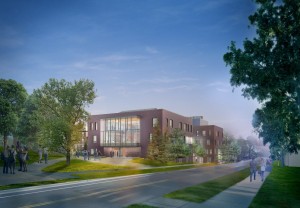
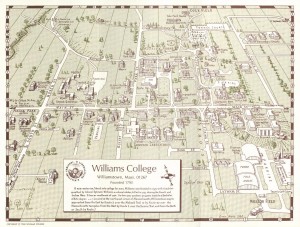
Halley Moriyama ’70 has graciously shared with us his compilation of how Williams’ physical plant has changed since we graduated. His sources include various Williams web sites and Whitney S. Stoddard’s 2001 Reflections on the Architectural History of Williams, edited by Thomas W. Bleezarde, featuring Arthur D. Evans’ photographs.
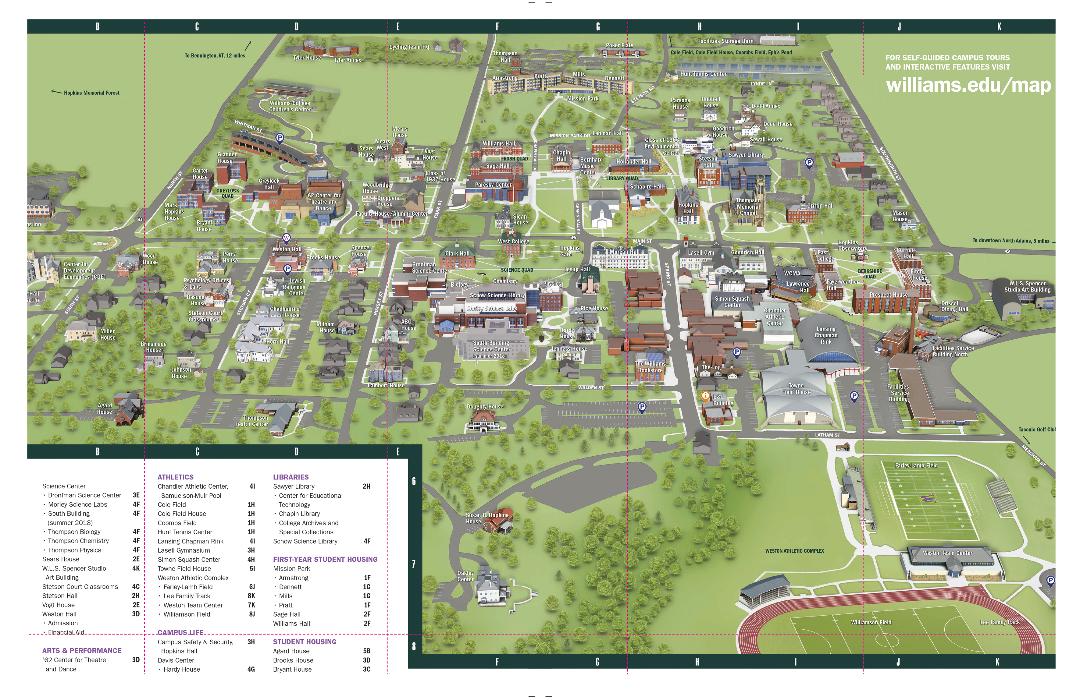
| Williams College, 1968 | Williams College, 2020 | |
 |
 |
|
| My, how you’ve grown! | ||
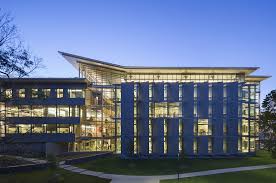
The Williams College campus has changed dramatically since when we were there. Nearly half the buildings are new, many constructed within the last ten years. They are energy efficient — Hollander and Schapiro Halls were the first two buildings in Berkshire County to attain LEED (Leadership in Energy and Environmental Design) Gold status — built for the internet age, and organized to promote interdisciplinary learning. Construction of a new science center to replace Bronfman began in late 2017 and will be completed prior to our 50th reunion.
| Mission Park (1971) | ||
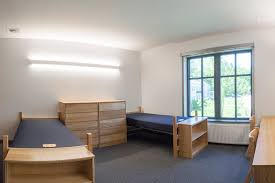
| Mission Park, a freshman dorm, is located off Park Street near the Haystack monument. The dorm is made up of four sections, each of which has horizontal entries. The central spaces in Mission Park have great lounges with pool tables, a kitchen, and comfortable couches. Almost all the rooms in Mission Park are singles. | 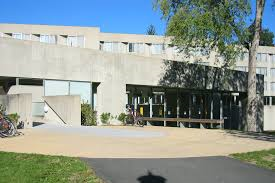 |
|
| Dodd House (1974) | ||
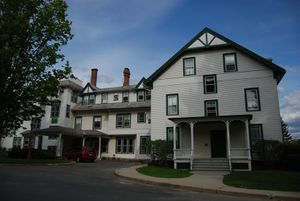 |
The former Williams Inn, Dodd is a white clapboard residential dorm building comprised of singles and doubles – and almost every room has its own bathroom. Most Dodd rooms are large, and the house itself boasts hotel-like amenities, a spacious common area with a nice kitchen on the first floor, and a grand piano. | |
| Bernhard Music Center (1979) | ||
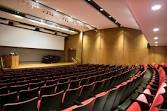
| The Bernhard Music Center, which is located beside Chapin Hall, contains two classrooms equipped with multimedia technology as well as well-maintained Steinway grand pianos, twenty-three practice rooms, ten faculty offices, and concert and rehearsal spaces. Numerous concerts take place year-round in the 279-seat Brooks-Rogers Recital Hall, along with all-college lectures, classes, and other events. | 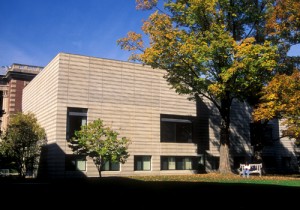
|
|
| Williams College Museum of Art Expansion (Phase I-1983; Phase II-1986) | ||
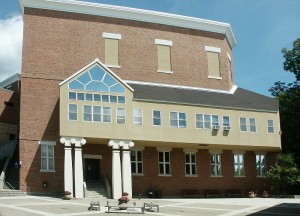 |
The first phase of the expansion of Lawrence Hall involved construction of a new wing off the south side of Lawrence. The back entrance features Ionic Order columns which cantilevers the space above (used for faculty lounge and offices), giving the back of the building an interesting composition. The new wing contains a big atrium that | |
| became the connecting link between the old and the new sections. The second phase involved the addition of new gallery space along with refurbishment of old rooms. | ||
| Chandler Athletic Facility (1987) | ||
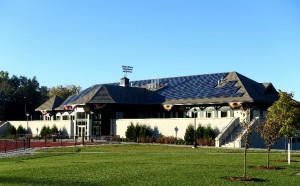
| The new athletic facility was named for John Wesley Chandler, 12th President of Williams College (1973-85). It contains the Olympic-length eight-lane Samuelson-Muir Pool with a diving area as well as a basketball court with adequate spectator accommodations. The new building is located off Spring Street and is connected to the squash courts and Lasell gym. Lasell was extensively renovated when the Chandler facility was built. | 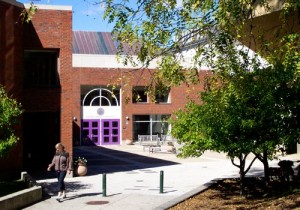 |
|
| Hopkins Hall Addition (1989) | ||
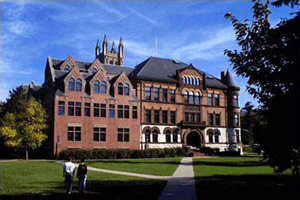 |
Based on the Romanesque style of H. H. Richardson, Hopkins Hall was built as a memorial to Mark Hopkins (d. 1887). Built in 1897, Hopkins was gutted to the shell and completely renovated in 1988-1989 with an addition on the north end.
Hopkins houses the main administrative offices of the college |
|
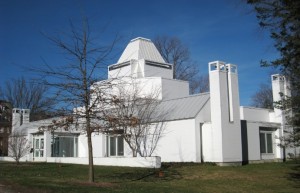
| Jewish Religious Center (1990) | ||
| he Jewish Religious Center (JRC) is home to the Williams College Jewish Association and Jewish life on campus. The JRC is located on Stetson Court, across from the Admissions Office. This building of unique architecture serves as temple, meeting hall, library, and kitchen. |
 |
|
| Chaffee Tennis House and Hunt ’44 Tennis Center (1993) | ||
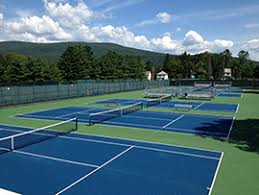 |
At the southwest corner of the College tennis courts, on the corner of Stetson Road and Lynde Lane, is the Clarence Chaffee Tennis House, which, together with six new hard courts, forms the core of the Torrance Hunt ’44 Tennis Center. Portions of the house contain trophies and memorabilia of Chaffee’s | |
| extraordinary 32-year career as coach of the College’s tennis, squash and soccer teams. | ||
| Spencer Studio Arts Building (1996) | ||
| Prior to the construction of this new building, the studio people had suffered in many locations throughout the campus, including the cellar of the Greylock Dining hall with no windows, in parts of the former Rudnick Laundry, in portions of the former Steele & Cleary garage and then Goodrich. The stone and glass structure, which is located on the far eastern end of campus, houses classrooms, studios, | 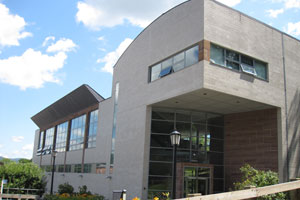 |
|
| and faculty offices. Opening off the lobby of Spencer Art building, Wilde Gallery is the primary student exhibition space on campus. Used for class exhibits, critiques, and student-initiated individual or group shows, the gallery enables students to complete the art-making experience by presenting their work to the public as finished product. | ||
| Simon Squash Courts (1998) | ||
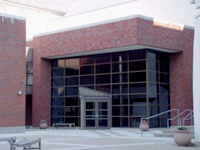 |
In the 1990’s, the U.S. squash organizations decided that the game of squash would be improved considerably by increasing the width of the regulation squash courts to standardize our dimensions with the rest of the world. | |
| As a result, it was necessary to build new courts, as other schools were doing. In the fall of 1998, Williams formally dedicated the Carol Girard and Cynthia Stewart Simon Squash Center, thanks to the vision and generosity of Williams alum and former squash captain, William E. Simon, Jr. ’73. Boasting twelve cement-plaster courts (nine of them glass-backed), brand new coaches’ offices, and housing the state-of-the-art Henze Fitness Center, it offers its players the finest squash facility in the country. The new squash courts are located adjacent to the Chandler Athletic Facility on Spring Street. | ||
| Goodrich Hall Restoration (1999) | ||
| Goodrich Hall is a Gothic Revival limestone building constructed in 1859 to serve as the College chapel, alumni hall, and classroom space. The building was renovated in the late 1990s and turned into a student activity center. Today, it houses a student-run coffee bar and is a | 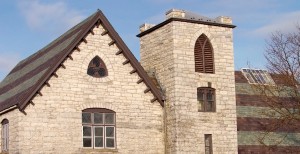 |
|
| vibrant hub of student activity for socializing, studying, and hosting events. Goodrich Hall is also a popular summer destination for Williamstown Theater Festival events. | ||
| The Morley Unified Science Center (2000) | ||
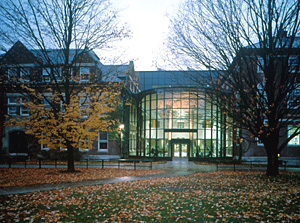 |
In September 2000, Williams celebrated the completion of the Unified Science Center project. This project included constructing a new building, the Morley Scientific Laboratory, and extensively renovating the four existing science buildings. The net result is that these buildings are now connected in a state-of-the-art interdisciplinary science facility. | |
| Class of ’62 Center for Theatre and Dance (2005) | ||
| The ’62 Center for Theatre and Dance provides teaching, rehearsal, performance, and technical spaces for the Williams College Department of Theatre, Department of Dance, Williams student performing ensembles, lectures and panel discussions, intercollegiate festivals, and nationally renowned visiting artists performing and working in collaborative | 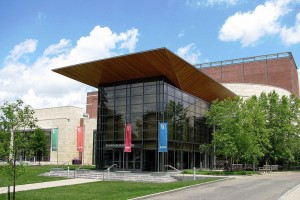 |
|
| residencies with students. The Center is named in honor of the Williams College Class of 1962, whose members envisioned the state-of-the-art venue for performing arts at Williams. The ’62 Center for Theatre and Dance is the summer home of the Williamstown Theater Festival. | ||
| Paresky Center (2007) | ||
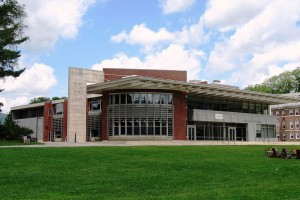 |
The new student center has been named Paresky Center in honor of a substantial gift from David Paresky ’60 and his wife, Linda, in support of the college’s endowment and financial aid program. Paresky attended Williams on full financial aid and says he both felt the obligation, and cherished the | |
| opportunity, to give others a similar educational advantage. Paresky Center occupies the site of the former Student Union, which was demolished. In addition to lounge areas and student organization meeting rooms, Paresky boasts four separate dining rooms, including the “snack bar,” which is a reproduction of the snack bar from the original Student Union. | ||
| Hollander Hall (2008) | ||
| The North Academic Building, completed in 2008, was re-named in 2010 as Hollander Hall, named by Richard and Jackie Hollander in honor of their sons Jordan and Adam, both members of the Class of 2010. This facility houses classes for the humanities and faculty offices. | 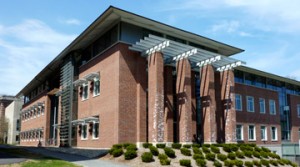 |
|
| Hollander Hall along with the Bernhard Music Center and Chapin Hall form the northerly part of a quadrangle that is composed of Stetson Hall and Sawyer Library to the east, Hopkins Hall and Schapiro Hall to the south, and Paresky Center to the west. | ||
| Schapiro Hall (2008) | ||
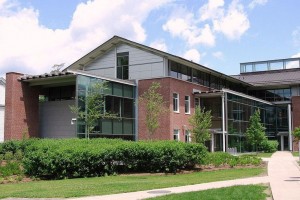 |
Opened as the South Academic Building in July 2008, the building was renamed Schapiro Hall in April 2009, honoring then College President Morton Owen Schapiro. Like Hollander Hall, Schapiro Hall houses classes for the humanities and faculty offices. | |
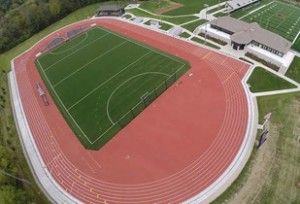
| Weston Field Athletic Complex (2014) | ||
| The newly re-configured Weston Athletic Complex opened in the fall of 2014, and is home to Eph football, track and field, lacrosse, and field hockey teams, while also providing practice and game fields for the soccer teams in case of unplayable field conditions at Cole Field.
The complex consists of two separate turf fields, Farley-Lamb Field (long turf) for football and lacrosse, and Williamson Field (short turf) for field hockey. Both fields and the track are lighted to allow for night practices and games. The Eph track and field team races and practices on the eight-lane Lee Track, which encircles Williamson Field. Jumping pits are alongside Williamson Field and at the end of the field. The surrounding field areas are used for field events. |
|
|
| A team support building, located at the south end of Farley-Lamb Field, provides all the teams with countless resources. The building contains four sizable home locker rooms, two for men, and two for women, in addition to separate locker rooms for coaches.
The Ephs also have access to a training room complete with an examination room, a hydrotherapy room, and a taping room. On the second floor, the teams enjoy a spacious multipurpose room. Teams can use the filming deck to film games or practices from a behind-the-goal line view. The building also contains offices for coaches, a laundry room, and a massive storage area for equipment. There are viewing decks on both sides of the building for spectators. This complex gives Williams’ athletes sports facilities that are among the best in NCAA Division III. |
||
| Class of 1966 Environmental Center (2015) | ||
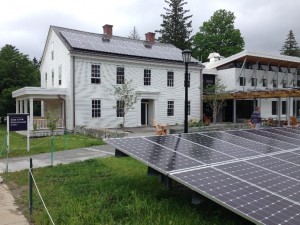 |
Dedicated in 2015, the college’s new environmental center is a living laboratory for sustainability and home to the Center for Environmental Studies Zilkha Center for Environmental Initiatives.
With a classroom, meeting and study spaces, a reading room,a kitchen, and gardens, the center’s development has |
|
| combined sustainable building practices, historic preservation, and extensive urban agriculture. The college is seeking Living Building Challenge designation for the center, the most rigorous performance standard for sustainable design. | ||
| Horn Hall (2016) | ||
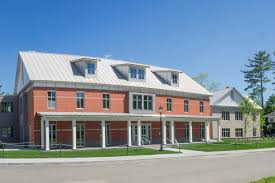
| Horn Hall is the first residence hall built in 40 years at Williams College. Horn Hall, located on Stetson Court, houses 60 sophomores, juniors, and seniors. Horn Hall is named for Joey and Ragnar Horn, alumni of the classes of 1987 and 1985, respectively.
The 25,000-square foot residence hall contains forty single rooms and ten doubles organized into six-person suites that share a bathroom. It has several lounge rooms, study areas, a collaborative meeting room and classroom space, and a backyard with patio space for entertainment or meetings. The building |
|
|
| has many sustainability features including low-flow plumbing fixtures, triple-glazed windows, additional exterior insulation in the roof and walls, LED light fixtures, and occupancy sensors. The college is pursuing LEED Gold certification for the building. | ||
| Chapin Hall Plaza and the New Quad (2016) | ||
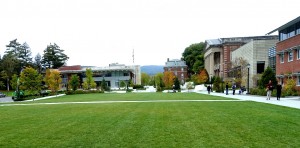 |
Chapin Hall Plaza was a multi-phased transformational project that creates a new pedestrian friendly green space/academic quad in the heart of campus and completes the east/west axis from the ’62 Center to the new Sawyer Library. | |
| During the summer of 2015 the old Sawyer Library was demolished and replaced with concrete walks and the extensive landscaping was planted. Concrete walks that traverse the quad at various locations also were added. A new plaza was created in front of Stetson Hall to complement the significance of that historical structure and complete the entrance to the new Sawyer LibraryThe existing concrete stairs that connected Chapin Plaza with the new quad area were replaced with a series of granite steps surrounded by large marble blocks that create opportunities for gathering and social interaction. Chapin Drive and the plaza in front of Chapin Hall were also reconstructed with brick and granite pavers that complement the more predominantly pedestrian features of these spaces. | ||
| Sawyer Library (2017) | ||
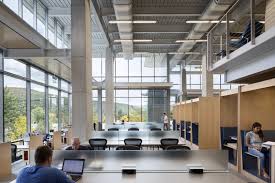
| This project represents the culmination of a twelve-year effort to reimagine the Williams library and restore historic Stetson Hall, which served as the library and now continues in an archival role by housing the Chapin Library, which houses rare books and manuscripts (including copies of the Declaration of Independence, the Constitution, and the Bill of Rights). The results fuse new and old, intertwining the college’s historic roots with the forward-looking views of its scholarly community. A library constructed in the 1970s (former Sawyer Library) eclipsed Stetson Hall’s presence on campus, and its large volume diminished pedestrian flow. Two additions to Stetson Hall’s rear served as faculty housing, relegating them to the campus perimeter, far from classes and student activity. The first phase of the project was to relocate faculty to two new academic buildings, followed by placing the new Sawyer Library in the space previously occupied by faculty housing. This has restored Stetson Hall’s stature as a campus destination and connects it and the library to Williams’ student center via new green space. Stetson Hall’s interior and exterior were meticulously restored, and its reading rooms and gallery spaces house items from the Chapin Library. | 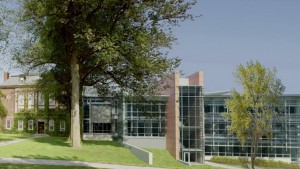
|
|
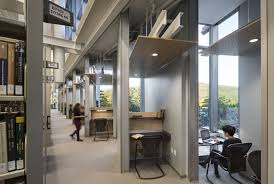
| For the new 132,000-square-foot library, the team focused on collaboration. It features a wide range of solo and group study environments, and splits the space into two distinct zones: one for collaboration and one for collections. The collaboration zone is split among three levels that house reference materials, technology, and rare books. The library’s monographs are spread across four levels and are readily browsed. Study carrels ring the stacks and provide sweeping views of the Berkshire Mountains.
Sawyer Library illustrates how sustainable planning and design can deliver inspiring architecture that supports social interaction, foster a sense of community, and provide environmental stewardship. Sustainability in every sense of the word drove the design and provided the motivation to restore Stetson Hall to its former glory. Other sustainable features include optimized construction systems and natural lighting, which energizes the library’s significant footprint through two major atria and a four-story light reflector that distributes clerestory light into the heart of the building. To further bolster Stetson Hall’s prominence, the new library’s roof is tucked below its cornice line. |
||
| Williams Bookstore (2017) | ||
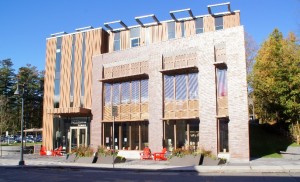 |
Williams opened this 10,000 square foot bookstore, cafe, and event space in August 2017. Located towards the end of Spring Street, the Bookstore is the place to buy course books and general interest titles, attend readings by Williams faculty and guest authors, study or relax with friends over coffee, and browse a wide selection of official Williams apparel and merchandise. | |
| The first floor includes a new cafe operated by Tunnel City. The second floor includes a private meeting room available for use by college departments and local organizations. The third-floor offices are currently leased by Overland, an organization that brings teenagers from around the country to Williamstown for global travel experiences. | ||
| New Williams Inn (2019) | ||
| Construction began in the fall of 2017 for a new Williams Inn. The site is located off the end of Spring Street. There are sixty guest rooms, a function room for up to 200 people, small meeting rooms, and a restaurant with thirty-five to fifty seats and an accompanying bar. There’s the possibility of adding, now or in the future, an annex with forty guest rooms, which | 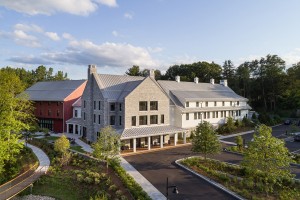 |
|
| would be available at peak times, but not need heating, etc. There is also a patio and location for a tent.The goal of the new building is to serve visitors and people who live here and who gather at the inn | 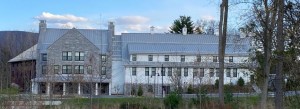 |
|
| for events such as banquets, chamber breakfasts, weddings, bar and bat mitzvahs, and receptions after memorial services. The new Williams Inn opened in the Fall of 2019. | ||
| Garfield House (2019) | ||
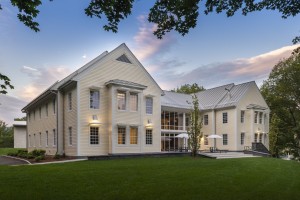 |
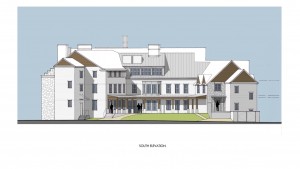
The Garfield House Project is being designed as a high-performance wood framed building using the “Passive House” design criteria and philosophy. This represents the most stringent energy performance criteria in the industry today and focuses heavily on a well-insulated airtight envelope, high | |
| performance windows, and high efficiency energy recovery. The forty bed, 16,000 square foot structure will include ten double and twenty single bedrooms, a full kitchen, dining room & living room areas, laundry facilities, and bike storage, as well as multiple gathering spaces strategically located throughout the residence hall. | ||
| Works in Progress | ||
| Saint Anthony Hall Restoration (2020) |
||
| The current Saint Anthony Hall building, which houses the Center for Developmental Economics, is being renovated to remove all residential components. The kitchen and dining function will be relocated from the west wing to the east wing to serve programmatic needs and better utilize building spaces. Additional classrooms, study spaces, and offices for faculty/staff will be developed in the space vacated by | 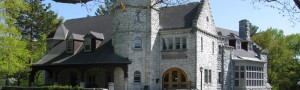
|
|
| the residential component. Restoration of the original finishes is planned where feasible. Mechanical system and envelope upgrades are planned. The work began in the fall of 2018 with an estimated completion scheduled for the spring of 2020. | ||
| Science Center Renewal Project (2020) | ||
|
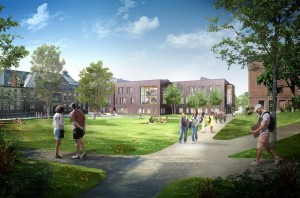
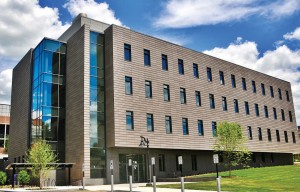
The Science Center Renewal Project includes design and construction of two new science buildings, which together will add 178,000 square feet to the existing Unified Science Center. The two buildings are the south building (~77,000 square feet) and the north building (~101,000 square feet.). Also, as part of the project, the 90,000 square foot Bronfman Science Building has been demolished. Included in this project are two new classrooms in Schow Library and the renovation of the biology labs. The project began in 2017 and is scheduled for completion in the fall of 2020. The project was driven by growth in the number of Williams students majoring in the sciences. In 2000, about 27% of students were science majors. Today, more than 45% of students are science majors.
The South Building was completed and opened in May 2018. It houses research and teaching laboratories, shared equipment and shop support spaces, a microscopy suite, and faculty offices for the biology, chemistry and physics departments. |
|
| In summer of 2018, Bronfman Science Center was demolished to make way for the new North building, which is anticipated to be completed in the fall of 2020. While the college looked at ways to save Bronfman, it proved infeasible given the numerous changes required to bring the building into compliance with modern academic and code standards. The new building will replace Bronfman with a similarly sized building that will house more flexible space, including classrooms, a large auditorium, labs, offices, and collaborative spaces for the Math/Statistics, Psychology, and Geoscience Departments. The new, central auditorium will carry the Bronfman family name. | ||