
Rob visited several classmates on a trip to the Texas April 8th to 11th, 2019. Here’s his report:
Texas is a big state, Houston is a big city, Corpus Christi embarks on a towering bridge, Austin engulfs with ease the old airport location and the Hill Country is rolling. How engaging when a classmate says he will meet me at the Breakfast Klub for a little “Houston funk” while the night before I sampled some of the local craft beer: Shiner Bock, St. Arnold’s Amber and Summer Pilsner at Goose Acres. Arriving at the appointed location prior to its opening, I was met by the entire staff as the doors opened and a round of clapping, smiles and energizing highlighted their stated mission of just serving “good food”. Indeed, my breakfast with Jim Noel, a Houston native, confirmed the food.
Early exposure to the concept of attending Williams is very varied throughout our classmates, certainly from the Texas environs 50 years ago, but somehow the grandmother of a family friend told him Williams was his place. Jim became a corporate banker right after graduation and returned to his Houston roots whereupon the family business in the early 80’s desired his attention.
The oil field, tubular goods industry in Texas is not for the feint of heart. Steep declines in the economic fortunes of the oil patch and rocking upturns leave a man’s financial nerve often under siege. Jim’s business fuses various pipe joints to particular grades of steel piping to withstand the forces inherent in the increased technology, depths and pressures associated with modern drilling programs. His degree from the College could not prepare one for this business craft.
He speaks of Professor Park, of the Physics Department, largely in relation to a Winter Study course he took. Quantum physics explained to the layman, he states. Jim served on the original Winter Study Committee and this left an appreciative mark for a chance to pursue subject matter outside of his economics major. He also mentions Professor Waite, remembering his German history course along with Waite’s “iconic and strong” presence on campus.
Additionally, Jim acknowledges friends Bill Gardner, Jim Ackerly and Chip Herndon, who was with us for only two years, but remains a friend he sees on visits to Tennessee. Bring them all back, we would welcome the reunions.
| No stranger to the vagaries of the business cycle, John Untereker, embodies many of the adaptive characteristics of the liberal arts experience demonstrated by his itinerate march across the employment landscape. Landing on one’s professional feet after merger cuts, desired relocations for greater family fabric or just opportunity, John is well travelled.
Arthur Anderson and auditing assignments brought John to Houston and NL Industries shortly after graduation and exposure to the drilling fluids business as a CFO (Chief Financial Officer). |
|
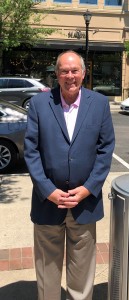
A move to Louisiana for ten years of life and toil with Petroleum Helicopters Inc. (PHI) introduced him and his wife, Mary, to the culture of this state, which presents a tight knitted, social environment not impossible to enter, but difficult, nonetheless. Back to Houston after adopting a son (now age 31 and an architect) and the desire to be nearer family, John became the CFO for a cardio related company that ultimately merged with the public company powerhouse, Merck. He was out and forced to join a power distribution company needing financial management and public company knowledge, which John possessed. Lastly, a stint at a smaller, private company owned by a Brooklyn Jew interested more in his family, moral fiber and general wisdom versus a specific skill set. Varied, indeed, and a tribute to a foundation from the Purple Valley.
I am always delighted to learn of the “under the radar” exposures classmates experience while at Williams leaving a lasting influence on their life. A chance class with Professor of Music, Shainman, established an interest in opera and now John and wife are regular patrons of the Houston Opera and enjoying it immensely. Reading is more prominent upon retirement and he mentions finishing Tolstoy’s War and Peace, recently along with Nathanial Philbrick’s writings. As we mused about the Williams experience, John remarks about the steep learning curve back then “and the process slows as we age”, a prospect less flattering than one would wish.
From Houston, I ventured south to Corpus Christi and a city along the coastline engaged in the petro-chemical refining industry and its new Harbor Bridge project that marks the entrance from the North to the City. The completion will mark the tallest point in South Texas and the longest cable stay bridge in the country. The bridge towers will stand 538 feet tall and will accommodate global shipping vessels greater passage to the channel where much of the industry is located.
| I motored over the old bridge to meet Lon Hill, whose family has long established roots in the City and in the Rio Grande Valley, a place he occasionally returns to. Lon’s grandfather developed land in the Valley. Early on, Lon was versed in Williams’ lore as his father and uncle both attended the College and he remembers his father celebrating his 50th in 1993.
Lon is a self-described introvert who “studied too hard at the exclusion of other experiences” while on campus. He carries a regretful thought surrounding the idea he “wished he was more well rounded while there” in pursuits and interests. |
|
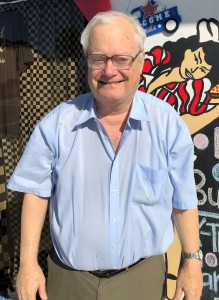
Binks Little, of the Religion Department is remembered as Lon was a major in that department and subsequently received an MA at Union Theological Seminary at Columbia University, but never finished the PhD program. His professional wanderings before returning to Corpus Christi in the early 1990’s to become the caregiver for his mother and father leaves him believing he would have benefited from an education that was more skill specific upon graduation than a liberal arts curriculum provided.
But, Lon retains a heartfelt opinion that Williams is a “precious place”. He recalls Sey Zimmerman, a roommate and fellow Texan, and his wife, Janet, who lived in Corpus Christi where the two married, an occasion Lon recalls attending at the time. In attempting to convince Lon to return to our 50th, he invoked the story of taking his father in 1993 to the Albany airport after escorting him to his 50th when he suffered a serious stroke on the flight home. “I will try to put that aside. In some ways it underscores how fragile and precious are opportunities to get together with classmates.”
| After meeting Lon, I drove back to Houston for a dinner with John Clemmons, a long time resident of the City and an MD with a specialty in gastroenterology. John’s wife was from Houston and after a residency at Emory University he began his medical practice there, which continues to this day. In a wide-ranging discussion of his path through life from an all Black high school in Savannah, Georgia, John relates a story to my question as to why he remains practicing at this age. “I grew up with parents that believed serving was important”. |
|
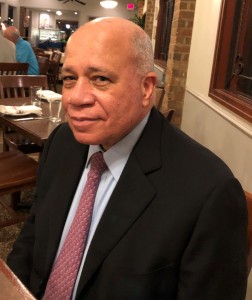
Both parents were teachers, but his Dad’s road to success necessitated surmounting professional hurdles a Black man encountered in Georgian society at that time. Desiring to attend medical school, his father was denied entrance, which John believes was the product of racial bias. Undaunted his Dad pursued and became a very successful physics teacher and never looked back. This home-centered culture of serving benignly interrupted our dinner. “I am old school, “ John stated, after he briefly addressed a telephone call regarding a patient “and I still take after hours calls.”
Although he expresses our time at Williams as one of “historical transition” concerning the development of cultural and academic programs for Blacks on campus and recognizes today’s changed atmosphere, his experience while there challenges my knowledge of the searing and emotional viewpoint of the Black, campus population. He recalls the eloquence of Preston Washington ’70, one of the leaders of the Black occupation of Hopkins Hall, and his ability to examine the slow pace of change at the institution according to a Black mindset. I mentioned I was not privy to the internal discussions of this small group nor did I ask he detail them. Although I understood at the time what was largely going down, I admitted that I do not feel my insight into the nucleus of thought within this group was whole or of depth. John was a member of the group that sat in during the occupation along with Forrest Jones.
Coming from an all Black high school, he admits adjusting to a small, mostly white student body, as well as, the academic challenges, which I confessed was part of my experience, kept him focused and somewhat removed from engaging other classmates outside of his immediate roommates. His natural reserve and desire to serve found an outlet in the ABC programs (A Better Chance) on and off campus. His summers were spent on the Williams campus for two years and the Carleton campus in Minnesota for one, tending to duties tied to ABC. During Junior and Senior year he lived off campus at the Huxley House mentoring high school students attending Mt. Greylock’s own ABC program. He made recruiting trips with Phil Smith, Admissions Director, to better serve Black students in their choices regarding further education.
John’s reminiscence of his self-styled engagement with the College was unfettered by any fawning description of his time there, but he left me with his recognition the Williams education throughout his life and career path gave him “standing” within his social and professional communities.
| Rick Ertel drove down from the Hill Country to meet me in Austin at a location formerly part of the old airport. Now developed, the mixed-use structures create a pleasing architectural reuse of the land mass. A lawyer by profession with a Harvard Business degree to fortify his skill set, he practiced law with Aiken Gump out of Dallas. Now retired to the Hill Country about an hour outside of Austin where his wife, Stephanie, has a family history, Rick is engaged with state & local, social and political efforts through Texas Impact (TI). TI was founded in 1973 as a non-profit entity comprised of Christian denominations, regional Jewish and Muslim social justice committees and local interfaith councils.
|
|
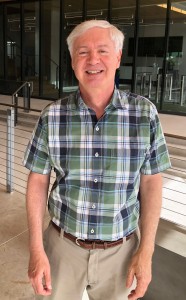
He mentions a recent initiative by TI to coordinate ecumenical donations to state relief efforts subsequent to hurricane Harvey. This information was critical in allowing the state to request federal funds based on amounts contributed statewide (TI $200 MM and TX $500MM). Rick serves on the Board and is currently in a leadership position at TI, while Stephanie is active with pro-bono efforts at the state legislative level there in Austin.
Mathematics were a staple for him at Williams and he recalls Professors Hill and Grabois, but makes a special mention of Faison and Stoddard of the Art Department. His children over the years were always surprised by the juxtaposition of his professional background and his educational exposure to art while at the College. He roomed with Hugh Hawkins and upon requesting he call classmates re; our 50th, he stated “all of his close friends return for the reunions.” Make it so I think to myself.
As we discuss the Williams experience, I am reminded once again of the theme to his thoughts, which coalesce around the realization that “the most important element to a Williams education is the extracurricular activities bringing broad exposure and the dialogue with classmates providing knowledge and inter-personal skills”.