
Our Fall 2019 Mini-Reunion was combined with our Presidential Forum. This provided us with the opportunity to learn about some of the inner workings of Williams.
We met September 13 – 15, with a “pre-event” on the evening of Thursday the 12th — a discussion of “Digital Technology, Social Media, and Today’s Political Climate” sponsored by the Class of ’71 Public Affairs Forum, the Cohan Family Forum, and the Lecture Committee from 7:00 to 8:30 PM in the ’62 Center for Theatre & Dance.
|
|
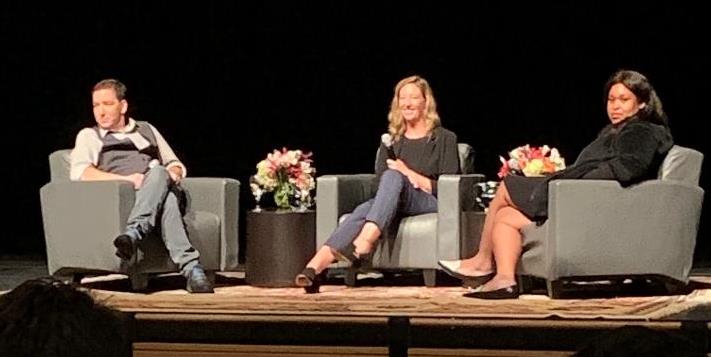
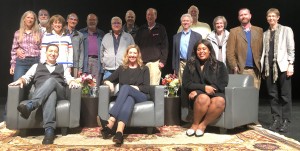
The discussion was reported on in the September 18th issue of the Williams Record.
Friday, September 13:
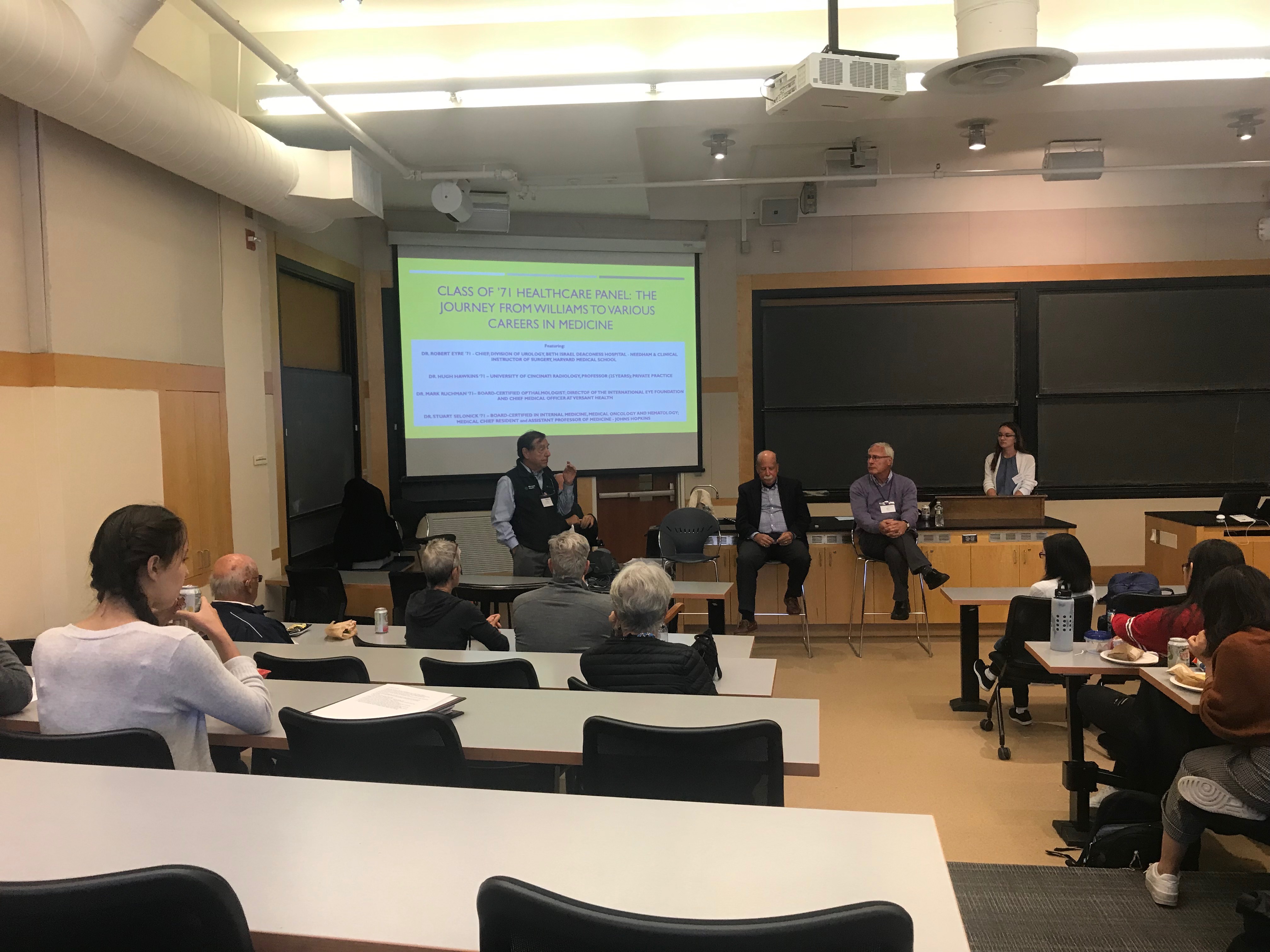
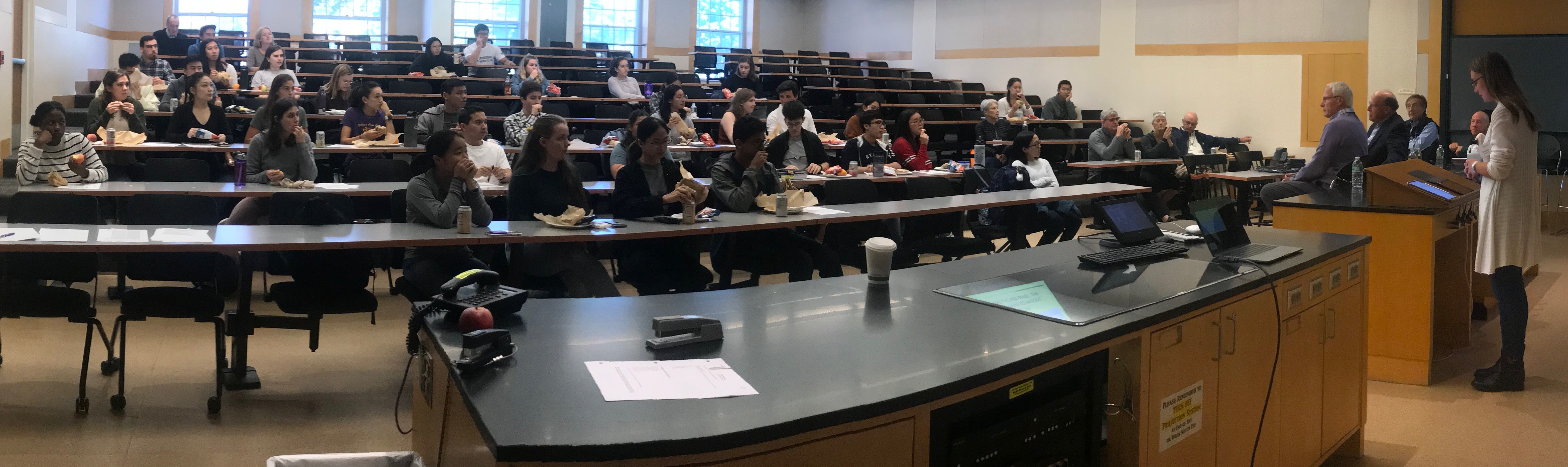
12:00 – 1:30 PM: Separate lunches with students organized by Career Counseling with doctors, educators (teachers and administrators), and attorneys. Classmates who aren’t panelists are also invited.
-
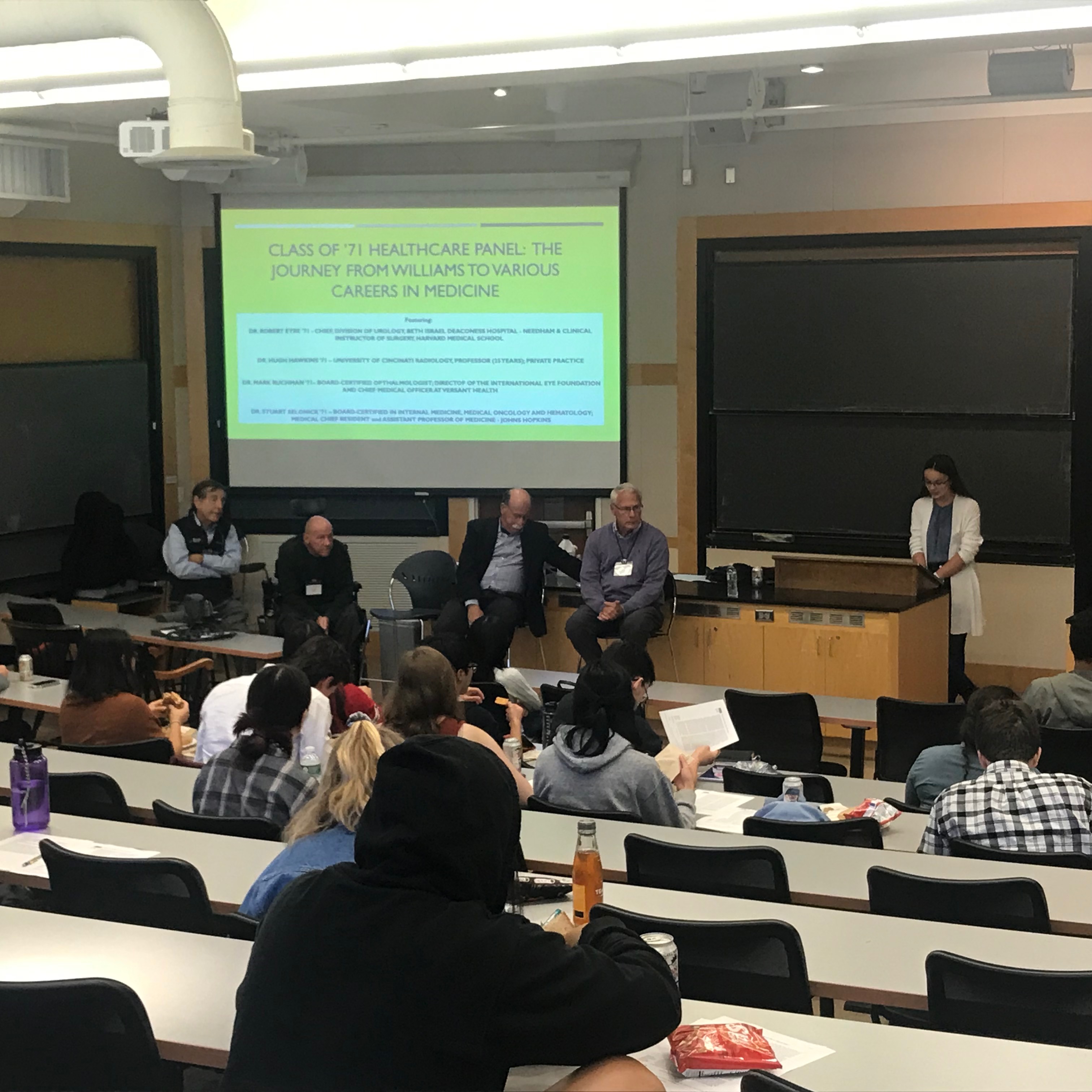
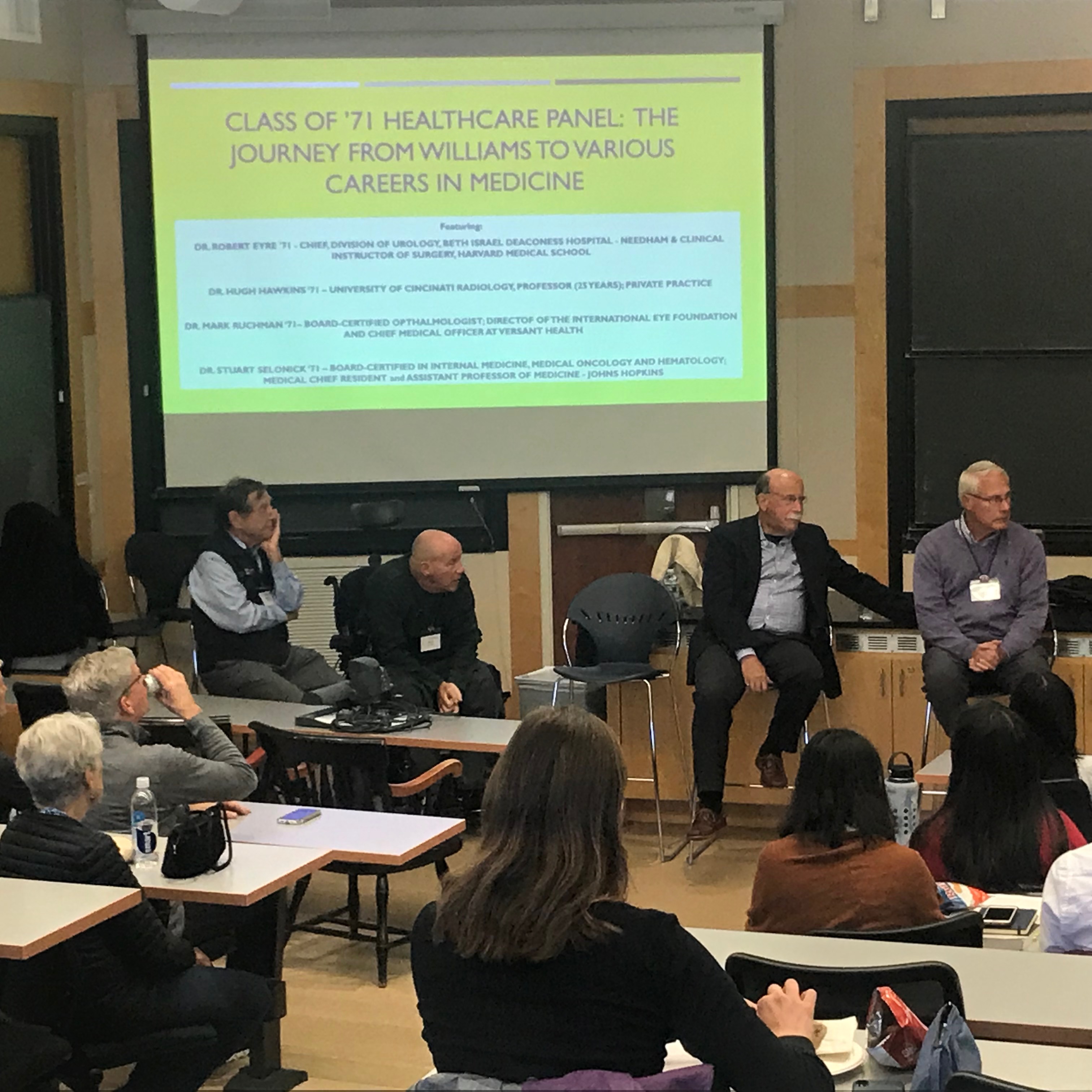
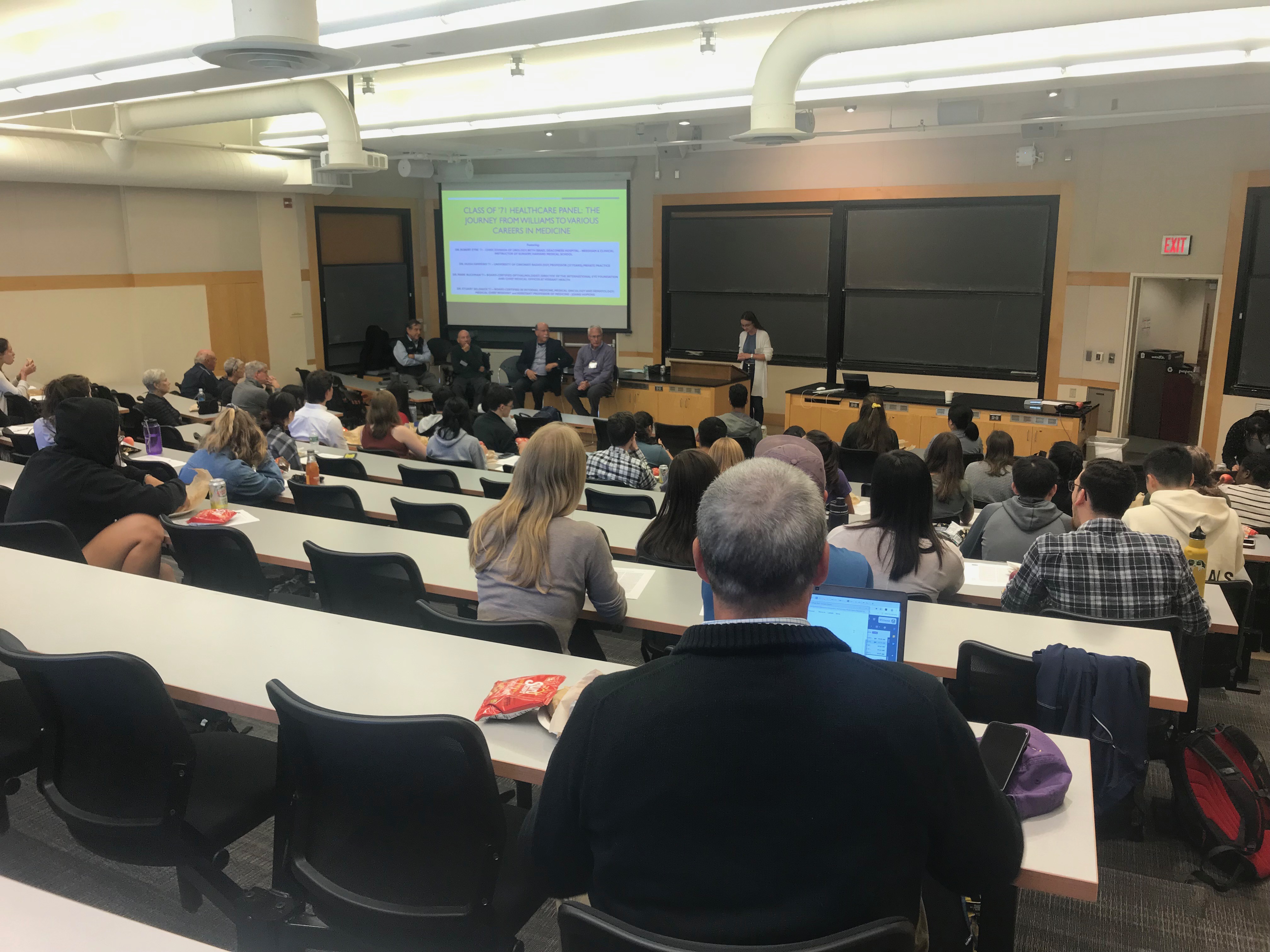
- Doctors: Bob Eyre, Hugh Hawkins, Mark Ruchman, and Stu Selonick; Wege Auditorium, Chemistry Building
- K – 12 Educators: John Chambers, Peter Clarke, George Ebright, and Kent Rude; Lewis Room, Mears House, 95 Park St.
- Lawyers: Colin Brown, Steve Brown, Mark Pearson, Jack Sands, Bob Schwed, and Roy (“Andy”) Simon; Faculty House (Lower Level)
See more photos
- Doctors: Bob Eyre, Hugh Hawkins, Mark Ruchman, and Stu Selonick; Wege Auditorium, Chemistry Building
2:00 – 3:30 PM, Presentation Room, Weston Hall: Session 1: Williams Today – Who constitutes the Williams student body and faculty today? How are they selected, and what are the challenges in getting who Williams wants (tenure, housing, and financial aid, etc.)? What are academic and student life like today?
3:45 – 5:15 PM, Presentation Room, Weston Hall: Session 2: Williams Finances – What do the College’s finances look like? What is the vision for Williams over the next 25 years, and what resources will be required to accomplish it? Topics include tuition and financial aid, faculty recruitment, and endowment management.
6:00 – 9:00 PM, Faculty Club: Cocktails and dinner at 7:00 with President Maud Mandel who will talk about the Strategic Plan and questions about the Plan and from the afternoon sessions. Business casual attire; jacket recommended for men.
Saturday, September 14:
8:00 – 9:00 AM, Faculty Club: Breakfast and committee meetings
9:15 – 10:45 AM, Paresky Center Auditorium: Session 3: Speech on Campus – Provocative speech, offensive speech: how can Williams facilitate productive, open debate on controversial issues? How does the College ensure a wide range of ideas and beliefs are shared?
Here are some suggested readings for this session:
-
- Executive Summary and pages 1 & 2 of the Report on Ad Hoc Committee on Inquiry and Inclusion at Williams College. The full report is here, but reading the first six pages is all you really need to do to prepare for this discussion. (More information about the Committee, including a link to the final report, is available on the Committee’s web page.)
- Report of the Committee on Freedom of Expression from U. of Chicago [the so-called “Chicago Principles] (3 pages)
- Article entitled “Against Endorsing the Chicago Principles” by U of Penn Professor Sigal Ben-Porath, published December 11, 2018 ( 3 pages)
- Article entitled “ Self-Censorship on Campus Is Bad for Science” by Williams Prof. of Biology Luana Maroja, published on May 28, 2019 (2 pages)
- Op-Ed piece from NY Times dated August 30, 2019 on The Difference Between Coddling and Safe Spaces by Mchael Roth, President of Wesleyan University (2 pages)
11:00 AM – 12:15 PM, Paresky Center Auditorium: Session 4: Arts on the Campus & Beyond – What does an education in the arts look like today, both inside and outside of the classroom? How do the arts and humanities remain vibrant in an era of pre-professionalization? How does Williams take advantage of its location in the arts-saturated Berkshires?
12:30 – 1:30 PM, Room 3, Griffin Hall: Lunch at tables with faculty members/coaches and students
12:30 – 2:00 PM, Ramunto’s at The Log: Lunch Meeting of the Reunion Fund Committee
1:30 – 6:00 PM: Free time, with a couple of organized events from 2:30 to 3:30:
-
- Meet in the Schow Science Library Atrium for private, small group tours of the new Science Center by Tiku Majumder, Barclay Jermain Professor of Natural Philosophy and Chair of the Science Center, and other faculty members. They’ll plan to visit labs and include some students, with plenty of time for Q&A.
- Meet in the WCMA Atrium in Lawrence Hall to join Deborah Brothers, Costume Director, Designer, and Lecturer in Theatre, for a mini course in the Williams College Museum of Art (WCMA) Rose Study Gallery. This interactive session includes close looking at textiles, photographs, and paintings in the WCMA collection with a focus on costume history and detective work.
Also, the Clark Art Institute has an exhibit “Looking Twice at Renoir and O’Keeffe (Ida, not Georgia)” which has received very good reviews.
6:00 PM – 9:00 PM, the new Williams Inn: Reception with Class dinner at 7:00. Business casual.
We will have a videographer present to capture thoughts about why we come back to Williams, some of our fondest memories (veridical or not), etc., so think about what you might want to say.
Sunday, September 15:
8:00 – 9:45 AM, Faculty Club: Class committee meetings
9:00 AM – 10:30 AM, Faculty Club: Brunch with Maud – more Q&A with Maud based upon the sessions during the weekend or discussions among classmates
I will be attending Joe Fitz’ memorial service on 9/14, and will miss this terrific program.
Ned
If you believe the subject of free speech on the Williams campus is a one dimensional subject likened to the polarity of a battery, either positive or negative, then the Presidential Forum for our Class of ‘71 disabused me of such a viewpoint. It is a nuanced and complex issue there and perhaps in society at large. One thing is certain, there is energy being expended on the issue along with occasional sparks being generated.
When is an invited speaker to campus merely a provocateur or someone with an uncomfortable view point? Is provocation by itself worthy of a learning experience? If a speaker is allowed on campus, does that mean the College endorses the view point? If a student is “hurt” by words or ideas, is that a form of “hate” speech and a reason to shut down further discussion as a self evident truth: “I feel harmed”, therefore, it is a self-evident truth. People are affected by words goes the discussion, which creates a kind of “psychic violence”. However, freedom equals the capacity to affect. This creates a power. What to do about this power or has it always been thus? Do these questions begin to blur the subject matter necessitating a deeper dive on campus as to where someone is “coming from”? Yes, and due to the various student perspectives, it is hard to sequester them into one single policy or guideline.
And, on a campus increasingly made up of students from around the globe including different cultures, socio-economic backgrounds and experiences both deep and penetrating, along with strong knowledge of the self, the institution is thrust into a time of intense assimilation. Diversity is a reality embraced by the Administration, the faculty and most alumni. But, the melding of this body into a more powerful experience and education comes with growing pains.
I come away believing more clearly now that the Trustees’ decision to bring our first female president to campus, Maud Mandel, was perceptive in ways not necessarily understood or expressed. A patient listener with a fundamental understanding and empathy for the cross currents operating on young minds, Maud embraces the effort to teach the wisdom of differing opinions. Maud is just beginning to find her way forward within the challenge of coalescing the student differences into a dominant strength at the College. I believe she views this as a rich vein of education needing nurturing. As various affinities are melded, one can expect a vibrant campus crucible for the liberal arts, an environment we are all vested in. At this time the students need an educator who champions the differences that exist while teaching respect for all in order to foster a more powerful educational experience. The students need to trust that communicating differences of opinion are meant to be augmentative and a learning exercise and not steeped in harmful motives. The Internet and social media create an anonymous power with the ability to malign viewpoints and avoid personal communication. This is much different from our experience. Maud arrives at a point in time when the needs dovetail nicely with her apparent skill set, one of nurturing, listening, but understanding criticism is a legitimate aspect of discourse and she states the students are doing much better than the general society, which lives with significantly less diversity of cultures and thought patterns than exist on the Williams campus of today.
Let me leave you with a thought a Senior student shared about whether graduates still feel upon finishing that they are a “Williams” person versus an individual more tied to an affinity group that merely went to Williams. He believes the large majority of students do feel they are a “Williams” person. He mused that perhaps in 10-15 years the current climate, which at times restricts the ability of classmates to communicate about differing opinions without tripping the “shut down” toggle switch, would smooth out and effectively be viewed as a stage in the College’s history. Sounds like vestiges of 1967-1971, does it not?